Written By: Brian McNamara
At the best of times, the X-Men corner of the Marvel Universe has been a puzzle. The super successful branch of Marvel was the premiere franchise for the company for almost a quarter century. But over the past decade or so, the line has diminished in popularity and market share.
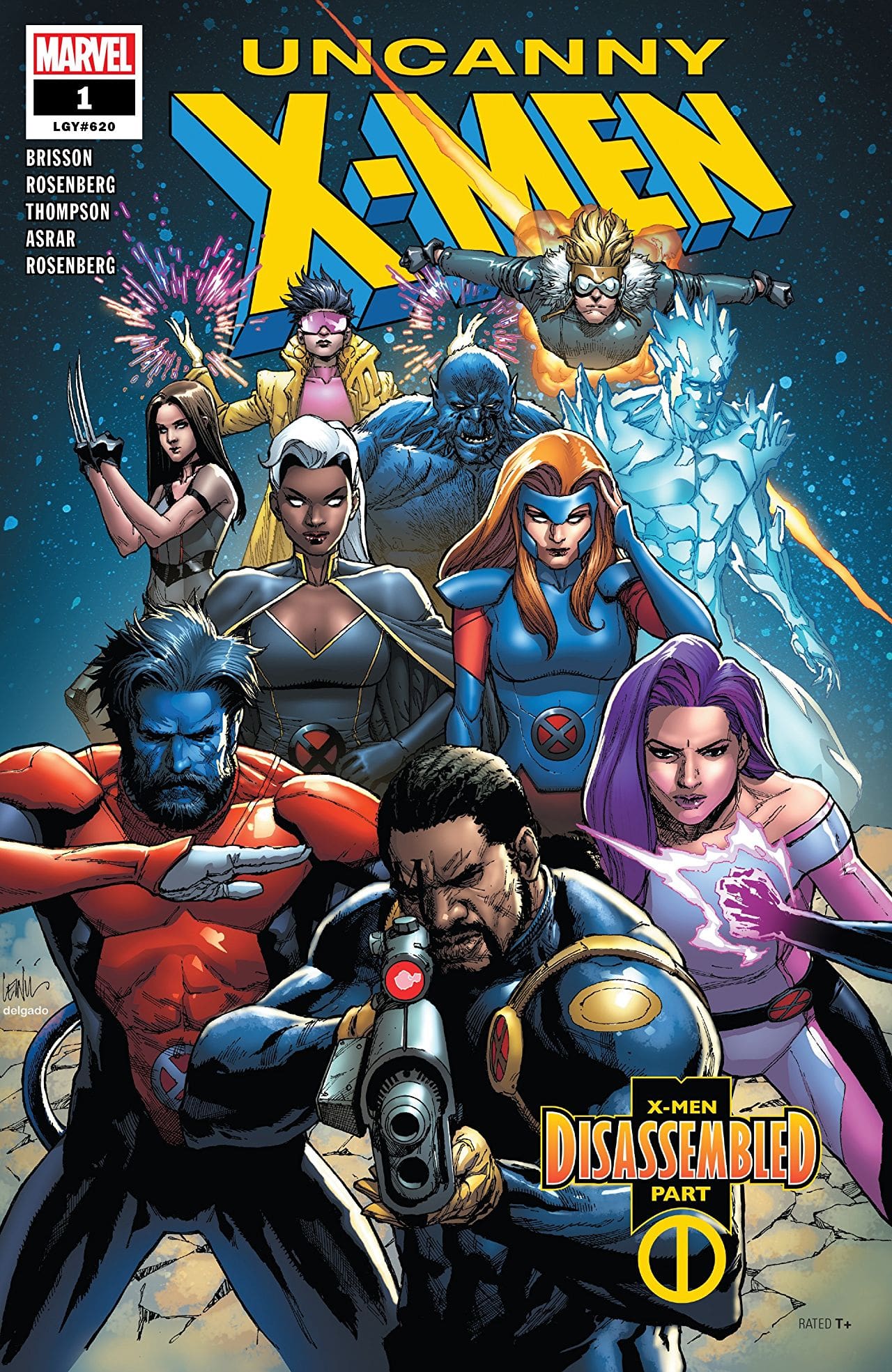
Too many books, too many characters and shifting story lines and priorities have lead to a messy, quirky, fantastic, terrible, lovably unique franchise. And that mess brings us to the brand new Uncanny X-Men – an over-sized, soft reboot of the franchise meant to reinvigorate the property.
However, this marks the third line-wide reboot/revamp in as many year and, perhaps most confusingly, this issue was published nearly a month before the final issue of the Extermination event that was meant to clear the board for this reboot.
Uncanny X-Men sees a mixed roster of characters from across the X-eras coming together under one roof. Kitty Pryde, the current leader of the overall X-organization – though that’s somewhat murky – has taken a team of low-level trainees to investigate an attack on a pharmaceutical company.
However, before the team can even get off the Blackbird, Kitty’s phasing powers are triggered and the plane crashes into the very building they were meant to protect. Kitty is missing from the wreckage and the trainees are forced into action against 90s baddies the Mutant Liberation Front.
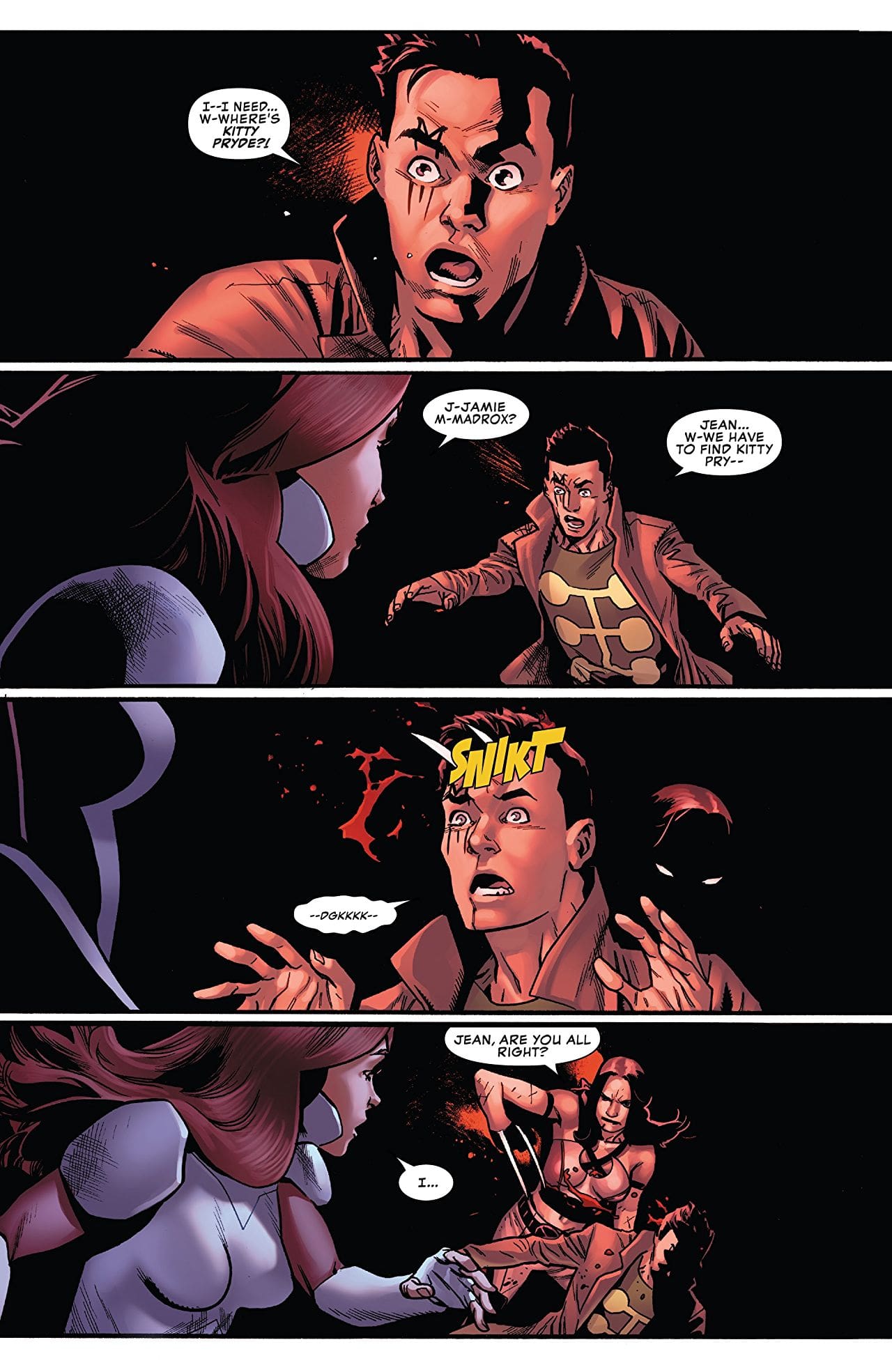
Shortly after this fight, the senior members of the X-Men are attending a rally – debate? – wherein a senator reveals that a vaccine for the x-gene, the cause of mutation, was developed at the very lab that was attacked. Our heroes debate the topic before the MIA Kitty Pryde is called on to… rebut the senator/give a speech? Only, she is replaced by Jamie Madrox the Multiple Man, who, after rambling for a few panels about not wanting to hurt anyone, launches an attack on the crowd in his quest to find the missing Kitty Pryde, essential to some future plan.
A lot happens in this issue. However, it’s spread over maybe 4 major scenes, and so it feels like a light story. With three writers at the helm of this book slated to run weekly for its first 10 issues, the issue feels more coherent than other multiple-writer do – like one voice, but at the same time it also feels crowded. There are a lot of characters at play, some of whom don’t receive anything in the way of introduction.
If you were a new reader, I don’t know how you’d make heads or tails of some of the action. While everyone gets a panel or two to have a moment, it largely feels like the writers wanted to pack all of their toys into one place so you would know who will be in play in the stories and books down the line. However, it feels bogged down, and the character voices don’t feel new or different from the reboot before the last – Extraordinary X-Men.
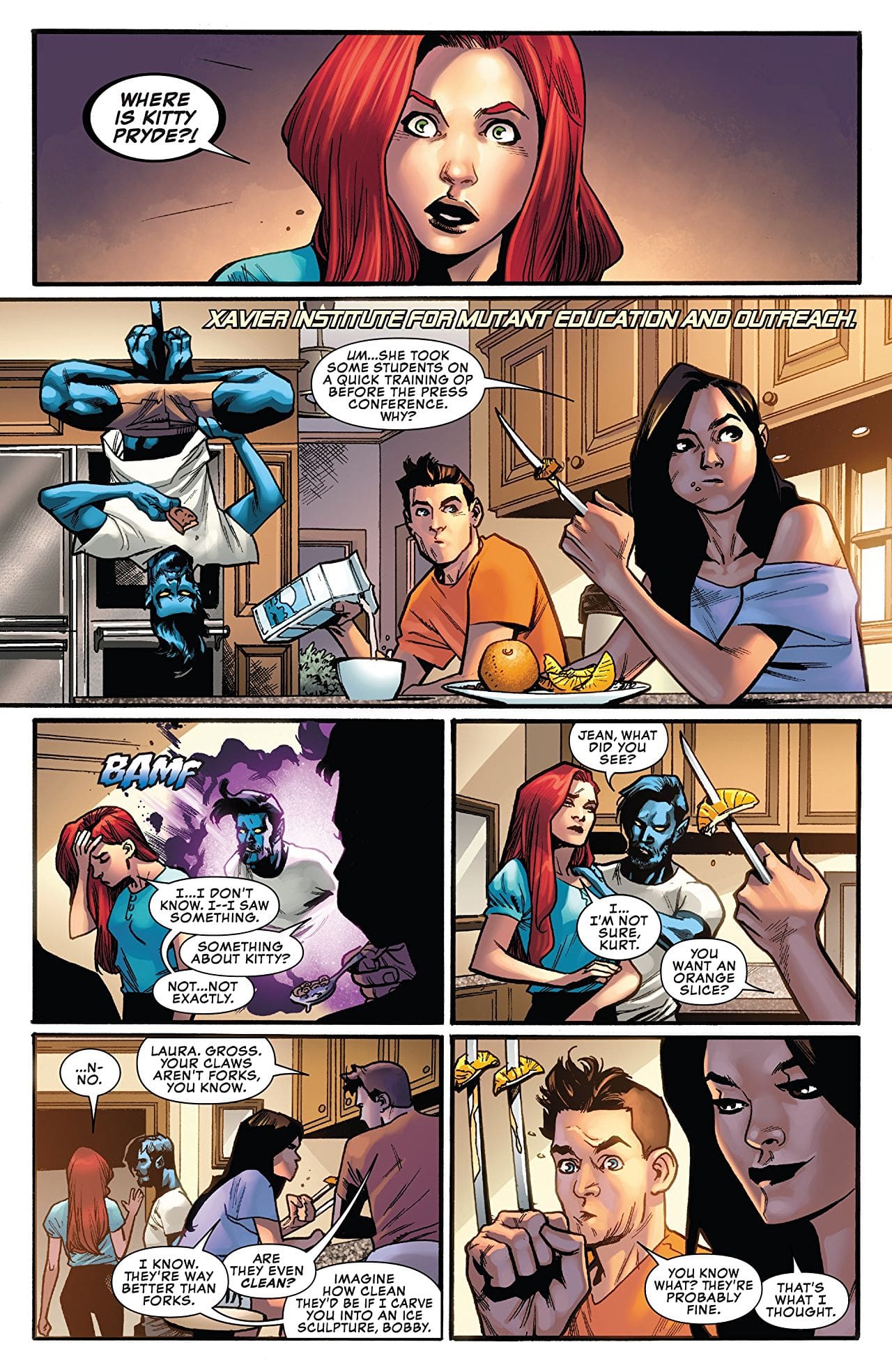
A number of things don’t seem to match up in the text. No one knows Kitty has taken her students on a training cruise this morning, but she’s expected to be deliver the speech/rebuttal in the afternoon? No one remarks that the pharmaceutical lab they’re speeding to defend is the same one with the vaccine that’s the centerpiece of the speech/debate happening later in the day? Jubilee and Bishop have an odd, stilted conversation that feels out of character for both characters, wherein Jubilee makes the joke that the X-Men standing in a crowd listening to a politician legislate them out of existence happens all the time.
It’s almost meta-textual, but fails. The main story ends with a huge fight and a lot of questions, but left me asking “So what?” There was no hook, no real drama. An X-Man was captured. A few others randomly disappear. But it lacks a sense of importance, urgency. X-Men as a franchise is known for its soap opera-esque characterization and it was just missing here. That the back-up stories also end in a big fight with no stakes and a few questions also speak to the odd tone of the book.
There are some upsides, though. The mix of characters is great and includes members from all eras of the X-Men, including the trainees – young X-Men who have been on the cusp of joining the main team for the better part of 15 years in some cases. The continued focus on the revived Jean Grey, a spill-over from the excellent X-Men Red, grounds the series. And the breadcrumbs dropped in the series do hint at interesting tidbits to come, but they’re not found in this issue.
Mahmud Asrar’s art varies over the course of the issue. At times, it’s great, and reminds me of his work on X-Men Red or Dynamo 5. But there are pages with poor layout, sloppy penciling and generic faces. You’ll be hard pressed to know if Archangel in civilian attire is supposed to be himself or Iceman. Iceman himself, when identified in text, looks like the younger version of the character recently floating around and not an adult. Faces and bodies have odd proportions. It feels rushed, either due to the weekly schedule or the extra pages. The art in the backs up varies widely as well, from sketchy lines and off-model characters to photo realistic and classic Marvel house style. It neither feels uniform or different enough to be a story choice.
In the end, this just isn’t an inspiring start to a new direction for these characters. It harkens back to the early 90s feel of the team, but nothing has seemingly changed from the last few reboots. The costumes? A few people who were dead are alive and vice versa? I’ll also offer that I am concerned about the arc of this issue being a vaccination for mutation. X-Men and hot button topics go hand-in-hand, but I found the writing around this subject to be very generic and I’m afraid it could very quickly dip into half-hearted “anti-vax” material and I don’t trust this team to handle it. It’s not a bad start, there’s a lot on the plate that can intrigue, but it’s also a bulky, “too many cooks” document that feels more afterthought than new direction.
Rating: 6/10