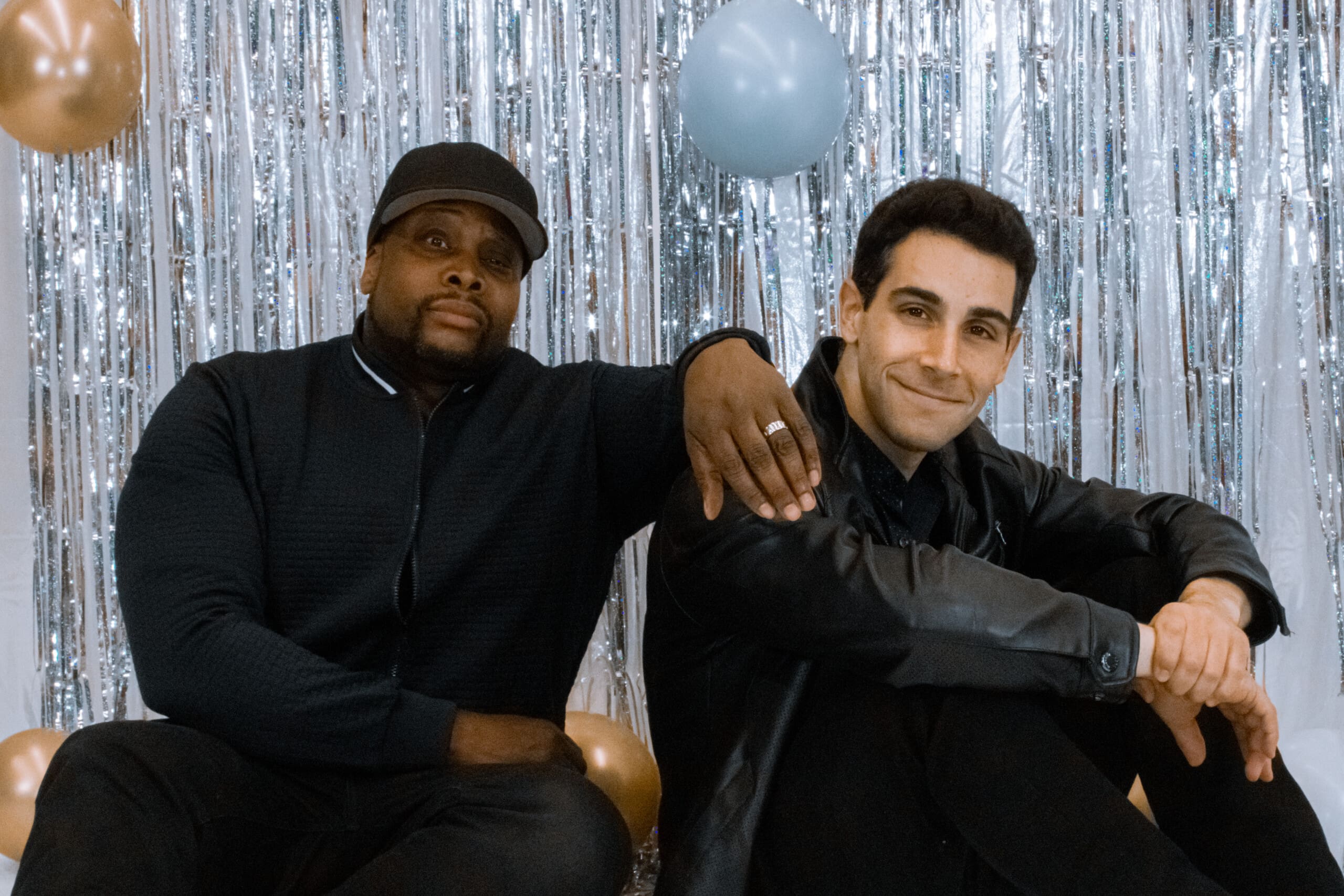
Never the Name is a bonafide Asbury Park supergroup consisting of members of Matt Cook and The Heard, The Bryan Hansen Band, and The Extensions. The common denominator of all these bands is singer/bassist Will Blakey — a man who not only is a terrific bass player, but has an absolutely powerful voice.
We caught up with Will Blakey to discuss the formation of Never the Name, mental health, the blessings and curses of being in a super group, and more as the band gets set to perform at Telegraph Hill Records’ What a Wonderful Year Festival on Saturday December 27 at The Wonder bar in Asbury Park.
Let’s start with the easy — the origin story of the band and the band’s name.
The origin story behind Never the Name is, I belong to a few bands. I am basically the resident bass player for a few bands. I’m with, in no particular order, Matt Cook and the Heard and Tom Briant from Never to Name is in that band. I am in The Bryan Hansen Band and Joshua Van Ness is one of the drummers for that band. Most notably, from the Asbury scene, I’m the bass player for The Extensions. Lisa LoVell was the keyboardist in that band, so I literally just took somebody from each of the other bands that I was in.
People know me to be in these different bands. For The Bryan Hansen Band, I do write a lot of the music for that band. So people would always ask me, ‘Will, when is the Will Blakey album coming out? When’s the solo album coming out?’ And I was like, I’ll get around to it. And then, so I did. I recorded a solo album. I did the entire album at home. Just kind of banged out all the parts, wrote all the songs, and mixed it, mastered it, and was about to put it out … and I was like, you know what? I don’t want a Will Blakey album. I wanted to continue to be a part of a band.
And, so I literally reached out to one member of the other three bands I was in. Thankfully, they all said yes, and that was never the name. And as far as the origin of the band’s name, my philosophy was, so long as you like the music. It’s “never the name” of the band that matters. Hopefully you remember it, but it’s not the important part, as long as you like the music.
So why decide not to go with that original solo stuff? And have you ported any of that over to this band, and reimagine it?
I don’t know, I like being in a band. When you’re the lead singer, you’re the front man, but at the same time, I didn’t want to be the front man and then also have it the whole project, bear my name. I just wanted it to be a band where, even though, yes, I’m the lead singer, everybody’s on equal footing as far as the dynamic of the band. As far as I’m concerned, we’re all doing our parts and being on equal footing with that regard.
As far as what we’re doing within the band, they were all very gracious. They just kind of learned the parts that I had already done, and we worked backwards that way. They knocked them out of the park. We’ve only done one live show. Tom and I have done a couple of solo acoustic shows together, but [the whole band] really knocked their parts out of the park. We’ve already even started tinkering with stuff for a follow-up album. I told them, ‘Okay, now that we’re doing it this way. I have a bunch of songs that I wrote, but you guys work on your own parts.’ So I’m looking forward to doing that just to hear how it all sounds when I don’t do all the parts. So that’ll be fun.
So, you put together your own all-star team. Take a minute to put your band members over individually. Why did you want each of these people, individually, in your band?
When it came to me trying to choose the musicians that I wanted to work with … First and foremost, I already knew the three of them. I already had established that they’re good people. They’re reliable musicians, and I get along with them. We don’t have any personality clashes, or there’s no egos, and there’s no unreliability issues and things like that, because unfortunately, with musicians, that does come up.
So once we cleared all of that, and I was like, I like these people, and I like hanging around them, and being around them, and I’m cool with them. Then it came down to can they play the parts? And then I was like, absolutely. I worked with Tom Briant in Matt Cook and the Heard. Matt Cook is piano rock, so the guitar in a lot of his songs is just a complimentary instrument. It’s not necessarily driving the melody of the song. So, I needed somebody who I knew could play a song and whether the guitar was driving the song, or whether the guitar took a back seat in the song, they would just play the part. They wouldn’t be caught up in their ego of ‘that part’s boring,’ or ‘I want to do this, or oh, I don’t want to do that.’ I just wanted somebody who I knew would be able to compliment the song as it is, and not be so concerned about how much they can shine, so to speak.
But also, if I asked them to play a solo, I knew that they could absolutely shred a solo, and that was Tom Briant, 110%. I had no doubt in my mind, I was like, that’s the person for that role. Because Tom is just like that. You want him to play two notes for seven minutes? He’ll play the two notes for seven minutes. You want him to play a solo that’s seven minutes long? He’ll play the seven-minute solo. Whatever you want. Tom is just like that. He’s a really easy-going guy.
As far as Lisa, who is the wild card in the band, I didn’t necessarily always need a guitarist, and a second guitarist, and always need a piano player. But I knew Lisa played both instruments. I knew, in fact, Lisa was looking to get back into playing guitar more in a band. So this is the perfect opportunity, because I need somebody who, while she does play some lead parts at times, somebody who would act almost in the capacity of a rhythm guitarist, but also switch to piano. I wrote and I performed the piano parts, but I don’t play piano as a primary instrument in most cases, so if the part was simplistic, I wanted somebody who would play it and let it complement the song. I knew Lisa would have no problem doing that. The funny thing is she turned around and told me that the parts are actually more challenging, and I thought that was funny.
And last but not least is “The People’s Drummer, “that’s what I like to call him, that’s Mr. Joshua Van Ness. One of the hardest-working drummers in the Jersey music scene. This man is all literally all over the world at times, and yet I managed to get him to agree to be in this band, and I am so grateful for that. But he’s just a talented individual. He has a lot of good ideas, he brings a lot of good energy.
He also plays guitar, so if you need somebody to bounce ideas off of, that’s another person who plays guitar in the band. And I knew that, given the time, he would lock down any part that I had written and performed and upgraded and I got to see that when we got to play, Happy Mondays at the Wonder Bar. He took the parts that I had played and gave them kind of an energy that can only happen in a live setting, so I was grateful for that.
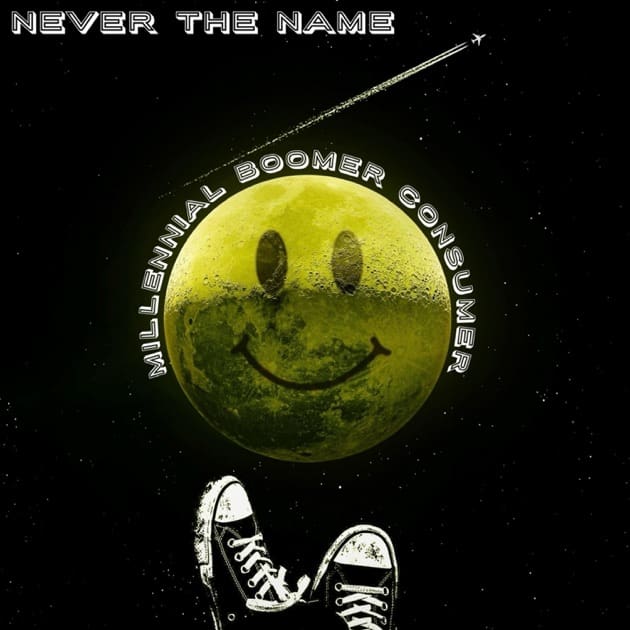
This year you released your first album, Millennial Boomer Consumer. When this record came out and you went through this process of making an unreleased album, building an all-star and then releasing this album. Did it feel exactly how you wanted or did it feel like the first step you wanted to take this band in?
I felt like this is exactly what I wanted. I felt a sense of accomplishment, and I felt a sense of pride. I felt a sense of relief, because I had put off doing that for so long, and it was literally — “There’s no excuse, why haven’t you just done this? For what it’s worth, you have a fully functioning home studio, you have all of the instruments, you play all of the instruments, what’s your excuse?” So once I committed to doing it, and then kept going, and kept going, and kept going, and then I had a lot of experience with mixing, mastering deep diving into that and then getting it all done and sitting back and listening to it amongst my peer bands.
I created a playlist that was actually full of bands that I’m in or bands from the indie scene that I admire. I put them all in and I would put the songs [of the album] as they were still unreleased in the mix. I would see if the volume dipped, if the volume changed, if the quality changed, and once it competed with all of those I was satisfied with what it was. Then an engineer, Pete Andrews, from Submergent, who records all of the Bryan Hansen Band stuff, brilliant, he listened to some of the stuff, and he was shocked that I had mixed it at home, and that I had mastered it myself. Once he gave me that well done, I was like, ‘Alright, I’m good, we can put it out.
You have this all-star team together, but has it been a little difficult to be to book shows because everyone’s so busy?
Yes, 100%. That is exactly what the issue is. We have some things coming up in the new year that we’ve managed to piece together. We’ll be announcing more of those shows in January. There are times where I’ll get a response from a venue, which I’m always happy when they actually respond, and I’ll look at my calendar, and just looking at my calendar, I might knock off two dates right off the bat. I take those two dates off the calendar, I text them the rest.
Joshua might knock off 3 or 4, because he’s the busiest person in the world. Lisa and I are both in The Extensions, so if I’m unavailable for an Extension date, that means she’s unavailable . And Tom plays with a couple of other bands as well, and he’s also very busy. We actually had a recent thing where we were trying to book a venue, and we got out as far as April, and we still couldn’t find one date. So, that’s the reality of it. I’m hoping people will see more of Never the Name in 2026, but I’m not expecting it to be three, four or five shows a month. You’ll see us sporadically, but we’ll be out there.
The name of the fest we’re doing this with is What a Wonderful Year. So, I want you to take me through 2025 for you, and for Never the Name.
The debut single came out in November of 2024, so that was a nice thing to get the ball rolling. Then in the new year we released two singles, two music videos.
We did a lot of fun and funny social media content, and we worked on the music to perform it live. Tom and I did a bunch of press, and a bunch of radio programs, and a bunch of streaming programs. We did a couple of duo performances, just he and I, on acoustic instruments, going as far out as New York. We were doing stuff like that, hanging out, getting to feel each other out in the sense of Never the Name, because we know each other from the scene and from different things. And just getting that feedback, that good feedback from people who listen to the album.
People were giving me their feedback, telling me what their favorite songs were, telling me what they liked and what they didn’t like. I shouldn’t say I didn’t like it, I didn’t have anybody say they didn’t like anything on the album. There was just one song that some people took some getting used to because there’s these tempo changes in it.
And then some learning, you know. I mean, our third music video was done with the dreaded AI. Everybody panics about that these days, but I learned how to do it over the course of a few months. Then, of course, in September, we did a show at the Wonder Bar, and that was a good time. 2025 has been very rewarding and very fulfilling, from the musical sense of creating something, finishing it, and putting it out into the world.
The album itself came out in its entirety in May. The feedback was positive. I started seeing it pop up on playlists. I would go places, and there would be a Never the Name song amongst a playlist of indie peers, and that meant a lot to go from a song from another artist I know from the Asbury scene or the Jersey scene, and all of a sudden, I’m like, “Oh, that’s our song! That’s a Never the Name song in the mix!” And then we were voted, Song of the Week, and Best New Artist, and things like that.
We had some accolades within the press, and people seeking us out to talk about mental health. One of our songs is about mental health, and there were all of these just great things that came from that. so 2025 was a very rewarding and fulfilling year, so it truly was a wonderful year, and I’m looking forward to what 2026 is gonna bring us.
Mental health awareness is something we promote and take seriously on the site. Can you discuss the song and why you decided to put it out?
We got a pass, so to speak. I got the easier version of it. There is a song that I have written for our second album that is gonna be a bit tougher, because that one is actually, really me talking about me. But the song “Consequences,” which is our second single from Millennial Boomer Consumer, we actually filmed a music video right at the House of Independence in Asbury Park. That song is about what you would want to say to someone that you care for when you know that they’re contemplating suicide?
Which, you know, everybody’s afraid to talk about. Most people don’t even like to say the word, but that’s what the song is about. What do you say to somebody that you care for, that you know is struggling? That’s why the first lyric in the song is, “Please be here tomorrow.” I want to see you tomorrow. I want you to continue to be here. You matter. That’s one of the key lyrics in the song. Just being unafraid to say those things, and maybe that was my way of kind of getting it out there.
You don’t want to tiptoe around the subject. You need to face that subject directly, because you never know what’s going to happen tomorrow. It may be too late. In my case, that story doesn’t have a happy ending. The person I wanted to say these things to never even got to hear the song. I learned that the person had taken their life at the same time I was writing the song. I finished the song one week, and I found out the next week that the week before that person had taken their life, and I never even got to express those things to them. I mean, I had tried. I can say with a clear conscience I had tried, but you always left feeling like maybe you could have done better, you could have done more.
So I put that out there. If you gotta grab that person and say, “Hey, you matter.” So, that was difficult, but necessary.
And, thank you for sharing that, because it’s not easy for people to talk about. I commend you for that, and putting it out in music form so people would hear it. It’s stuff more people need to do.
And now, we have to transition to the final question. Telegraph Hill Records, they’re putting the show on. Talk about your relationship with them, and how they’ve, you know, worked with you, helped you in the band throughout the making of this, or even the second record.
Telegraph Hill is an indie staple at this point. I haven’t really worked with them too much directly with Never the Name, but they have been very helpful with circulating the music, because we’ve appeared on Telegraph Hill Radio quite a few times, so I’m certainly grateful for that. This will be our first show with them. So I’m really just glad that they threw us in the mix with everybody else, because like I said, Telegraph Hill Radio has honestly played all three singles, the acoustic version of one of our singles and at least two songs from the album that were not singles. So, they have definitely given us a spin or two or seven on their radio program. That’s been something that we’ve been grateful for, because when you put out an album and you’re a new band, you just want to participate. You just want to belong amongst your peers. Especially in this case, where I’m in so many bands that are already in that scene, and I’m around these people all the time — it’s like, ‘Hey, I’ve got this new project, could you include this too?
And I don’t even have to ask, they throw it in the mix. So they’ve been very, very kind to us with that regard, and they’ve been very, very considerate in thinking of us in the first place. So that means a lot. That’s been my experience with Telegraph Hill, and again, being asked to do what a wonderful year, that was a huge thing. I’ve done it so many times with The Extensions, and I’ve done it a couple of times with Bryan Hansen Band, but it meant a lot to just be turned around and asked “Hey, we want Never the Name.” So that was really cool. So I’m grateful to them for that.