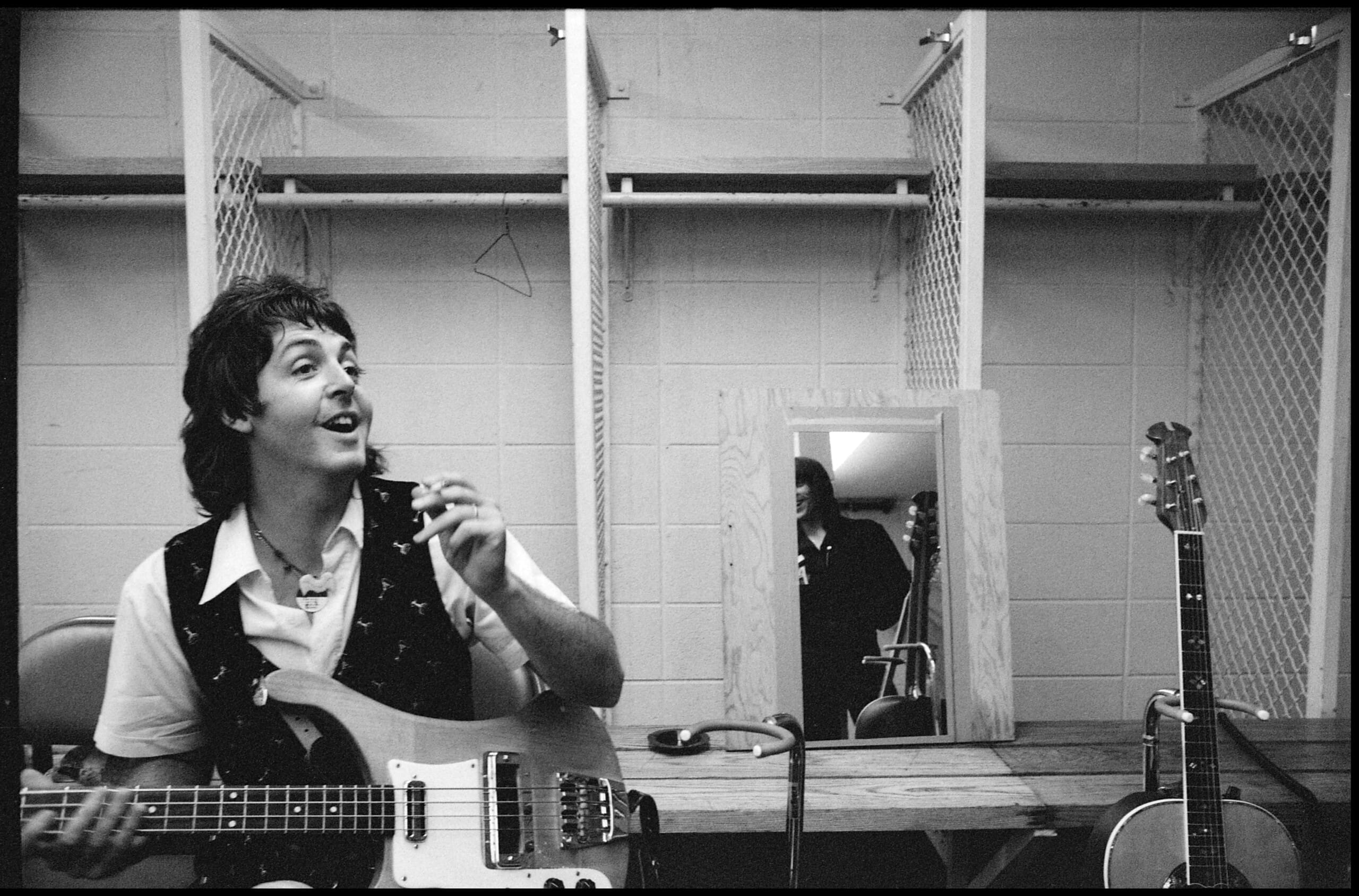
You’d be hard-pressed today to find someone who doesn’t know who the Beatles are, but what happened after the Beatles is far less remembered in pop culture.
Man on the Run, premiering today on Prime Video, is the lesser-known story of the years after the Beatles’ breakup, told mainly through Paul McCartney’s perspective, who also serves as the Executive Producer. It begins in late 1969, just days after the Beatles renegotiate with EMI Records, when John Lennon announces to his bandmates that he’s leaving the band. However, his announcement is never made public due to the recent contract with EMI. McCartney, uncertain if he’ll write “another note, ever,” heads to Scotland with his new wife Linda, her 6-year-old daughter, and their newborn daughter. His absence sparks rumors that he’s left the band, been replaced, or even has died.
At just 27, McCartney had already reached the height of fame, but in many ways, his life was only beginning, and, as he often repeats throughout the film, he still had a lot of growing up to do. Man on the Run is largely about this coming of age. It focuses on McCartney after the Beatles, from his quiet life making folk art and growing his own food, to his struggles with creating a new band, Wings, and his complicated relationship with Lennon.
The film doesn’t break new ground or make bold claims—probably because much of the off-camera interviews are reused from previous recordings. But even the new voice-overs from McCartney offer little new insight. It’s unfortunate because many moments in McCartney’s life that fans would love to hear his side of remain unexplored (not least of which is his infamous interview hours after Lennon’s death).
While the film isn’t a must-see for Beatles and McCartney fans, director Morgan Neville demonstrates his talent for making limited footage engaging (see Piece by Piece). His choice to omit any on-camera interviews allows Man on the Run to step back from a traditional documentary approach, even if it feels similar in many ways. However, this also seems to distance the viewer from what should be the film’s core: McCartney. Despite the archival footage and home videos, Neville fails to create the level of intimacy that this kind of documentary could have fostered between McCartney and his audience.
Man on the Run offers a nostalgic look at McCartney’s life after the Beatles, and for that, it’s worth watching. But it won’t turn new fans into lifelong followers, nor will it satisfy long-time fans seeking a deeper connection.