If there’s anything Mitski knows intimately, it’s heartbreak. Some of her greatest hits — take “I Bet on Losing Dogs,” “Nobody,” and “Washing Machine Heart,” for instance — lament grief while wrapping it up in a melody that really lands the punch. Nothing’s About to Happen to Me is no different, but in the way that it is easily the strangest installment of Mitski’s discography. Running at just under 35 minutes, Nothing’s About to Happen to Me is a tried-and-true Mitski masterclass in less being more, all the while teetering just on the brink of insanity with an almost suffocating riff of self-aware mortality.
“In a Lake” starts the album with the same twanginess that pervaded this album’s predecessor, The Land Is Inhospitable and So Are We. Lyrically, Mitski sets the listeners up with stories of claustrophobic loneliness, self-imposed misery, and longing, while the sonic chaos itself is a whole other beast.
However, it’s not a Mitski opening track if there’s not a jumpscare, and “In a Lake” follows her same formula of hooking listeners in by tossing them into the metaphorical deep end. Despite her last three albums following this method, it never fails or feels overdone, as the build-up in this song alone proves that Mitski knows how to go in with a bang while also already making you want to fucking cry. A seamless transition from the atmosphere of the last album to this one, “In a Lake” doesn’t even end on a consonant note: the closing lyrics “In a big city / you can start over” coupled with its last anticipation tone imply that her starting over in question is imminently at hand.
“Where’s My Phone?” is the figurative deep end that “In a Lake” prepped us for, and already on track two, listeners are fighting against a soundwave current. Reminiscent of Mitski’s earlier albums with grungy, gritty guitar, the intoxicating melody of “Where’s My Phone?” turns a mundane, daily issue into a poetic and heart-wrenching analogy for anxiety. A musical shapeshifter, Mitski demonstrates within these first two tracks her mastery of culminating a series of different vibes into one song. No matter what genre she aims to embody, she basically Kelly Clarksons it and ruins it for anybody else’s attempts at genre-jumping.
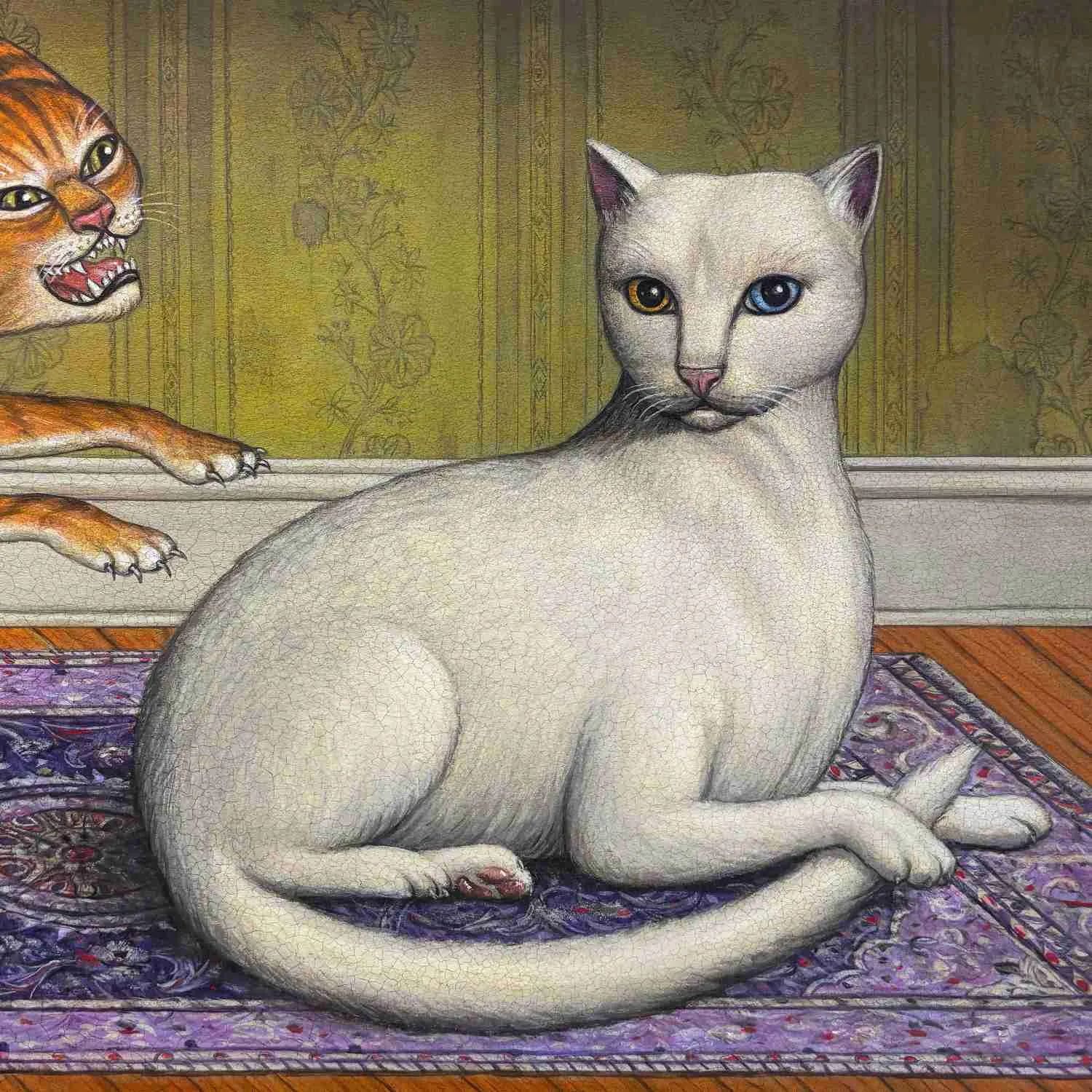
The rest of the album practically serves as Mitski’s hopscotch grid. “Cats” calls back the similar ambiance of “Frost” from The Land Is Inhospitable after the bedlam of “Where’s My Phone?”, and even serves as this album’s lyrical antithesis to the later swingy “I’ll Change for You.” It’s also the first instance in this project where Mitski uses the imagery of pets to represent stages of loyalty and attachment, with cats being a recurring motif for solitude in both lyrics, titles, and the album’s cover art. Thick basslines then come back to carry the instrumental of “If I Leave,” where Mitski illustrates her ability to make self-deprecation and dependency simultaneously romantic and aching.
“Dead Women” and “Instead of Here” anchor the album in the middle as the most lyrically devastating, with the latter perhaps ranking as one of Mitski’s most crippling songs to date. While “Dead Women” references the pressures of being seen as half a person and only an object of entertainment as a woman in society, “Instead of Here” details the all-consuming embrace of Mitski’s mental abyss.
The album’s sophomore single, “I’ll Change for You,” almost sets the tonal shift for “Rules,” which is maybe the weakest song on the album and the musical outlier. Despite the lack of conviction present in the composition of “Rules,” it nevertheless stands as a testament to Mitski’s willingness to experiment, much like Laurel Hell’s “Should’ve Been Me.”
“That White Cat” brings listeners back with the driving undercurrent and desperate vocals seen in 2014’s “Drunk Walk Home,” almost solidifying the manic energy running rampant through each track. Every few albums, Mitski likes to remind us that she has more vocal range and power than just the soft crooning she does in most of her songs, and every few albums, I am in awe of her raw talent. “Charon’s Obol” is yet again another occurrence of pets mentioned in this album, with the unwavering devotion that only a dog can afford to have. “Lightning” is the culmination point of Nothing’s Going to Happen to Me, as the last lyrics of the entire project sort of call out the title of the album itself: “I can hear the song of my death / Singing for the lightning to come / Calling to thе thunder, ‘Polo.’” Nothing’s about to happen to her, yet she’s playing as the instigator for that something to happen.
Though boasting less of a sole sonic coherence in contrast to her other albums, Nothing’s Going to Happen to Me listens like tides that push you away and pull you back in. From themes of others having more of a say than you do in your own life to the devotion that one feels for a lover, Mitski once again turns her own sorrow and suffering into a group therapy session. The borderline psychotic break that this album details, though, both through its instrumentals and imagery, is less a cry for help and more a cathartic release. In this way, Mitski’s eighth album falls in line beautifully with her remaining discography. Nothing’s Going to Happen to Me transforms the story of the human experience into 30 minutes of painful relatability, not unlike a bruise you want to keep pressing on until Mitski’s next release.