Written by Avani Trivedi
Radioactive Emergency, a new limited series, is now streaming on Netflix for viewers drawn to slow-burn disaster dramas rooted in real events.
The premiere episode begins in a scrapyard, where two men stumble upon a discarded device, unaware of what it contains. The scene is quiet, almost uneventful, which makes it more unsettling. There is no dramatic music or immediate sense of danger, just curiosity and opportunity. As they pry the machine open, the camera lingers on the glowing material inside, hinting at the catastrophe to come. The pacing here is deliberate, forcing viewers to sit with the tension of knowing something the characters do not.
As the story shifts away from then and into the city, the tone begins to change. Families go about their daily routines, children play and street vendors sell goods, but small signs of something being wrong start to emerge. People fall ill without explanation, and objects pass from hand to hand, unknowingly spreading contamination. The transitions between scenes are subtle but effective, creating a sense that the disaster is slowly but surely getting everywhere. Unlike fast-paced thrillers, the show builds fear through absence: the absence of answers, the absence of visible danger and the absence of control.
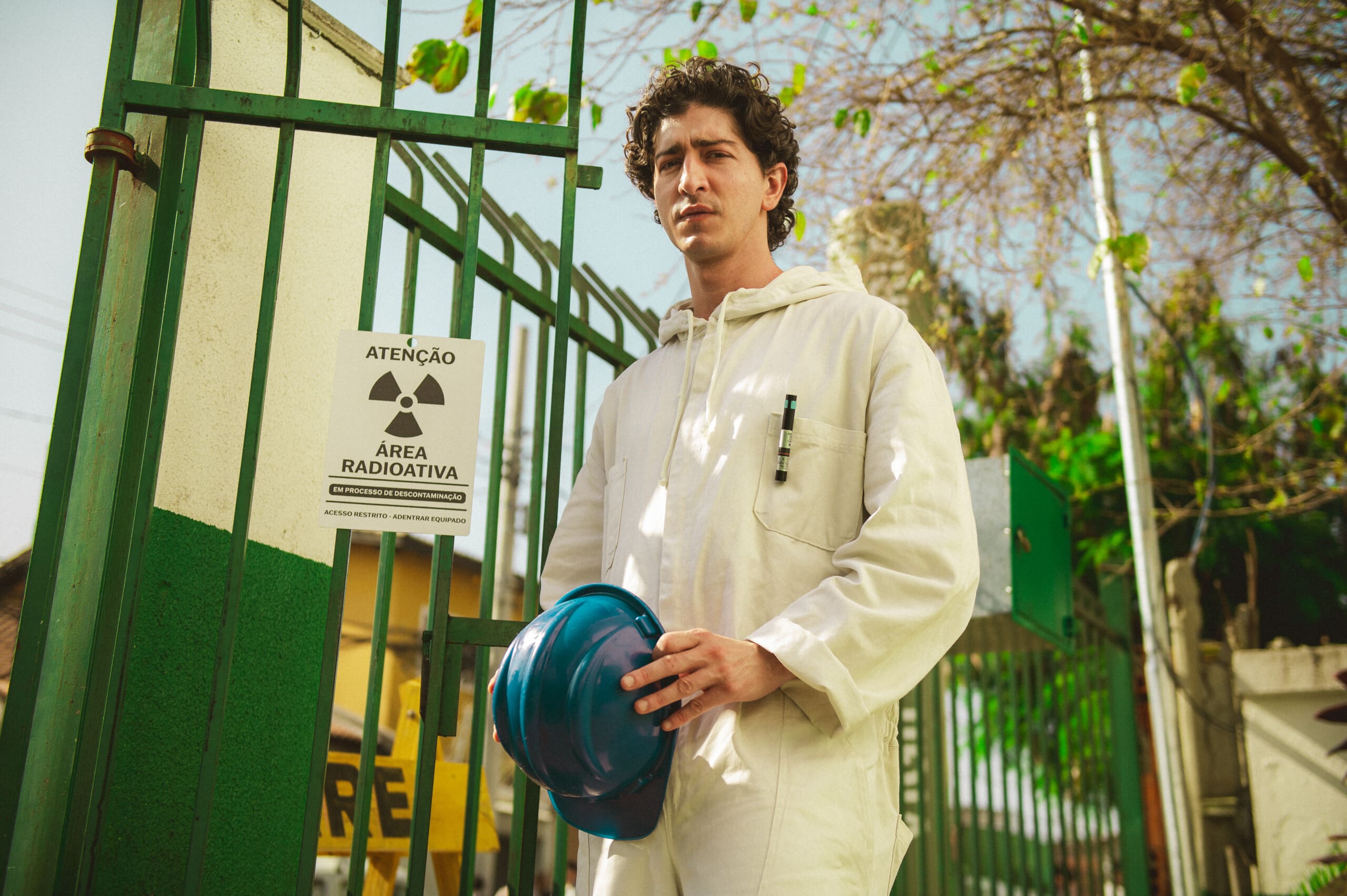
Dr. Gabriel (Johnny Massaro, God Save the King) is introduced in stark contrast to the unfolding chaos. His first scene is calm and controlled, set in a laboratory with muted colors and steady camera work. He speaks with precision, grounding the narrative in science, even as the situation grows increasingly uncertain. His character serves as an anchor, someone trying to make sense of the invisible threat. However, even he is not portrayed as all-knowing. There is hesitation in his decisions, reflecting the reality of dealing with something so poorly understood in the moment.
The visual contrast between spaces is one of the show’s strongest elements. Contaminated areas are not marked by obvious destruction but by ordinary environments, homes, hospitals and markets that slowly become sites of danger. The color palette remains grounded, almost muted, reinforcing the realism of the situation. When patients begin arriving at hospitals, the shift is noticeable but not exaggerated. There is no sudden chaos, but rather a growing sense of confusion as medical professionals struggle to identify what they are dealing with.
Much like the opening, the pacing remains steady throughout the episode. This works in the show’s favor, as it mirrors the nature of the disaster itself. Radiation does not create an instant spectacle; it spreads quietly, often going unnoticed until it is too late. The narrative structure reflects this, weaving between different perspectives without rushing towards resolution. Scientists, doctors and civilians are all given space, though not all are equally developed.
Where the show occasionally falters is in its attempt to balance these perspectives. Some personal storylines are only briefly introduced and then sidelined as the broader crisis takes center stage. While these moments add emotional weight, they are not always explored deeply enough to leave a lasting impact. The focus remains on the scale of the disaster rather than the intimacy of individual experiences.
The episode also places a strong emphasis on institutional response. As authorities begin to realize the severity of the situation, the narrative shifts toward coordination efforts, tracing contamination and managing public fear. These scenes feel procedural at times, but they add a layer of realism that strengthens the overall story. The tension here is not just about the radiation itself, but about how systems react under pressure – often too slowly.
One of the most effective choices the show makes is resisting the urge to over-explain. Scientific concepts are introduced, but not in overwhelming detail. Instead, the focus remains on the consequences of those concepts. This makes the series engaging while still maintaining a sense of authenticity. Viewers are not expected to fully understand the science, much like the people in the show, only to grasp its impact.
The episode ends without a clear resolution, reinforcing the idea that this is a slow-building story. Unlike shows that rely on immediate payoff, Radioactive Emergency is more interested in setting the stage. The threat is established, the key characters are introduced and the scope of the disaster begins to take shape. It leaves viewers with a lingering sense of unease rather than a dramatic cliffhanger.
This is a good watch for viewers who enjoy grounded, atmospheric storytelling. The series leans into realism, focusing on how ordinary life can be disrupted by unseen forces. For those interested in disaster narratives that prioritize tension and subtlety over spectacle, Radioactive Emergency offers a compelling, if sometimes uneven, start.