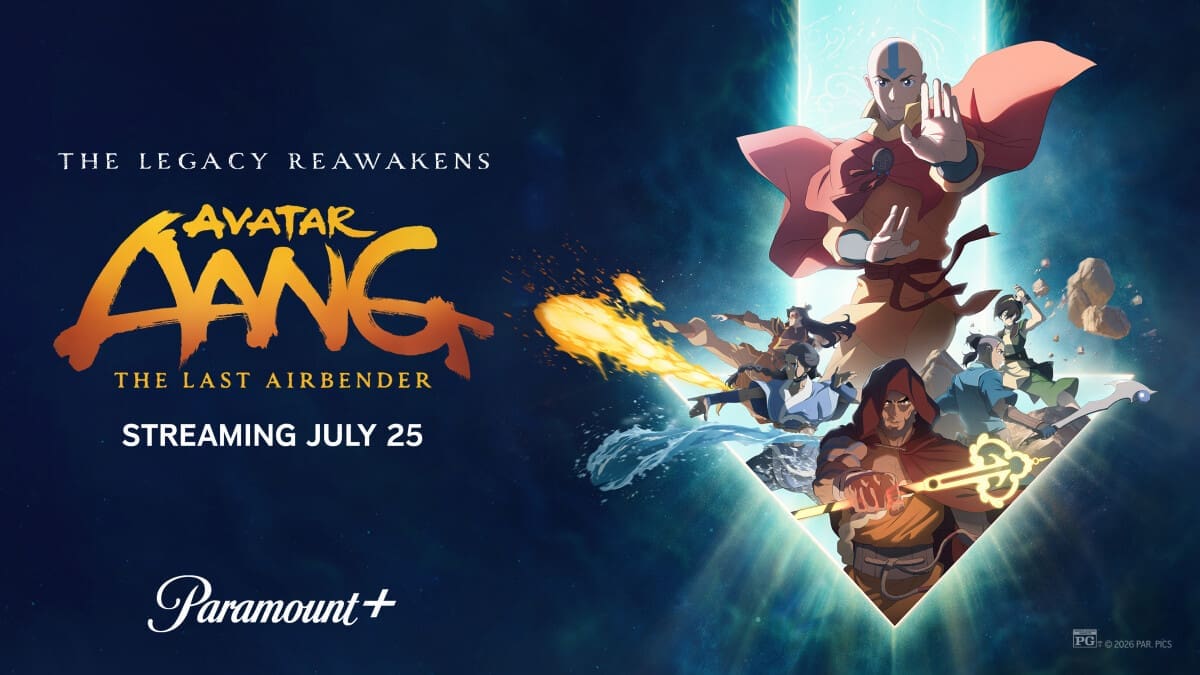
The long-awaited continuation of Avatar: The Last Airbender has arrived in Avatar Aang: The Last Airbender. It’s a shame it was released straight to streaming on Paramount Plus, since this is a film made for theaters. Fans of the original series might get a kick out of some old references and seeing their favorite characters all grown up, but the animation is the true standout in this film.
Finally grown up, Aang (Eric Nam, Traitors US) and his team (known as the “Gaang”) search for clues to a missing Avatar who Aang cannot contact. They face off against The Denied, a group of non-benders hot on their tail and find the mysterious Tagah (Dave Bautista, Guardians of the Galaxy) who can guide them to the lost staff of Avatar Sonam. Aang is delighted by the prospect of a new mentor figure while Katara and the rest are more than skeptical of this stranger’s knowledge and old ways.
The new voice cast suits the characters in their adulthood. Román Zaragoza (Ghosts) sounds the most accurate to Sokka’s voice from the series. Steven Yeun (BEEF) has the best vocal performance as Zuko, despite missing Dante Basco’s iconic raspiness. Oscar winner Ke Huy Quan (Everything Everywhere All at Once) and Taika Waititi (Our Flag Means Death) have vocal cameos that utilize their distinct tones. Admittedly, both Quan and Waititi’s scenes were brief and you’re left wanting more, but it’s still a shock that this star-studded voice cast didn’t get the big screen treatment.
While this movie tried to give fans enough of each character, it’s very Aang-focused. Aang’s journey trying to restore airbending is transformative for him, but characters like Sokka and Toph (Dionne Quan, Rugrats) have little to do and are one-dimensional, almost regressing to former versions of themselves. Even Katara (Jessica Matten, Dark Winds) is depowered to give Sokka something to do – seriously, when does Katara ever run out of water? There were moments to showcase how close the gang has become despite going their separate ways after the finale, but ultimately the movie has little team effort coming from Team Avatar.
The runtime felt very limiting to the film, specifically during the fight scenes. The battles–while beautiful–felt very long. There were multiple big fights in the movie that seemed to take up significant time that could’ve been spent showing character interaction and how relationships have changed since they were kids. However, the choreography and animation is stunning enough to look past the lengthy brawls.
A better use of the movie’s time could’ve been to focus on The Denied, a group of non-benders different from the other radical groups we’ve seen before in The Legend of Korra. While they eventually become relevant to the plot, they are never a real threat to the main cast. With a little more time, they could’ve been unforgettable foes.
The animation of this movie is what makes it a worthwhile viewing experience. The bending is flashy and colorful, as is the spirit world despite being tonally different from the original series. The bending and fight scenes alone would’ve been spectacular to see in theaters, despite the story lacking proper development.
Die-hard fans might love to return to the world of the Avatar, but casual enjoyers might want to just rewatch the original show for more cohesive adventures. The finale of Avatar: The Last Airbender is only a little bit shorter than this movie, and showcases each character’s development properly without prioritizing anyone too much. While there are moments Avatar Aang: The Last Airbender that are worth the price of a theater ticket, the enjoyment found in the original show is truly priceless and irreplaceable.