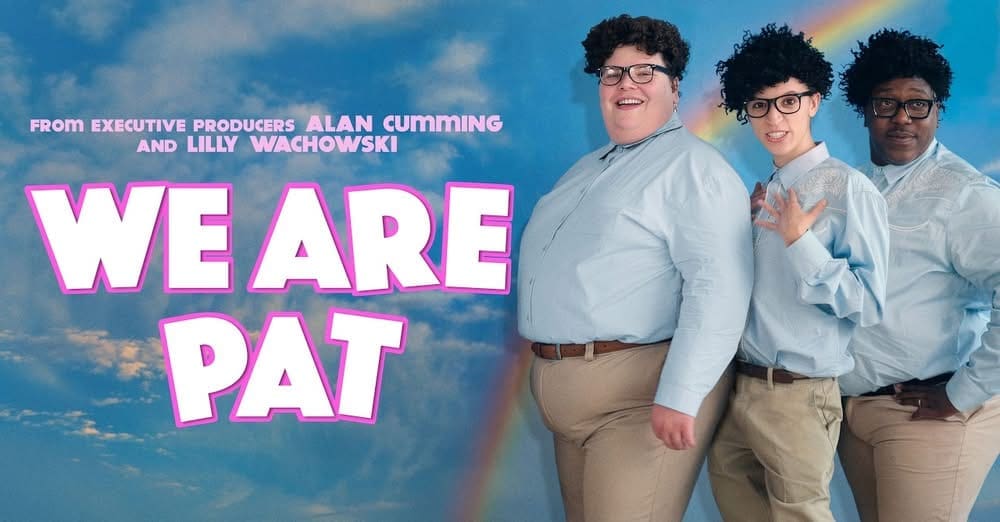
We need to talk about Pat.
More than 30 years after a curly-haired, middle-management office worker stepped onto the stage of Saturday Night Live and became a polarizing cultural phenomenon, the character is back. We Are Pat, a documentary now streaming on Peacock, is prompting a cultural reckoning. What begins as a nostalgic pop culture excavation quickly evolves into a profound reflection on gender identity, the ethics of authorship and what happens when a joke outlives its era.
At the center of this dialogue are Julia Sweeney, the legendary performer who created and portrayed Pat in the early 1990s, and Rowan Haber, the Sundance Fellow and award-winning director who set out to dissect the character’s complicated legacy. In a joint interview with The Pop Break, Sweeney and Haber discussed the film, the parallel climates of the 1990s and today, and how an oblivious office worker became the focal point for a national conversation on gender.
“It’s actually thrilling, because it was such an off-the-cuff kind of creation of mine,” Sweeney said, reflecting on how it feels to still be discussing Pat decades later. “Then it got accidentally hugely popular, which was great for, I guess, being in show business. And then I made the movie (It’s Pat), and then it was a big bomb. And then I just tried not to think about it for 30 years.”
Defined by an oblivious nature and a lack of gender markers, Pat captivated millions on SNL. But as understanding of trans-ness and non-binary identities evolved, the character faced cultural backlash.
For Haber, the current cultural moment made it the perfect time to reopen the archive, seeing a striking parallel between the 1990s and today.
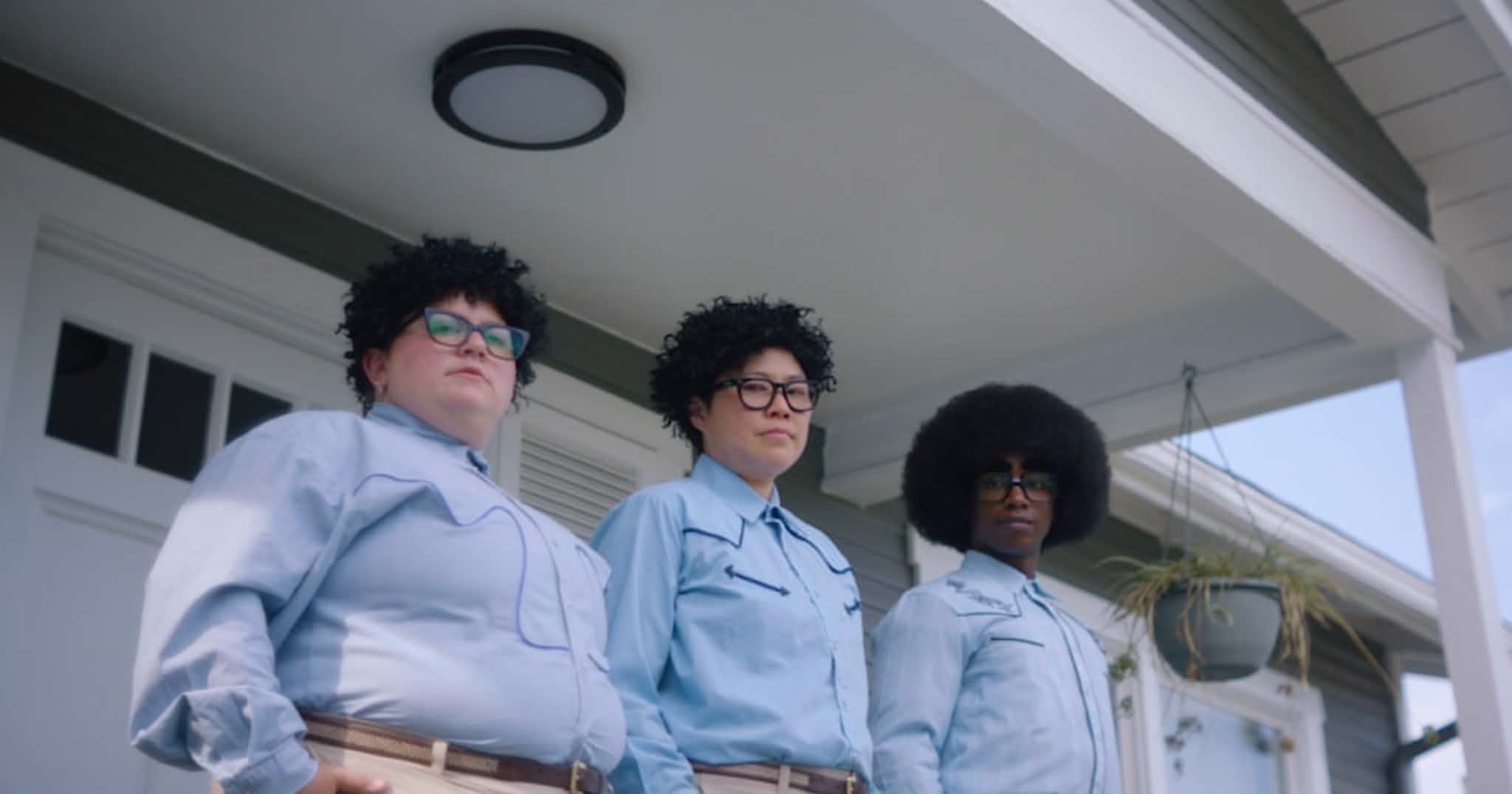
“It is such a moment for trans comedy that’s sort of interesting, but also there’s been a huge backlash against trans people,” Haber explained. “So in a way, I felt like it was a really parallel moment to the ’90s. In the ’90s there was this kind of step forward with gender and sexuality, it was so bold and culturally it was so queer in a lot of ways, but then there was this huge, really conservative backlash. Similarly, that’s happening today.”
By revisiting Pat, Haber sought to evaluate how much society has actually progressed. “I felt like, let’s take a look at this character who existed then and kind of apply them to today and understand: how far have we come? Have we come far? What does progress mean politically, and what did progress mean in terms of the way that we think and talk about gender?”
To build the narrative, Haber opted for a hybrid structure weaving five elements — a simulated writers’ room, sketches, archival footage, interviews, and verite — enhanced by a heavy graphics treatment. Haber credited co-writer and lead editor Hannah Buck for shaping the structure with an experimental perspective, while Alex Bohs assisted with finishing.
“We just knew that we were going to be a bit experimental in the editing process,” Haber said. “So, I just knew that we needed an editor that was extremely strong at structure, but also had an experimental brain. Bringing on really amazing editors was what really helped us make it cohesive, because it is almost like a collage.”
A vital component is the inclusion of modern trans and gender-nonconforming artists, including Molly Kearney, Murray Hill, Robin Tran, and Abby McEnany, some of whom were tasked with “rewriting” Pat through an inclusive lens. For Sweeney, who was 30 when she played Pat and is now 66, engaging with these commentators was transformative.
“I really felt excited to get to know people in the non-binary, LGBTQ, and intersex community, which is thrilling to me,” Sweeney said. “I feel like I accidentally pricked something that really gushed things out from that community that I wasn’t really aware of, and I’ve always been interested in that.”
Hearing from those hurt by the character’s legacy was therapeutic for Sweeney. “It felt good to just work it all out with everyone, hear what they had to say, hear the people who were hurt and why, which I totally get, and also feel justified in what I did, too. It wasn’t naive, and maybe inept in some places, but it was also good-hearted. So I feel at peace with it.”
This collaborative process also shifted Sweeney’s perspective on who truly owns a fictional character once it enters the cultural lexicon.
“I don’t feel proprietary about it,” Sweeney noted. “One thing I didn’t know about show business before I was in it is how much it becomes a collaboration between you and the audience. It’s a very feedback-loop kind of thing.”
Haber agreed, noting that audiences have a natural tendency to reclaim the art they grew up with. “You can have these beloved characters that you then can repurpose for yourself in the way that you want,” Haber said. “You can take what you like and leave what you don’t like.”
Sweeney believes that Pat’s lasting power lies in the character’s ordinary, non-sexualized nature. While 1990s gender-bending icons like Prince or k.d. lang challenged norms through a highly stylized, sexualized aesthetic, Pat was simply Pat.
“Pat was a regular person who worked in an office, it brought up the idea of gender and sexuality definitions just in a regular sense,” Sweeney said. “Pat was just oblivious. So, it kind of made it easier to think about gender. I think it sparked an idea of like, ‘Well, why are men’s haircuts differently priced than women’s haircuts?’ and things like that. I’m proud of that.”
With the film now streaming on Peacock, both creator and director hope the documentary fosters a deeper appreciation for the character’s place in comedy history.
“My personal bias is that I want everyone to love Pat,” Haber said. “I want them to think Pat is cool. I want them to be able to love Pat.”