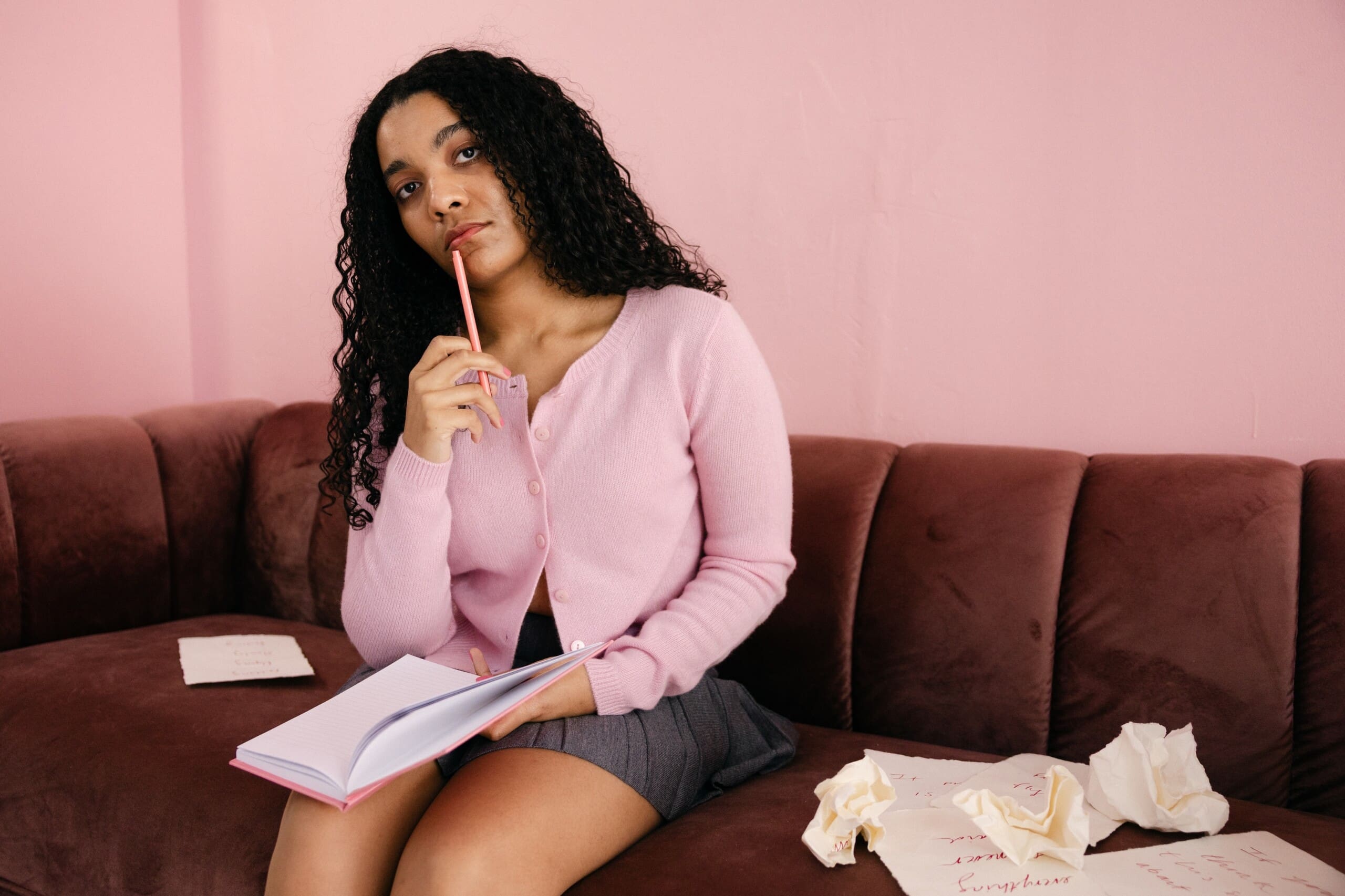
Ren Genevieve is no stranger to vulnerability, if her first EP, tongue tied, is anything to go by. With track after track bursting with intermixed vocals and a distinct lyrical openness, Genevieve pours her soul into each song, making them a tangible listening experience.
The sonic shift in her cheeky upcoming single “Everything I Never Said,” the titular track on her upcoming EP, proves this musical expertise further. Written and composed by Genevieve and produced alongside Joshua Monroy (Elton John, OutKast, Justin Bieber), “Everything I Never Said” is the playful dichotomy to Genevieve’s otherwise soulful discography.
Ahead of the single’s release, we sat down to chat with Genevieve about her newest song, love for music, and the importance of leaning into her feelings.
So just to start, can you just describe for me how your music career began? Like, what started you getting into music, and how did you think you wanted to pursue it?
I’ve been told I came out of the womb singing and loving music, and I really do feel that way. I’ve been singing since I can remember. I think [when I was] two, two and a half [years old], I wanted to join the church choir, like the adult choir. I was really adamant. I was like, “Yes, two-and-a-half-year-old me can really add to this.”
(laughing) They needed you in that choir.
(laughing) Yeah, I was really, really gunning for it. I didn’t make it into the choir at two, unfortunately, but I did later on sing in the choir. But I got into musical theater. My parents put me in dance classes, and I did singing lessons. And then it was through doing musical theater that I went to the Manhattan School of Music’s pre-college program. I studied classical voice there from 12 [years old] to 17 [years old], through middle and high school. So I really, really think that that experience solidified my love of music, and it really helped me learn a lot about music theory and how to approach singing and writing and all of that. It really influences how I am now.
 And then I decided I wanted to do a combination of musical theater, but I was always writing my own stuff on the side. I think I wrote my first song maybe when I was 10 or so. From then on, I was writing, writing, writing all the time. It wasn’t until college that I really shared my music with anybody else. But I think that all of those experiences, learning about music and being surrounded by a community of artists, really inspired me to keep going and to help me fall in love with music in an even deeper way.
You said you didn’t really start sharing your music until college. What prompted you to start doing that? Was there a specific moment where you were like, “Okay, I’m gonna start performing”? How did that happen for you?
Yeah, I actually was in a practice room, which I would do a lot. After musical theater classes, I would go to a practice room. I was supposed to be practicing for school, and what often would happen is I’d practice for a little bit, and then I would veer into writing. I would just go and write for a couple of hours until the practice rooms closed. And this one night, I wrote a song. I wrote my first single, which I put out, called “I Like You (I Think).” I wrote that in a practice room in 30 minutes. And I was like, “I really, I really like this one. I think this feels different. I feel like this sounds like something I want to share with people.”
I actually sent it to a teacher of mine for feedback. I was like, “Hey, so I’ve kind of been getting into writing, and I wrote this song, what do you think?” And he asked to share it with the class.
That sounds pretty nerve-wracking. I’d be like, “No, absolutely not.”
I was like, “Oh, yeah. Sure, I guess. Yeah, you can share it with the class.” I think that song ended up not being shared with the class in the end. We ended up having a different writing assignment for that class, and I had to play it for the class. We all went up one by one, plugged our phone into the aux, and played it through the speakers in the classroom. And that was the first time I’d actually watched people react to my music in real time.
After I played it, everyone was like, “Are you gonna put that out? I would listen to that. You’re gonna release that, right?” And I was like, “Oh, um. Yeah, I guess I will.” That really sparked the idea for me that my writing was something that other people might actually resonate with and something that needs to be shared. I think ever since then, I’ve stuck with sharing it.
That’s awesome. So then, with your musical theater experience and also how you trained classically with voice, do you find yourself, when you’re writing music, incorporating classical or musical theater elements into your music? Do you integrate the two into what you’re creating?
I think it really depends on the song. I write in a lot of different ways. I will, often for lyrics, have an idea for a phrase or a verse or chorus or whatever. My notes app is full of different blurbs and pieces of things. Most of the time, they are accompanied by melody. But sometimes I do use that classical structure, and I think, “Actually, I want to write a song that’s using this key, and that’s using this kind of cadence. I want to play around with how that classical structure could exist in a pop song.” So I think that there is some of that for sure that goes on. I really enjoy music that has complexity and depth, and I think that I try to integrate all of those influences when I am writing.
In terms of musical theatre, I don’t know if it’s super conscious on my part. I think that what musical theatre has informed is maybe my writing style and the importance of the words that are being used. When I’m editing a song or in a moment when I have to pick and choose what can stay and what can go, [musical theater] helps me to figure out, is this moving the story forward? Is this giving somebody insight into how I’m thinking and feeling about the situation? Or is it just because? And if it’s just because, is it super necessary? Sometimes “just because” is fun and that’s great, and it stays, but sometimes it is a reason to let it go and to let the line be something else. So I think they definitely are influential in how I think about writing.
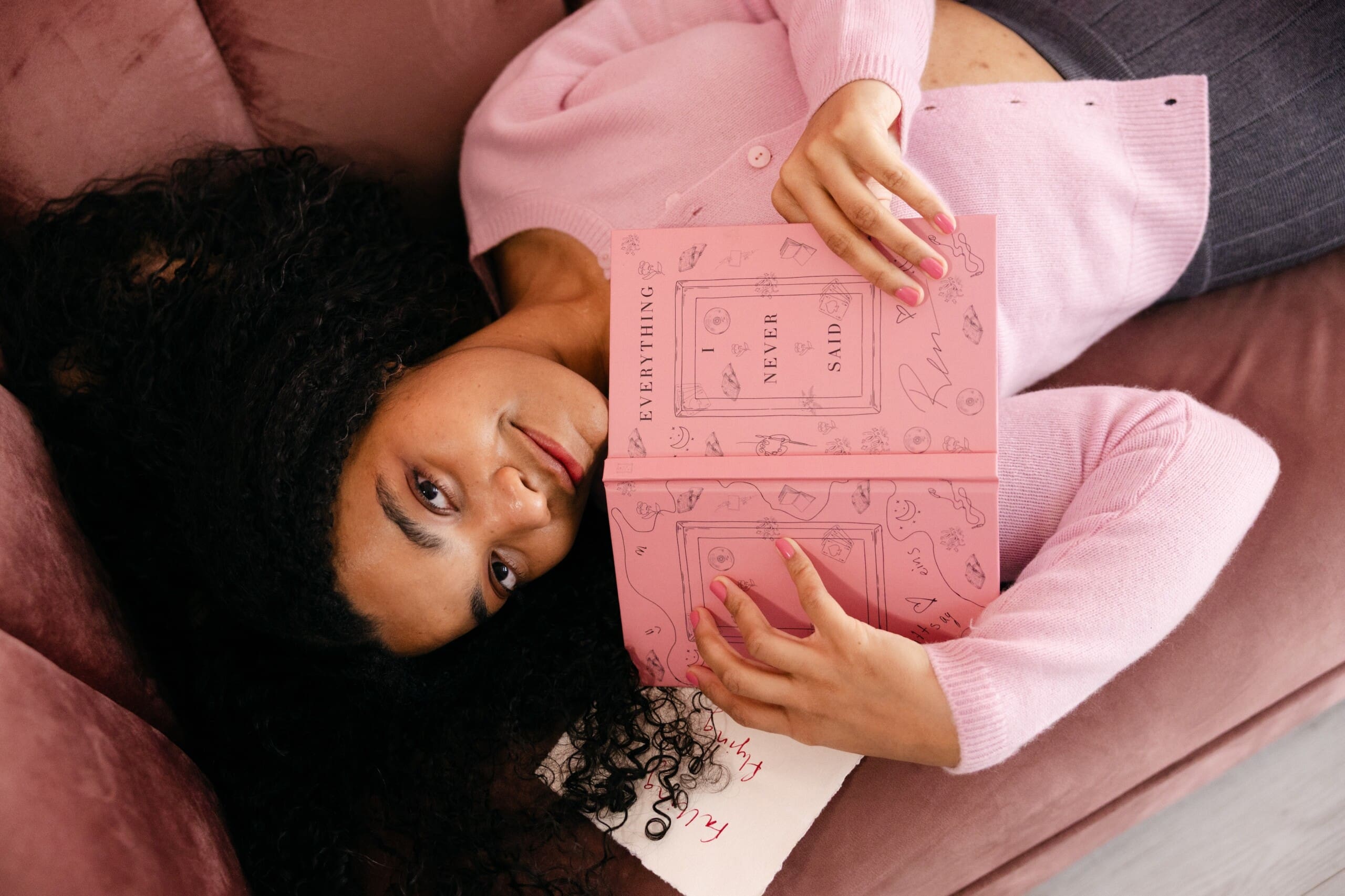
That makes sense. I’m a big musical theater person, and I think it was your song “Forts,” for some reason in particular, that really stuck out to me as having musical theater undertones to it. But what you said makes sense about writing purposefully, because when you’re watching a musical, every song brings the story forward. So it’s really cool that you incorporate that into your lyricism and how you write. I think as someone who knows that, it’s very apparent in what you do, which is awesome. Gearing towards the release of your new song “Everything I Never Said,” how would you, in your own words, describe how it differs from previous songs in your discography?
I think that song has a more polished feel to the production for sure. It really leans into the playful side of my writing. There are some songs that I’ve written in the past that give you a glimpse of that, but I think this song just goes for it. And it has that fun, tongue-in-cheek element going on lyrically. Musically, I think it’s a lot lighter and that it’s generally more upbeat, as well. I think all of those things exist in contrast to my previous project and the songs on it.
I definitely noticed that when I listened to the single. What inspired you to make that vibe shift? That was the first thing that I clocked when I was listening to it. I was like, “Oh, this is, like, not dancey, but it’s got that drive behind it and the more upbeat feel.” So what made you want that aesthetic for this song?
I think it was driven by the lyrics. I mean, the line in the chorus is something that I would say in conversation very often. I don’t necessarily sit and say, “This song is about this person, and this song is about this person.” But I would jokingly say to my friends, “Well, if they think this song’s about them, that’s because it is. Eventually, after saying it so much, I was like, “That might be a fun thing to write around.” …I think that it’s that lyric in particular that really drove the playful tone of the whole thing. I just wanted it musically to feel as playful as that is. It’s serious, but it’s playful. I wanted it to have that balance.
Regarding that specific lyric, “If you think this song’s about you, it probably is,” has there ever been a time where someone’s confronted you about being like, “Oh, this song’s about me,” thinking it’s about them? And how has that gone for you, if that’s a situation that has happened?
No one’s ever directly asked me if a song is about them in particular. I’ve definitely had people ask me to write songs about them.
That’s a weird request!
(laughing) I don’t know if that’s a backwards way of doing it.
Kind of. I’ve never heard someone say that before. That’s so funny. What was your reaction to that? How did you respond?

I don’t even remember. I think I was so shocked that I was like, “Yeah.”
You’re like, “I’ll think about it, I guess. Maybe?”
Yeah, maybe, who knows? But it’s happened in that backwards way. I’ve definitely had people who are close to certain situations go, “Is this about this, and is this about this?” With “Forts,” for example, that’s about my childhood and my friends growing up and all of that. They know that’s about them, and about us, and our time growing up… In general, I haven’t had any negative feedback about my writing thus far. No one’s reached out to me and said, “Hey, I don’t like that you said this.”
Do you find that, when you’re writing lyrics, it’s hard not to say anything that could give someone’s identity away? Do you find that a challenge? Or do you think it’s easy to keep it general and broad and to remain anonymous about it?
I think that thought comes to me after I’ve written it. So, most of the time when I’m writing about something, it can be pretty stream of consciousness. One of the songs that’s on the [upcoming] EP, the lyrics to that are from when I was in my notes app over a weekend after a certain situation, and I was writing stream of consciousness. That ended up being the song. I try to just be as honest as possible, and I find that if I’m honest, I don’t think that anyone can be upset. Well, at least I won’t be like, “Oh, I shouldn’t have said that,” because it was truthful in the moment for me. I lean into that and into the feelings of a particular moment and try to capture that. I think that, if anything, I don’t think I’ve ever written to the point of name-dropping. I lean into describing the person and a situation over things that I think might lean towards, “This is about so-and-so.”
That helps me to not be super concerned about protecting anonymity, but it is definitely something that I think about after the song is written and after it’s done. Then I’m like, “What’s the line between being truthful and really engaging with how certain behaviors or things that people say make you feel, and perpetuating harm on somebody else?” So I do try to keep a balance there. But in general, I think that because I lean toward a more descriptive writing style, I don’t really overthink it too much.
You mentioned your EP, Everything I Never Said, coming out. What can fans and listeners expect from it? How do you think it’s different from your previous EP? What’s the vibe going into it?
It’s similar to the single in that it’s lighter. It has a more upbeat tone to it, but I think you do still get some of that descriptive lyricism from my previous project. I think there’s going to be something for everybody. If someone really liked “Forts,” there’s definitely a song in this EP that they’ll like and they’ll be drawn to. In general, I think it’s a lighter overall tone and definitely leans into a poppier, maybe somewhat dancier vibe at times, but I think that it’s a good balance between the two.
You’ve also previously mentioned that famous female singers such as Joni Mitchell and Taylor Swift have inspired your writing process. Is there anybody else, any other bands or artists, that you listen to right now that you say are really influencing your sound as it is with this new EP?
At the time [of writing this EP], I was really into Lana [Del Ray], and I was really into some of the songs on the Gracie Abrams project, The Secret of Us. Also, I was listening to Eternal Sunshine by Ariana Grande, and Beyoncé’s Cowboy Carter, I was listening to a ton. I’m a huge Beyoncé fan. Beyoncé is always an inspiration, but I was listening to that project quite a bit throughout the time that this was being created. I think that you can definitely hear some of those influences. I have a very eclectic kind of taste, so I listen to a wide variety of music. I think you can hear that on this project in particular. I was listening to Chappell Roan and Sabrina Carpenter. I mean, the pop girlies were having such a moment this summer, and we recorded this project over the summer. So I think that you can definitely feel the fun and lightness that was characterized by that pop music in this project. But I think you can definitely still hear that Joni [Mitchell] inspiration in the writing and some of the instrumentation, as well.
So then, moving forward with the release of the EP and just looking later down the line with your career, what would you say the definition of success is for you? At what point would you hit something where you’re like, “Okay, I’ve made it,” whether it’s a big moment or a small moment?
The first thing that comes to mind, honestly, is being able to perform a show and have people singing my lyrics with me. I think that would be the “I made it” moment because, ultimately, as a songwriter and as a singer and as an artist, I think you want to connect with other people through music and to feel that commonality. That moment really captures that. There’s nothing quite like being at a concert with your favorite artist, and you’re screaming their lyrics, and they’re singing them with you. It’s this really, really special moment that I think there’s nothing else like it.
…I’m so excited for the song to come out. I really, really loved making it. It was such a blast, and I can’t wait for people to hear it.