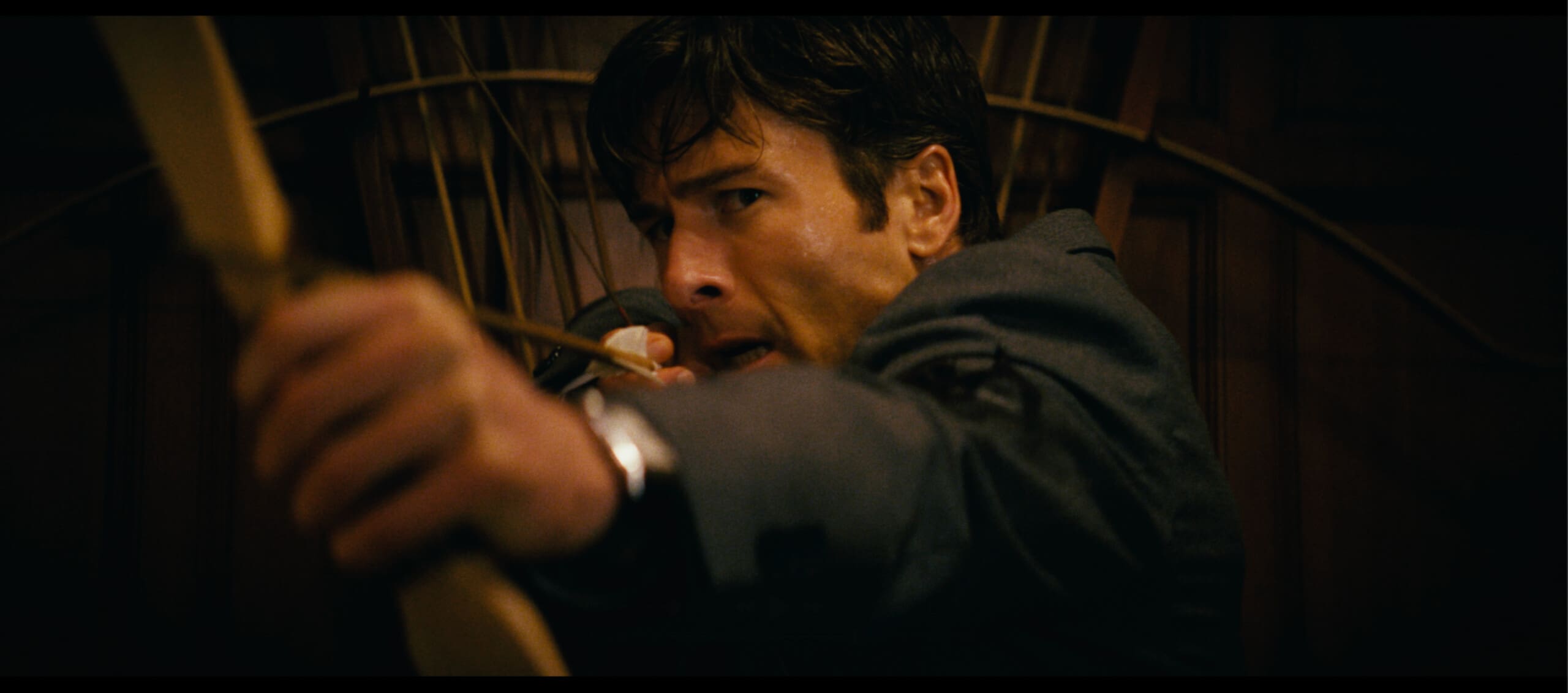
A24 and writer/director John Patton Ford’s How to Make a Killing continues Glen Powell’s trend towards top leading man status. However, its inability to create depth or evoke a stylish flair within its juicy plot makes it almost solely ride off a charm that isn’t everlasting.
The film, loosely inspired by the 1949 British film Kind Hearts and Coronets, follows Becket (Powell), the youngest and most distant heir to the Redfellow fortune. Yet, with so many annoying, estranged siblings in line to the throne, Becket decides to kill off everyone that’s ahead of him to earn his rightful riches. How to Make a Killing is foaming at the mouth with entertaining potential simply from its premise alone. The concept of this ostracized entity within a wealthy lineage picking off his competition one by one is full of great possibilities. Whether its fun kills at the hands of Becket or intriguing thematic threads tied to growing frustration towards the rich, How to Make a Killing has all the makings of a potential crowd-pleaser – especially with a charmer like Powell leading the charge.
And, at times, the film lives up to that potential.
The opening highlights how Becket became a forgotten Redfellow in a way that tugs at the heart and sets him up as a likable underdog. Becket, as an amateur killer, is impressively sly. He’s remarkably calculated and so under the radar that no one sees him coming. Yet, he’s not perfect and the tables turn on him in fun, unexpected ways. The film does a great job putting him on his heels in the third act, and it’s what leads to fun twists and a great final boss battle with the Redfellows. There’s also this interesting inner conflict of Becket desperately continuing this murder plot even after he’s attained a more than suitable personal life. It’s a great way the film taps into that nearly universal yearning for vast riches over simple comfort and the consequences Becket faces for that hit you right in the gut.
Powell straight-up puts on a show for audiences to vibe with his cool, calm, collected mastermind demeanor. His charisma is irresistible and you’ll be instantly smitten by his off-the-charts confidence. The line delivery is perfect for the “confession-style” storytelling the narrative has. And, he brings that chameleon-like flexibility in his performance that fans of Richard Linklater’s Hit Man will adore. He’s also got a solid supporting cast surrounding him to generally up the fun and sew in some diabolical personalities. Margaret Qualley is probably the biggest standout outside of Powell for the femme-fatale persona she brings as Becket’s childhood friend Julia. She gives off such great frenemy energy and makes the jaw-dropping power flips in the third act have real weight.
Unfortunately, How to Make a Killing often underwhelms due to its lackluster execution. Oddly enough, Ford’s vision lacks any real ambition to get the most out of the film’s story, characters, or style. Becket’s murder plans are usually way too rinse and repeat, and the overly sly nature of his execution makes for bloodless, unsatisfying deaths. The needlessly rushed pacing means there’s never enough time dedicated to exploring the rich siblings on Becket’s hit list – to the point where some characters are taken out merely minutes after being introduced. This means potentially great performances, like Topher Grace as a corrupt evangelist speaker, are criminally wasted. It also leads to certain relationships Becket gains feeling flat and not containing the emotional power it wants to. Most shocking of all though is definitely the lack of flair with the atmosphere. For a story about a working class underdog taking out the rich, the film’s depiction of its villainous wealth is remarkably bland. The cynical bite of the humor is far too tame, and the visuals and scale of the film are deeply uninspired.
Thus, How to Make a Killing rarely matches the ambitious nature of its lead, especially with the lack of substance it brings.
We’ve gotten a lot of films lately that see lowly protagonists fight against wealthy overlords or systems that look down on them. The Menu and, more recently, Park Chan-wook’s No Other Choice immediately come to mind. How to Make a Killing finds nothing new to say or do with this concept. Any intriguing idea, like Becket struggling to choose between murderous pursuits or stability he earns himself, is often undercooked or takes a backseat to the snarky storytelling from Becket’s perspective. There’s not enough time taken or depth achieved with the story to make the satire break past the surface level. The film never shakes an overly smarmy view on desires for wealth to create any vulnerability for viewers to latch onto. The ending, in particular, suffers greatly because of this and you leave feeling robbed of actual impact over failed attempts at a cool-feeling twist on your expectations.
How to Make a Killing isn’t terrible in the slightest because of how easily likeable its premise and Powell’s performance are. But, it’s disappointingly unremarkable due to the style and substance it severely lacks. It’s a film that sounds better on paper than it actually is, and audiences will likely leave feeling more robbed than enriched by its stabs at the rich and powerful.