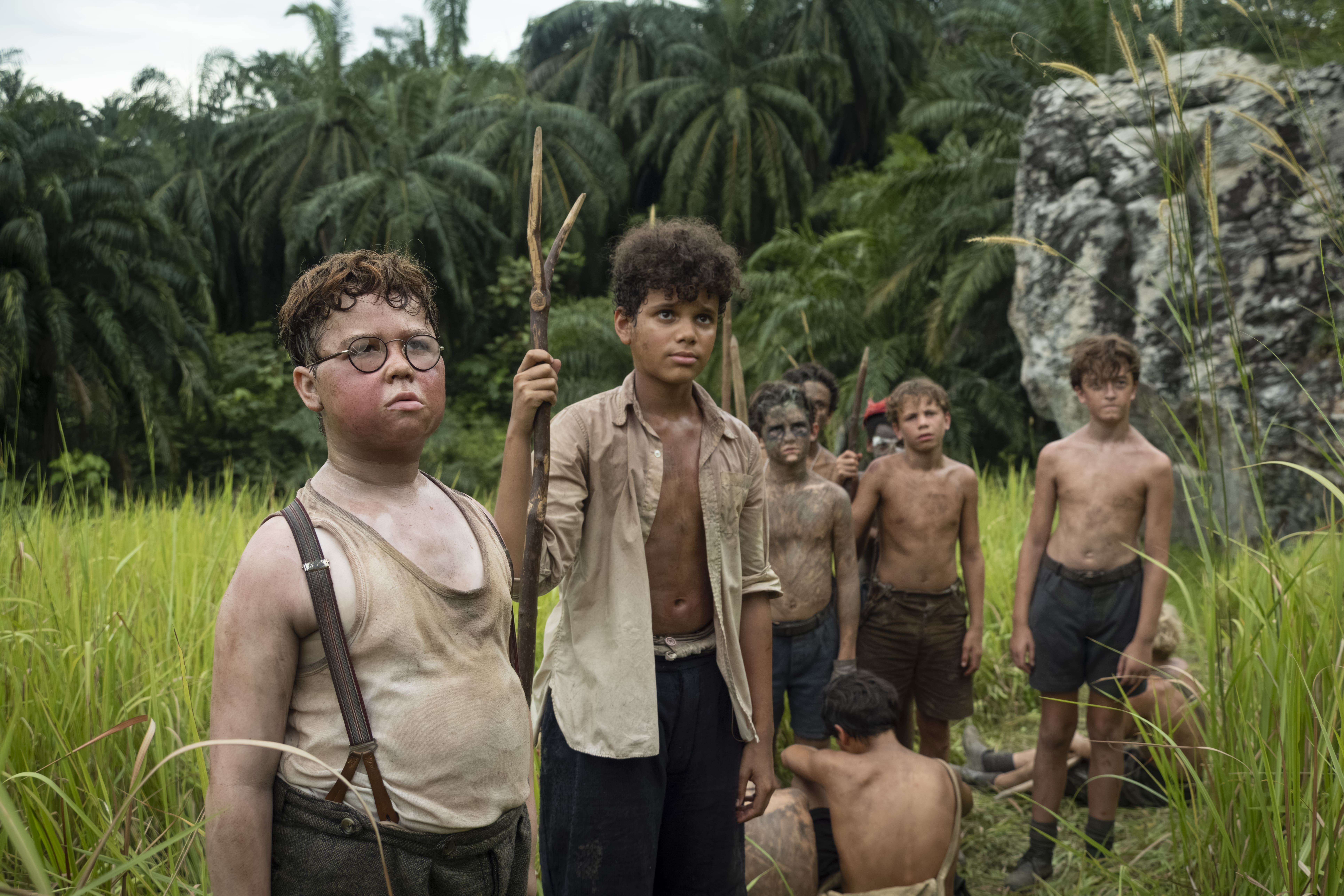
In February of 2026 BBC released the first-ever TV adaptation of Lord of the Flies. The series, now streaming on Netflix, is created by Jack Thorne, the writer of the Harry Potter and the Cursed Child, Wonder and the Enola Holmes films. The series’ eerie sound design and cinematography paired with the endearing performances of the child actors bring William Golding’s novel to life perfectly.
Each episode is named after one of the four boys the novel follows, Piggy (David McKenna), Jack (Lox Pratt), Simon (Ike Talbut), and Ralph (Winston Sawyers). We are first introduced to Piggy not Ralph in the series. This is a good choice since starting with the most rational of the boys then devolving into chaos from there enhances the drama.
The shots of the island are gorgeous, each one full of life and vibrancy. However, the soundtrack swells and with it a foreboding feeling of doom wells up. Interspersed among shots of the island’s bounty we get an up close shot of each one of the boys. This drives home how the island can provide the food, water, and shelter but it can not save our boys from themselves.
Lox Pratt, who’ll portray Draco Malfoy in HBO’s Harry Potter series, delivers on both Jack as a tyrant and a scared boy in Episode 2. Jack’s infatuation with hunting a pig, and his past as a choir boy meld together seamlessly. Without the ritual of church to ground him Jack creates a new routine for himself. He spends his days stalking his prey, sharpening spearheads, and smearing mud over his face as camouflage.
Thorne engages with Jack’s descent into a scornful leader of a tribe to undermine Ralph’s authority while not forgetting where Jack comes from. Jack embraces the chaos of a hunt, the thrill of a chase, and the unruliness of a fire because his life as a choir boy was so tightly controlled. Here on the island he gets to be playful, racing with Ralph. His dynamic with both Ralph and Simon is beginning to fracture, the first signs of a brewing conflict which will end in Simon’s death and Ralph being hunted.
At first it’s because Jack absolutely hates Piggy. He finds Piggy to be annoying and thinks of himself as the better leader due to his physical strength. Jack overestimates his abilities though, when he attempts to climb a cliff to scavenge parts of the plane. Jack is frightened climbing up there, Maurice and Roger help him down. Jack is ashamed that anyone might think of him as scared of heights, or the Beastie that the littler boys on the island talk of.
It comes through in his conversation with Simon in the underbrush, “I don’t get scared, I get worried. It’s a better word.” Simon lets him get away with those semantics, and helps Jack do up his face for his pig hunt. A tender moment between the boys, which makes the tragedy of Episode 3 hit harder than it does in the novel.
In Episode 3 Simon says if he could be anywhere it’s here emphasizing his deep connection with the island. Simon is the most introspective of the four boys. Yes Piggy has wisdom but not instincts. Simon hears the Lord of the Flies, a pig’s head on a stick, speak to him, warning him that the Beastie can’t be killed.
This scene could have been done better, it doesn’t have the same dream-like quality it does in the novel. The voice of the Lord of the Flies doesn’t echo with authority. It’s not memorable or title worthy in the way it should be, instead of being immersed in Simon’s hallucination it really does just feel like a pig’s head on a stick. The show runners should have taken more creative liberties with the scene perhaps with imagery foreshadowing Simon’s violent death such as him seeing his own rotting head. Which is then contrasted with the gentle way that nature lays him to rest when his body washes out to sea.
In the final Episode titled “Ralph” the remaining boys are rescued but not without putting Ralph and Piggy’s friendship to the test. Thorne chooses to give Piggy a name, Nicholas which Ralph shortens to Nickie. Ralph is the only character who calls Piggy by his name, showing that he is the only one who considers Piggy to be a friend. A humanizing touch, since in the book Ralph cries for his wise friend “called Piggy” but Piggy never wished to be called that. Thorne’s Ralph and Piggy, or Ralph and Nickie have a sweeter dynamic. The loyalty truly goes both ways, Ralph stays with Piggy until the bitter end, then digs a clumsy grave for his friend. It’s personal, it’s intimate, and it’s deeply tragic everything that Golding deprives us of when Piggy’s body is washed away by the tide.
BBC brings a freshness to Lord of the Flies in this mini-series constructing missing scenes between the boys, masterful camera work, and immersive soundtrack. We experience all of the joy the boys feel on their new island home and a look into the darkness within themselves which they inevitably succumb to.