Written by Matt Swanson
In Hokum, Irish filmmaker Damian McCarthy builds a terrifyingly suspenseful atmosphere in a hotel in rural Ireland. McCarthy is no stranger to horror, writing and directing other horror films such as Caveat (2020) and Oddity (2024). In this new film, Adam Scott stars as Ohm Bauman, an author haunted by the trauma of his past and seeking closure. Today’s horror landscape can feel saturated with cheap jump scares and stories that lack depth. Hokum sets itself apart by building an immersive setting to weave three stories together: a man’s guilt, a mysterious disappearance and an allegedly haunted hotel.
The film opens with Bauman writing an incredibly bleak epilogue to a novel, when he is haunted by an apparition of his mother. Frightened, he begins to look through his parents’ belongings, searching for a solution. Along with his parents’ ashes, he finds a picture of them on their honeymoon at the Bilberry Woods Hotel in rural Ireland and decides to travel there to spread their ashes.
After arriving at the hotel, several things become clear. First, Bauman is cruel and detached, showing his dismissive arrogance to everyone he encounters. Second, the honeymoon suite that Bauman’s parents stayed in is now locked shut. The rumor around the hotel is that the owner caught a witch in there and he is adamant about keeping the suite locked so that it cannot escape. The final revelation about Bauman is that his mother died from a gunshot wound, and there seems to be much left unsaid by Bauman about the circumstances of his mother’s mysterious death.
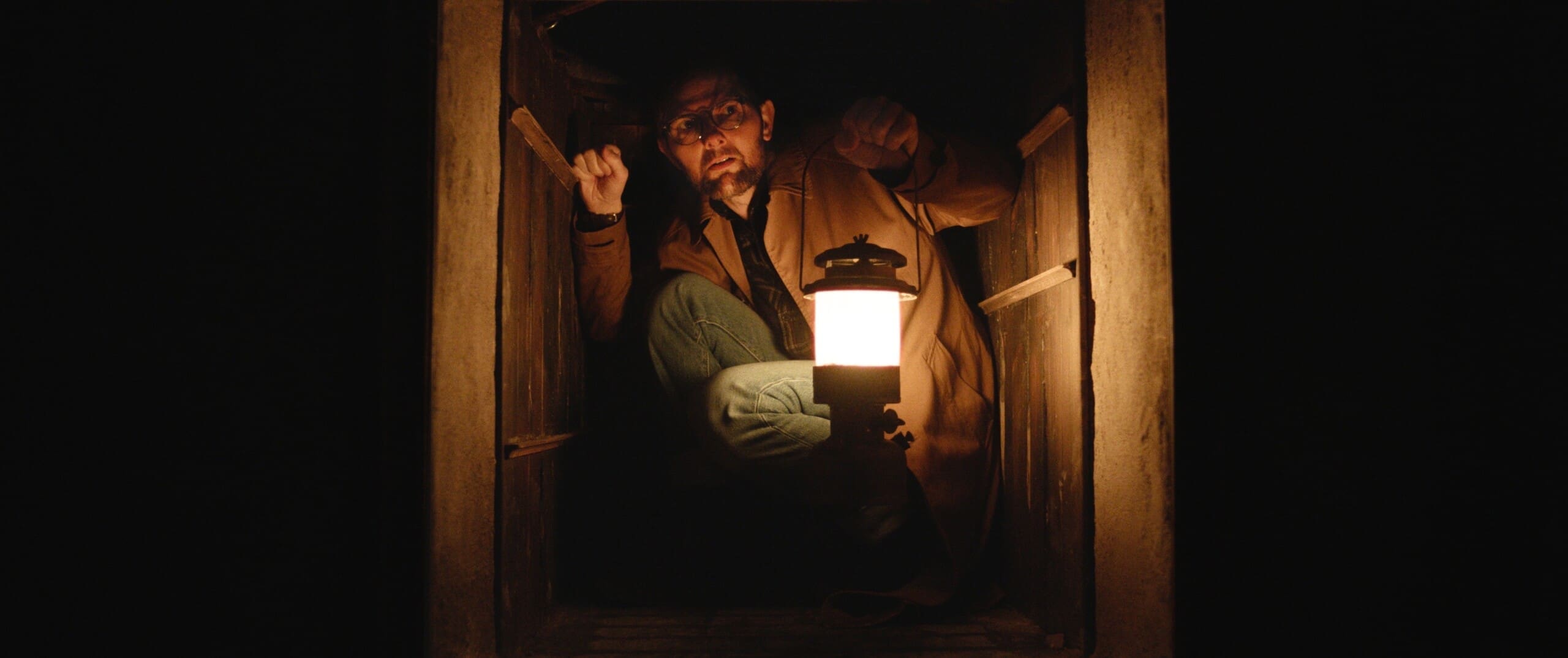
After Bauman spreads his parents’ ashes, he overindulges and returns to his room. A hotel staff member, Fiona (Florence Ordesh), feels something is wrong and decides to check on him. She finds that Bauman had attempted to take his own life and she is barely able to save him. The story cuts forward, to Bauman waking up from a coma several weeks later. Upon awakening, he tries to find Fiona in order to thank her for saving his life, but he is told that she is missing. Eventually, Bauman decides that he owes it to Fiona to search for her, and that the only place that has been untouched by the police is the locked honeymoon suite. It is in this honeymoon suite that Bauman comes face to face with horrors of his past, the rumored horrors of the hotel and Fiona’s fate.
The most compelling part of this movie is how well it balances the supernatural elements with the narratives grounded in reality. The film doesn’t go as far as The Shining, completely blurring the lines between the normal and paranormal, but it does make the audience question what is real at points. However, the throughlines of the author coming to terms with his trauma and seeking justice for Fiona stand up on their own—even without any witch getting involved. This is important from a suspense standpoint: as the paranoid Bauman is haunted by the horrors of reality, the audience is never certain if or when horror beyond imagination might introduce itself. Because the movie’s most impressive feature is its ability to build suspense, it benefits by avoiding an overzealous use of jump scares. There certainly are several loud and startling moments in the midst of suspense, but the film never solely relies on those moments to deliver frights.
One of the ways Hokum becomes so suspenseful is because of how well it leverages its mysteries. There are mysteries surrounding Bauman’s past, the witch, and the missing girl. While the film successfully keeps these mysteries in play for long enough, there certainly are revelations that feel like they happen too soon and deflate a lot of earned momentum. Even so, the film uses these revelations as subversive pivots in the plot to reveal other dangers, keeping it from ever becoming fully predictable.
One of the greatest accomplishments of the film is its ability to build an immersive setting. A significant portion of Hokum takes place within a single hotel room, and it uses the familiarity of that setting to surprise the audience in many ways. Additionally, the movie feels like a love letter to Ireland at times, with sweeping wide shots as Bauman drives to the hotel and intimate moments in the lush forest of the Emerald Isle. Ultimately, the film’s horrific folklore and mysteries are successfully elevated by the uniquely Irish setting. As McCarthy continues to find success in the horror genre, one can hope he continues to frighten audiences through more distinctive Irish settings.