
Written by Ava Mehr
Prime Video’s Off Campus wastes no time leaning into the standard hockey romance structure, with emotionally messy athletes, relationship drama, and unusual tension from the first episode.
Based on Elle Kennedy’s popular book series, Off Campus follows the tutoring arrangement between Briar University hockey captain Garrett Graham (Belmont Cameli, Until Dawn) and music student Hannah Wells (Ella Bright, Malory Towers) slowly turn into a relationship. The two make a deal where Hannah tutors Garrett so he can stay eligible for hockey, and in return he pretends to date her to make her crush notice her. At first glance, the series comes off as another bingeable book adaptation but the problem with Off Campus is that it feels far less interested in creating its own identity than it does recreating the atmosphere of Heated Rivalry.
This shows up immediately with Garrett. His early locker room scenes are structured in a way that feels eerily familiar to a scene between the two main characters of Heated Rivalry. He is introduced as the star hockey player who has everything he’s ever wanted, but the series starts hinting that he’s not actually okay underneath his facade. There’s even an early shower scene that is shot in that same kind of vulnerable, hypermasculine way that obviously reflects Heated Rivalry. It’s not even just the setting, it’s the whole feeling of it.
The difference is that Heated Rivalry genuinely builds something layered out of those moments. That show is about two male hockey players in a relationship that is secret, complicated, and tied up in identity. The fact that it’s a gay relationship isn’t just a background detail, it’s what everything is built around. There’s constant pressure within every scene because the characters are dealing with repression, fear, and what it means to want someone in a world that doesn’t allow it. Even the smallest scenes feel loaded because there’s always something being hidden.
Off Campus tries to recreate that same kind of intensity, but it falls short of having the same powerful appeal. Garrett and Hannah are a straight couple, and that changes everything about the emotional stakes and severity. There’s nothing about their relationship that has to exist in secret in the same way or carry that same level of identity-based pressure. So when the show tries to mirror those same emotions, the stakes feel so much less, because something feels missing.. Garrett and Hannah spend most of the season stuck in this fake romantic relationship where neither of them is fully honest about what they actually feel. Compared to the rawness of Heated Rivalry, where every emotion feels painfully real even when the characters are trying to hide it, their relationship feels more performative than genuine.
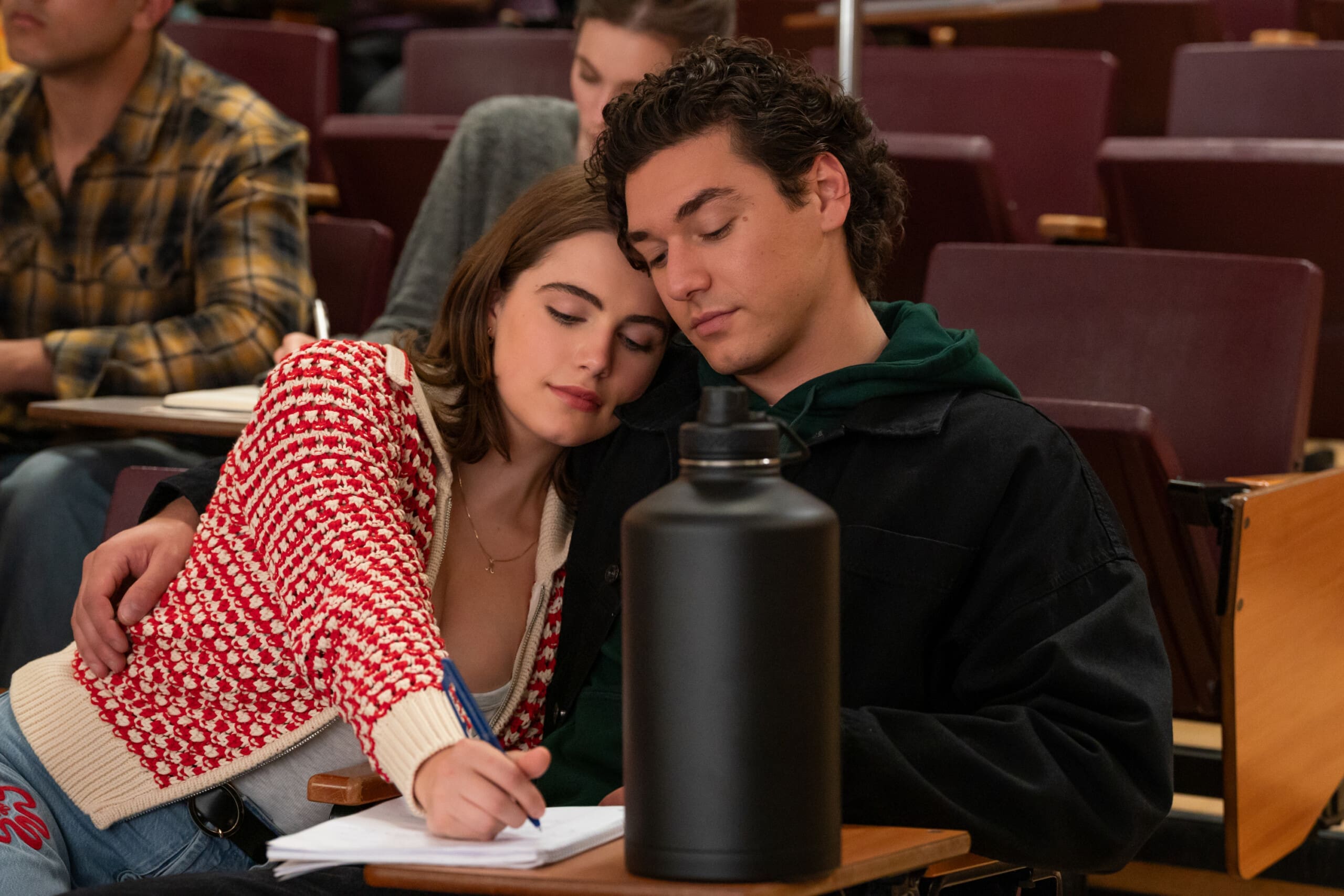
Garrett’s storyline is built around pressure he receives from his dad, his team, and in his role as captain. There are scenes where he is clearly overwhelmed, especially in the locker room after games or when he is snapping at teammates. But it rarely goes further than just showing that he is stressed. It does not really dig into what that pressure is doing to him in a deeper emotional way. Instead, it circles around it and scratches the surface.
Hannah’s storyline has a similar issue. She is dealing with rape trauma which justifiably leads to trust issues. The series clearly wants that to matter, but her narrative gets pushed to the side for romantic drama. Her relationship with Garrett is built on attraction and an emotional back and forth but it follows a very predictable pattern. They argue, they pull away, they find their way back to each other. It works in a basic romance sense but it doesn’t evolve any further beyond that. Hannah’s arc about her sexual abuse she experienced could have been executed much better if there was more attention and care put into those scenes.
The hockey scenes are where the show feels the most real and alive. The locker room banter, the friendships, the way the players interact when they’re not in serious plot moments — those parts feel the most real. These scenes are not trying so hard to be emotional or important. But whenever the show tries to be serious, it’s extremely rushed through. Issues regarding family, emotional trauma, and masculinity are brought up but are never focused. The series moves on from these very real, human, and relatable issues because it seems more interested in focusing on the fantasy of the romance between Hannah and Garrett.
That’s where the divide between Off Campus and Heated Rivalry becomes impossible to ignore. Heated Rivalry isn’t just a hockey romance. It’s about secrecy, identity, and the emotional weight of being gay in an aggressively masculine space where the love between the leading me is neither easy nor safe. That’s why even the quietest scenes in that series feel so intense and powerful, because there’s always something hidden deeper under every moment.
The season finale of Off Campus feels a bit rushed. The season spent most of its time pulling Garrett and Hannah apart with misunderstandings and emotional walls, yet the finale wraps things up pretty quickly once Garrett finally starts being honest about how much pressure he’s been carrying from hockey and his toxic family. This is supposed to lead to a big emotional payoff of the two finally choosing to commit to each other. But, it doesn’t hit as hard as the show wants it to because so much of their conflict could have been solved if they had just communicated earlier which was frustrating to watch as a viewer.
That is the biggest issue with Off Campus as a whole. It constantly looks like it is about to say something deeper about pressure, masculinity, trauma, or relationships, but it always pulls back before it gets there. The show wants the emotional intensity of stories like Heated Rivalry, but it stays too safe to ever fully reach it. In the end, Off Campus is not bad because it’s similar to Heated Rivalry. It is disappointing because underneath all the dramatic music, locker room tension, and emotional stares, there are glimpses of a much better show that are never fully realized.