Written by Ava Mehr
A24’s box office hit Backrooms has been one of the most anticipated horror movies of the year. What started as a viral internet image eventually grew into a massive online phenomenon. It inspired YouTube videos, fan theories, games, and an entire mythology surrounding the endless maze of yellow hallways known as “backrooms.”
Much of that popularity can be credited to 20-year-old director Kane Parsons, whose 2002 Backrooms YouTube short film helped bring the concept to a mainstream audience. Unfortunately, Backrooms proves that what works in a 10-minute short film does not always translate into a two-hour movie in theaters.
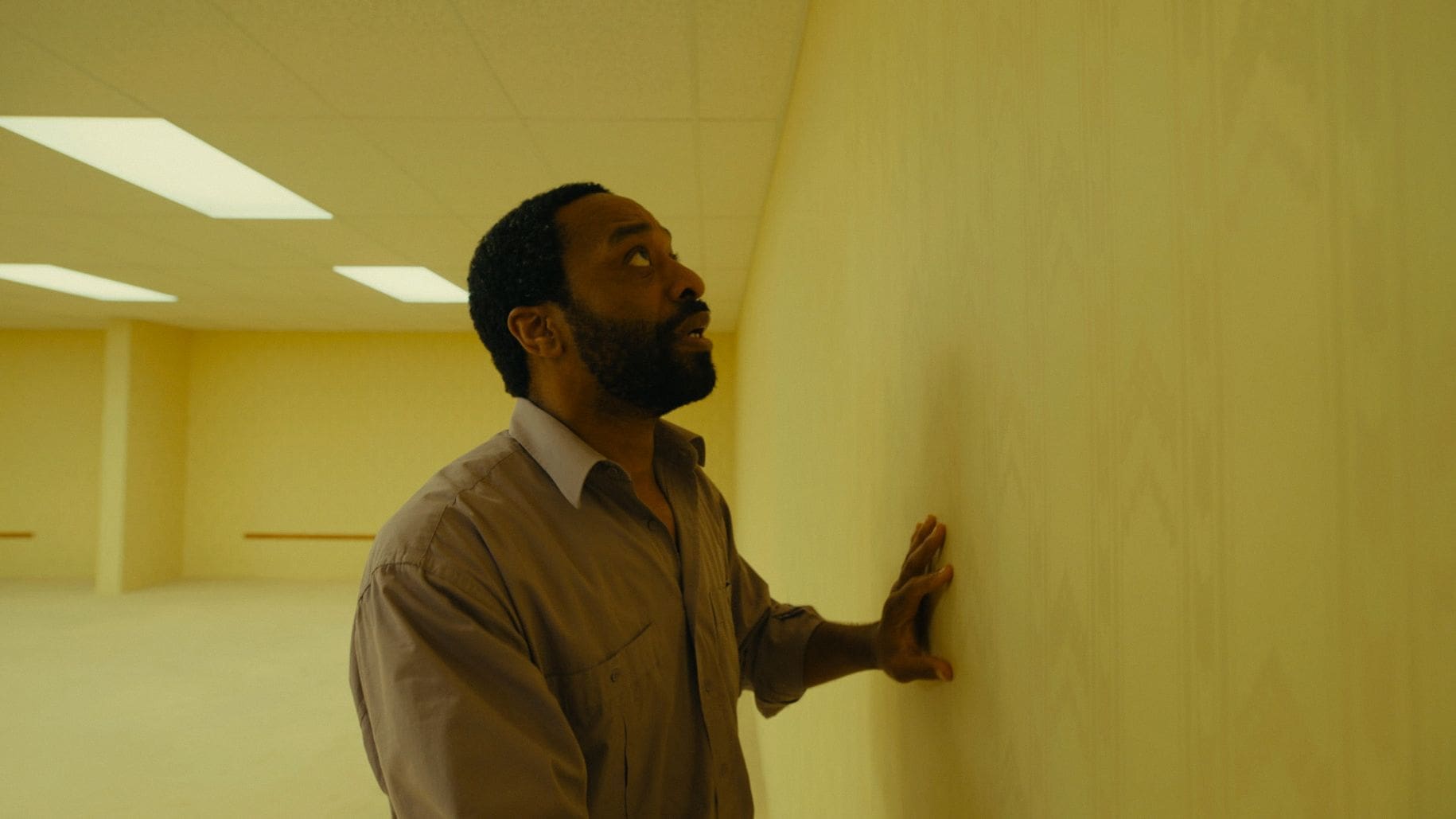
The film follows Clark (Chiwetel Ejiofor, Doctor Strange), a furniture store owner who discovers a crack in his store’s wall that leads to another reality. Clark, after becoming trapped inside the backrooms, slowly loses himself in the strange world around him. As his disappearance raises concerns, his therapist Mary (Renate Reinsve, The Worst Person in the World) begins searching for answers and eventually ends up in the backrooms with her client.
The film is at its strongest during its opening scene given the setup. Parsons understands how to make the backrooms feel not just scary, but unsettling. The shaky camera work, found-footage film style, and eerie soundtrack create a constant feeling that something is wrong even when nothing is happening. Early scenes of Clark wandering through endless hallways and empty rooms capture exactly what made the original YouTube short films so effective. Every move feels unpredictable and every strange noise feels like a warning.
The problem is that once the movie gets past that initial mystery, there is not much underneath it.
The biggest missed opportunity is the backrooms themselves. The film hints that there’s a much larger story hidden beneath everything Clark experiences. There are security cameras watching him, strange creatures roaming around, and signs that other people have been trapped there. Yet none of these ideas are explored in any meaningful way. Instead, the film keeps piling mystery on top of mystery until it starts becoming more frustrating than intriguing.
The frustration is fueled further by stranger moments that serve little purpose beyond just being strange. Backrooms constantly introduces strange details that seem like they should matter later. Whether it’s the cardboard cutout endlessly speaking in a different language or the random furniture scattered throughout the maze of hallways, each moment creates the expectation that there’s a bigger story underneath everything. They exist to make the audience feel uncomfortable, yet they never add up to a clearer understanding of the backrooms or why any of this is happening.
Clark’s storyline suffers from the same issue. The film attempts to explore his loneliness and isolation but those ideas are mostly glossed over rather than developed and explained. The film spends so much time focusing on the mystery surrounding Clark that it forgets to fully develop the emotions influencing him—his sense of loneliness. Mary’s storyline is even more frustrating. At one point, the film shows a childhood flashback involving her mother covering their house’s windows with newspapers and refusing to let her go outside. It feels like the beginning of an important character revelation, but it’s never meaningfully brought up again and has no connection to the rest of the plot.
This is the biggest issue with Backrooms. It constantly feels as though it’s about to reveal something deeper about its meaning or its characters, but it never gets there. The setting works, the soundtrack is genuinely creepy, and the found-footage aspects are effective. Atmosphere and aesthetics can only carry a story so far. It’s obvious that there are glimpses of a much better movie hidden throughout the film.
Even with its flaws, Backrooms is an impressive achievement for a first-time feature filmmaker. Parsons clearly has an eye for visual horror and understands how to create tension through sound and atmosphere. The film succeeds at making viewers uncomfortable. What it struggles to do is give that discomfort any larger purpose.