Written by Jennifer Marie
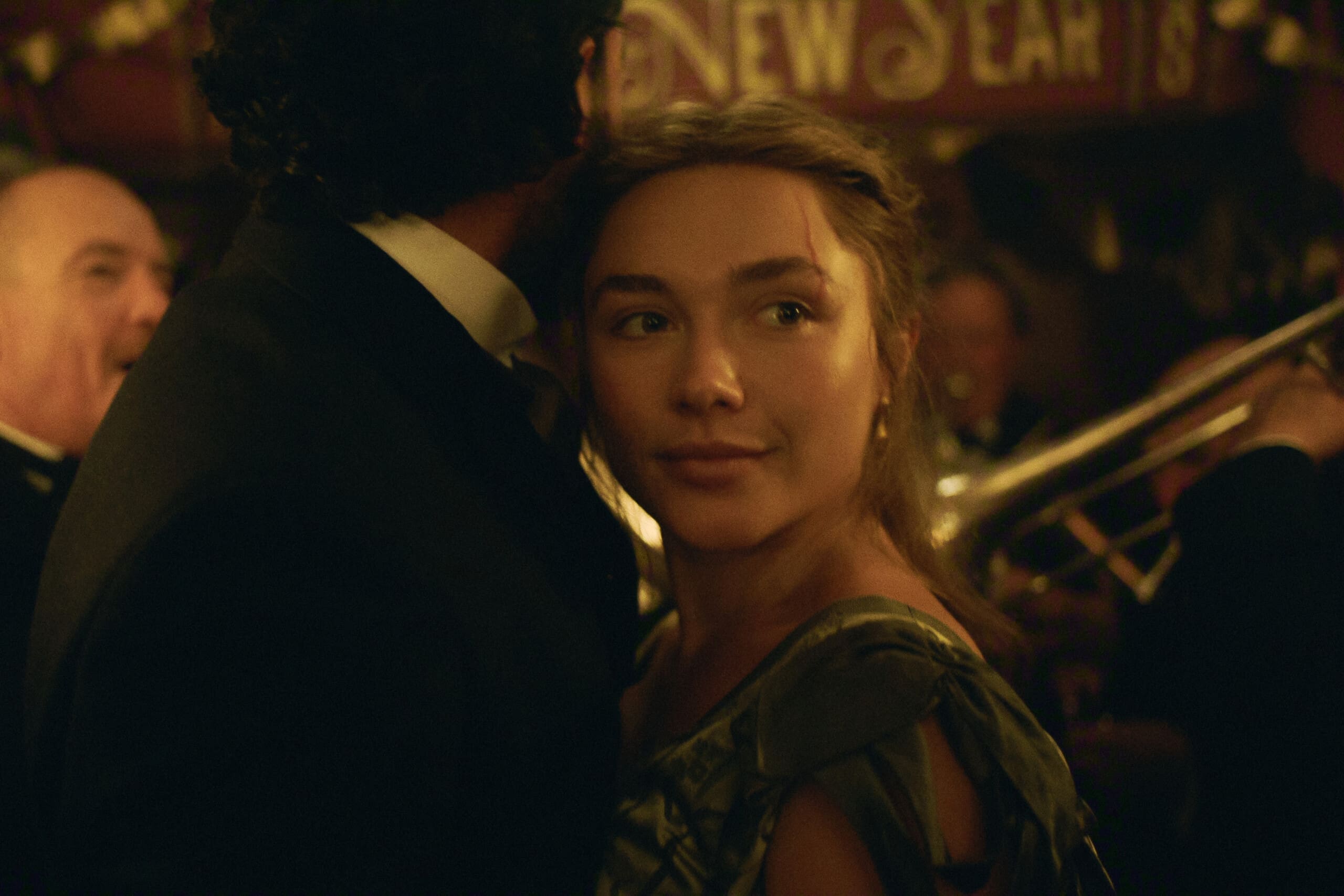
Let’s start this review of Netflix’s new East of Eden adaptation by admitting that this writer is a fan of Florence Pugh (Midsommar, Little Women), as an actor and an artist. Her portrayals of women are timeless but unbridled to the point where women are grounded, strong, and quixotic — independent of a male perspective.
Secondly, I have read John Steinbeck’s 1952 novel East of Eden more times than any other book. And as much as I love it, every adult woman in it is only one of two things: A prostitute or a devoted wife and mother.
My anticipation going in is that these two forces — Pugh’s portrayal of women as if they are, in fact, fully formed creatures, and a man’s 1950s-era interpretation of good, evil, and womanhood — will collide beautifully.
And they did.
Much of the online discourse of this rendition of the 700-page epic makes this particular element, but I find it to be entirely in keeping with the source material. While most people who will watch it have not read the novel, they will not have needed to. There are seven main characters, and Zoe Kazan’s Netflix interpretation of their intertwined lives is rich, complex, and hard not to binge.
If you have only seen the 1955 version starring James Dean (coincidentally directed by Kazan’s grandfather, Elia Kazan), this plot covers the entire book, rather than just the final part.
In modern terms, it falls into historical fiction, character-driven drama, and even part thriller. Murder, adultery, arson, and domestic violence all take place in the first two episodes — set against the background of a nation taking its first full breath as a continental empire. The earliest character fights in the American Civil War, and the youngest sees America enter World War I.
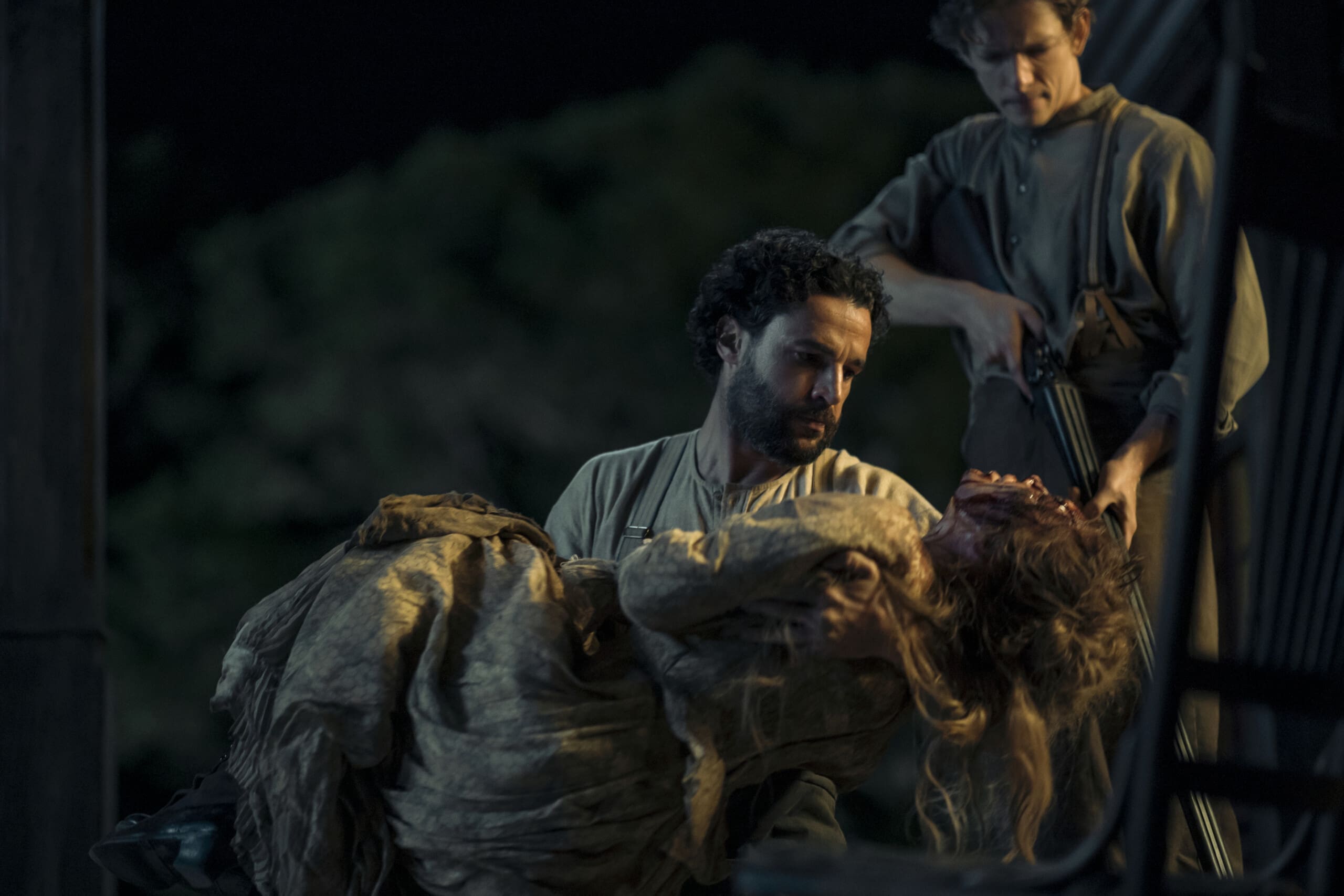
As it follows the three generations of the Trask family, the Biblical story of Cain and Abel sits at the heart of East of Eden. In the Book of Genesis, these brothers are the sons of Adam and Eve, but their relationship ends when Cain murders Abel out of jealousy (the first recorded murder in the Bible). The story of sibling rivalry with the struggle between good and evil becomes the foundation of the Trask family’s story (characters’ names starting with “C” or “A” being one indication of the supposed nature).
At its core, the series sees each character’s story asking how much of one’s personality, life choices, and destiny are owed to how they are born, versus how they are raised — or what can be chosen for themselves. The paths men, women, and minorities could walk were vastly different, but connected all the same.
Pugh as Cathy Ames is the series’ gravitational core, one of the two foci around which other characters orbit; the second being her husband Adam Trask (Christopher Abbott, Sanctuary). She plays the character from older teenager to adult, schoolgirl to madam, and it is unsurprising she’s said that the six-month filming process is mentally and physically draining. It is a generational performance.
Abbott’s version of Adam is torn. He’s stoic and even stiff, a bit too stiff (but also hot?). It is a tough character to play, and upon a rewatch, it serves this version of the story’s presumptive protagonist well. Some of his character’s internal tension is offloaded onto Charles (Mike Faist, Challengers) to make the format work, which is very well done.
Faist’s portrayal of Charles is fantastic, and draws more empathy from me for this unkind man, which is surprising. It is one of the top performances. However, as much as his portrayal adds to the story, some elements of cruelty and brutality are not fully embodied. A famous fight with his brother Adam felt dramatic, but not dangerous. The series is all the better for it on balance — as Cain to Adam’s Abel.
I am ready to be most critical of (read: excited to see) Ciarán Hinds (Belfast) as neighbor/farmer/wiseman Sam Hamilton, because Sam is a precious favorite among favorites in literature. And of course he delivers. His humanization of an almost mythical character makes use of his Irish lilt and broad build to dance across gentleness, curiosity, and masculinity.
There’s less of Sam to hold onto in this series, as his family’s storyline is almost entirely amputated (a missing limb that is the saddest and most notable casualty of the transition to screen). But the Hamilton family requires at least a full additional episode, so I have to trust that this is attempted and found to be unwieldy. (It is an incentive to read the book, if you’re inclined to do so).
This Sam stands very closely alongside live-in servant Lee (Hoon Lee, Warrior) as the two men who midwife Adam through his adult life. Hoon Lee conveys erudition, love and vulnerability in equal measure, and without this ballast, the rest of the series would fall apart. As Lee’s life unfolds, particularly as a Chinese-American, the concept of freedom takes yet another form. He’s one of the few good parents in this story, and any good parent knows that comes at a personal cost.
Lastly (it’s a big cast!), the third generation of Trasks, the “good” Aron Trask (Joe Anders, Cape Fear) and the “bad” Caleb Trask (Joseph Zada, The Hunger Games: Sunrise on the Reaping) close the final episodes brilliantly, especially for two actors barely in their 20s.
Anders’ Aron, like Abbott’s Adam, feels a bit one-note and makes it more difficult to see the difference between the two brothers, so be ready for more seriousness and less tenderness, if you’ve read the book.
Zada’s Caleb is a standout — closely behind Pugh and Lee in this stacked ensemble. As a symbolic torch-bearer of his family’s sins laid bare over the previous five hours, as well as his own decisions, one can’t help but root for him.
The cinematography lends itself to the sweeping nature of the epic, while also feeling tactile and lived in. Only early on does it sometimes fall into the soap opera-like fuzz that recent Netflix series have. But the setting is fully underfoot and real by the time it’s in Salinas for the last half of the series. Major props to the set design and costuming departments, as well as the untouched beauty of Aotearoa (New Zealand) for shaping this long-gone world of the virgin California foothills.
Great literary works are hard to convey on film, which is why many adaptations fail. They need to be rebuilt anew in many ways in order to be understood off the page, while taking a final shape that matches the original work.
They must also serve two audiences: New viewers who don’t care about source material, and decades of readers who very much do.
Kazan’s work does this almost impossibly well. Even in Steinbeck’s Nobel- and Pulitzer Prize-winning genius, there is imperfection. She invents no new storylines or themes to bring cogency. Rather, her work is like that of an art conservator who removes brown varnish to uncover pink cheeks and bright eyes that were hidden by time.
It’s the best Netflix release of the year, and this cast should be seen on everyone’s screens come Awards season.
East of Eden is now streaming on Netflix.
*For those also well-versed in the book, Dessie Hamilton is the only exception to the whore vs. mother dichotomy. She’s a fantastic character, but a relatively minor one, and not included in the series.