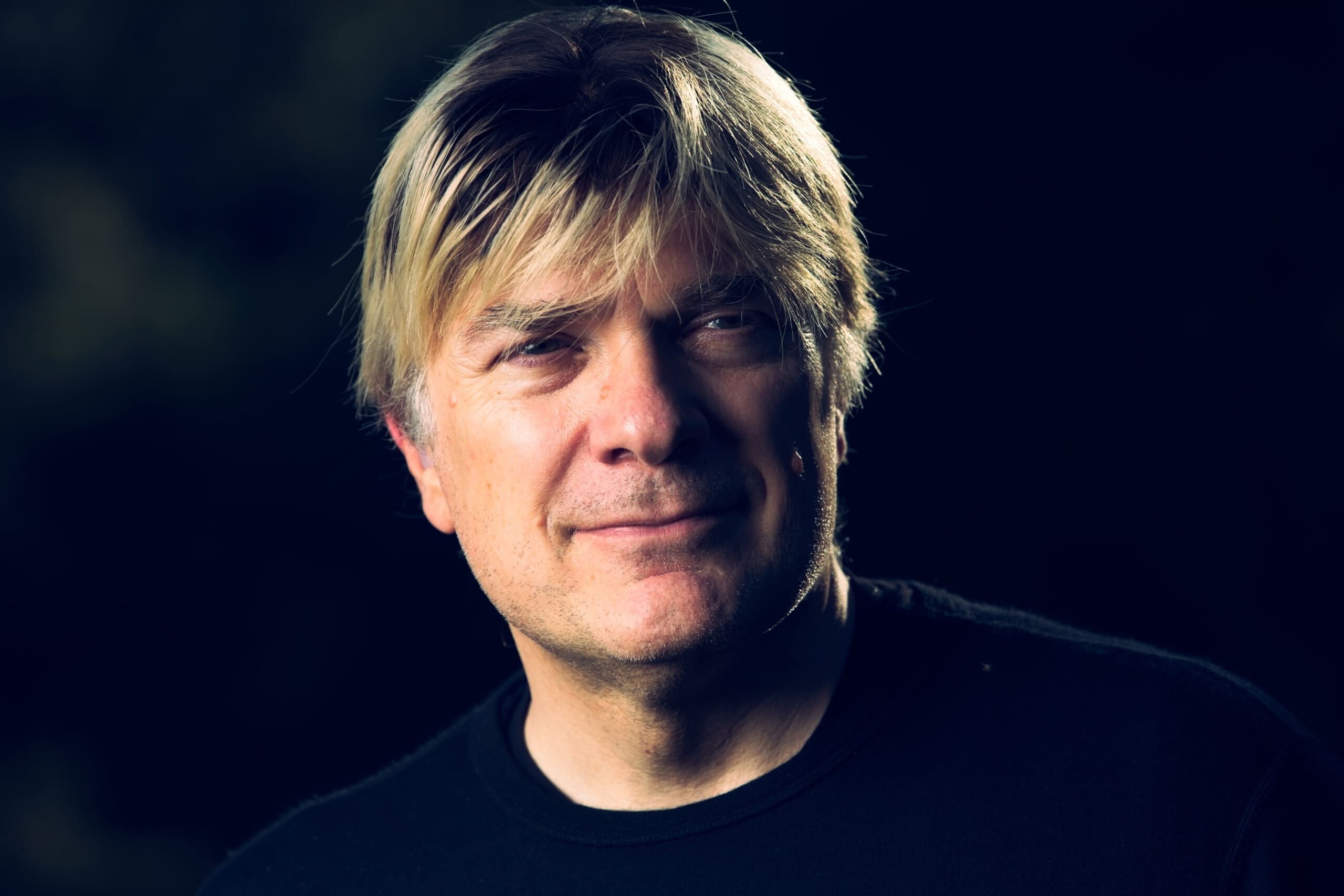
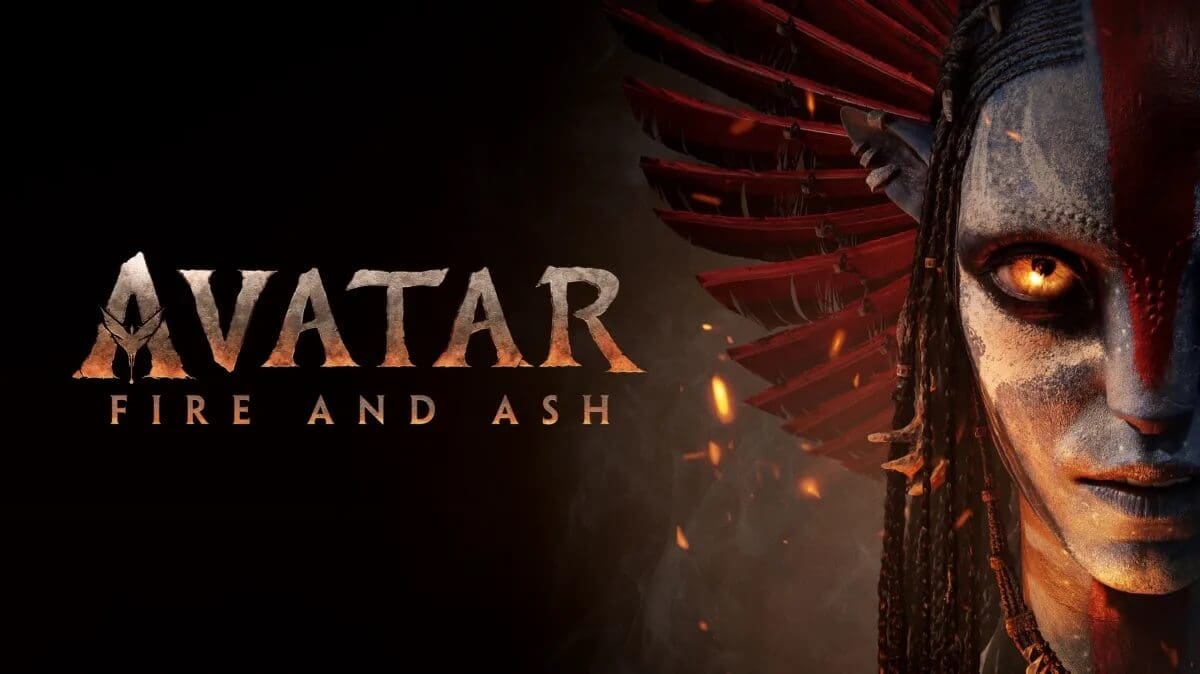
When audiences return to Pandora in Avatar: Fire and Ash, they’ll not only see but hear a world that’s darker, more fractured, and emotionally heavier than ever before. For the composer of Avatar: Fire and Ash, Simon Franglen, that evolution has been years in the making.
“It’s fair to say that I have had a very intense relationship with Avatar since 2009,” Franglen says. “The first one was composed by James Horner, and I was the lead arranger on the first one in 2009, but I did spend a year working on it, and then obviously the last two I’ve been the composer.”
Over the years, Franglen’s musical footprint on the franchise has grown massive in scale.
“Between the five hours of music in the theme park and the six hours on screen for the last two, there’s 11 hours of music out there,” he said. But the sheer volume isn’t what defines the work. It’s the emotional arc threaded throughout every scene that connects with audiences in ways they could only dream of.
Franglen approaches the Avatar saga as a single, unfolding journey rather than isolated films. “I’ve looked at it that each of them has to be their points on a journey,” he explained.
Breaking down each film, Franglen said, Avatar is about discovery with a whole new planet. Avatar: The Way of Water is about family in a new area of water and characters. Avatar: Fire and Ash is about grief, as it introduces the ash.
That grief, central to Avatar: Fire and Ash, sets the tone for everything that follows. “How does a family process something as terrible as losing a son?” Franglen asked.
“And then we have the ash, which obviously completely changes everything that we think we know.”
Having read Avatar 4 and Avatar 5 as early as 2017, Franglen composes with the end already in sight. “I sort of know where the destination is,” he said. “There are Easter eggs in Avatar two that don’t pay off until Avatar 5.”
Those long-game decisions shape everything from motifs introduced years earlier to themes that slowly reveal their meaning.
“For instance, we had a three-note motif, which I would use sometimes when Kiri (voiced by Sigourney Weaver) was talking about Eywa. And in three, we discovered not only is it a motif, but it also has some words, which is my Eywa.”
The result is music that evolves like a living organism.
Franglen said, “There is always an evolution. And part of this is taking a bigger view, so that I wanted the music to be part of that journey. So there’s DNA from Avatar one in two, but two looks different because it’s a child. The child looks different to the parent, and three looks different to two and one, but it carries some of their DNA as well. And four is going to be very different. Four goes off to places like we’ve never discovered, and I think that’s going to be an amazing journey. I hope we make four and five now.”
Beginning with Avatar: The Way of Water, James Cameron encouraged Franglen to lean hard into thematic storytelling. “Jim asked me, very especially with Way of Water onwards, to bring themes so that themes connected with characters. So we have the family theme. We have a theme for Payakan and the tulkun. We have a theme for the Metkayina — for their connection with the sea. We have the wind traders, now we have a theme for them, but we have the ash, and Varang has her own thing, and then we have the RDA, effectively the Avatar’s version of the Imperial March, as Jim would say.”
That meant music not just for heroes, but for factions, cultures, and even moral ambiguity.
Perhaps most striking is the musical relationship between Jake Sully (Sam Worthington) and Miles Quaritch (Stephen Lang). “There is a connection between that and the family theme. We finally hear that connection at the end of Avatar 3, when they’re both trying to save Spider. You hear this connection of the two themes joining together.”
So when audiences hear that happen, they’re really hearing an idea that’s been evolving for a long time.
“That was an idea I had in 2018 and and then when I wrote the themes properly in 2022 for Way of Water, I made sure that there was this connection, so that you had this idea that as that there’s always Jake and Quaritch are always bound together, and that there was this, you know, there’s a fact that here Jake always calls Quaritch colonel, and Quaritch always Calls Jake Corporal.”
It’s a bond rooted in their shared past.
“Even though they’re now both Avatars, they still remember the Marine, the human Marine in them, never gets away.”
As Avatar: Fire and Ash pushes into darker territory, Franglen uses harmony to tell the story beneath the dialogue.
“There’s a scene with Jake and Neytiri (Zoe Saldaña) where they are in their hut at the village, and she says to Jake, ‘You said you could protect us.’ This is the scene where she starts talking about how she hates the humans. And Jake says, ‘Do you hate our children because they have four fingers’ … It’s a very intense scene.”
That sense of musical fracture mirrors the characters’ emotional distance.
“I did this thing where I’d have two lines that you think are vaguely playing themes that we know are associated with their love theme, but they go apart, so there’s never harmony. They never join together. They never feel as if they’re connected, because they have lost that sense of connection. And so I was using that exact thing of using harmony, or the disharmony of Jake and Neytiri as part of what you hear underneath and how you feel it.”
This technique carries into the film’s most dangerous new alliance: Quaritch and Varang (Oona Chaplin).
“There is an electronic kick drum that I persuaded the dub stage to make as loud as possible,” Franglen says.
“It’s almost exactly at the halfway point of the film. It’s also, as Jim would say, almost exactly at the halfway point of the series of films. It’s almost exactly in the middle of our whole sequence of five movies. And at that point, everything changes.”
From there, the sound becomes deliberately inorganic. “You hear the electronica, you hear the synths, and you hear the drum,” he explained. “Those are colors that I’ve never used, except for the ash before, because the ash are about turning their back on Eywa, so there’s nothing organic about them.”
Despite the scale of the action, Franglen believes restraint is just as powerful as intensity.
“If we have at the end, the 45 minutes of action, though, I know that at some point I’m going to have to hit 10. I just know that that’s going to, but the question is, how do I get to 10?” he asked.
“I use this thing of using tempos, and I go to tension, and then release, and then tension, then release, and I’m sort of gradually ramping up tempos, just to give more pressure on you over the 45 minutes, and also to keep telling the story.”
One of the most emotionally charged moments in the saga required near silence. “There are scenes like sacrifice, where Jake is going to kill Spider,” he said. “That was a case of holding everything back. So even though it’s an incredibly strong scene, I had to actually tell the story. I had to hold back everything until the last three seconds.”
Franglen goes into the scene and explains how the audience sees Jake stab forward, but the knife isn’t in frame, causing the viewer to not know what’s happened. He said how the scene is meant to be a prayer with Jake needing guidance for his hand.
“The point is that if I had overplayed that, if I had played it too loud, it would have got in the way of the key thing, which is the emote — the intention of his dialogue, and the sense is you’re there to build this sense of tension. Right up to the last moment, you don’t know what’s going to happen. And so I kept it back.”
Only at the final moment does the music erupt, which is followed by stillness. “Then this is when we build the orchestra, and it goes really loud. Then after that, there’s silence, and you hear a single voice singing the Eywa theme,” he said. “The prayer has been answered.”
“I’m very, very proud of that musically,” he added. “I think it did the job.”
Franglen’s musical instincts were shaped long before Hollywood. “My first music that I really fell in love with was punk,” he says. “They felt that society had turned their back on them.”
That rebellious energy became the foundation for the Ash Clan. Franglen said, “They feel that Eywa has turned her back on them, and now they’re going to turn their back on Eywa, and they’re going to tear the world down.”
“There was no theme,” he says. “It was about the frenzy.”
After experimenting with guitars, he found Ash’s voice in an unexpected place. “I started working with this Mongolian string instrument called the Morin Khuur,” he says. “That gave me the frenzy. It was about a real sense of just this destructive energy.”
Paired with electronic drums, the Ash became a sonic rejection of nature itself. “They don’t have a tune,” Franglen said. “They have a feeling.” The electric drums are something Franglen never used for the Na’vi; he used organic drums for them.
“I initially started with some electric guitars, and it just felt wrong. Then I started working with […] the Morin Khuur, and that gave me the frenzy,” he said. “They don’t have a tune, they have a feeling, and that was the way that I approached it, because I’ve given each of the clans their own color musically.”
That instinct of trusting feeling over convention also led Franglen to take big creative risks in the entire Avatar saga. “Well, the risk, I think, was the ash, because Jim’s idea for the ash when they arrived was completely different,” he says. “He didn’t have a motif in the same way. He just had something that felt more standard, action, classical.”
Franglen hoped to go another direction. “I went and played him something, and he went, ‘Oh, that’s it. That’s it. That’s the ash.'”
The moment the Ash Clan first appears, the music signals that shift immediately. “That’s the first dive. You hear the synth go, and then the ash,” he explained. “It was very different to his idea, and it was a risk, but he went, ‘Yeah, that’s it.’ Sometimes you have a feeling, and you know strongly that it should be that way.”
A self-described “thematic composer,” Franglen believes melody still matters. “I think themes help you connect to the stories,” he says. “And I hope that in the future, thematic scores will not die out, because I think they’re an essential part of what makes the cinema a cinema.”
For Franglen, the ultimate goal isn’t innovation for its own sake; it’s emotional endurance.
“I’d like to think that somebody can play the film in 50 years’ time and still have the same emotional connection,” he said.
With Avatar: Fire and Ash, Franglen is continuing a musical journey that spans generations, grief, rebellion, and hope. And as Pandora burns, its soul still sings.