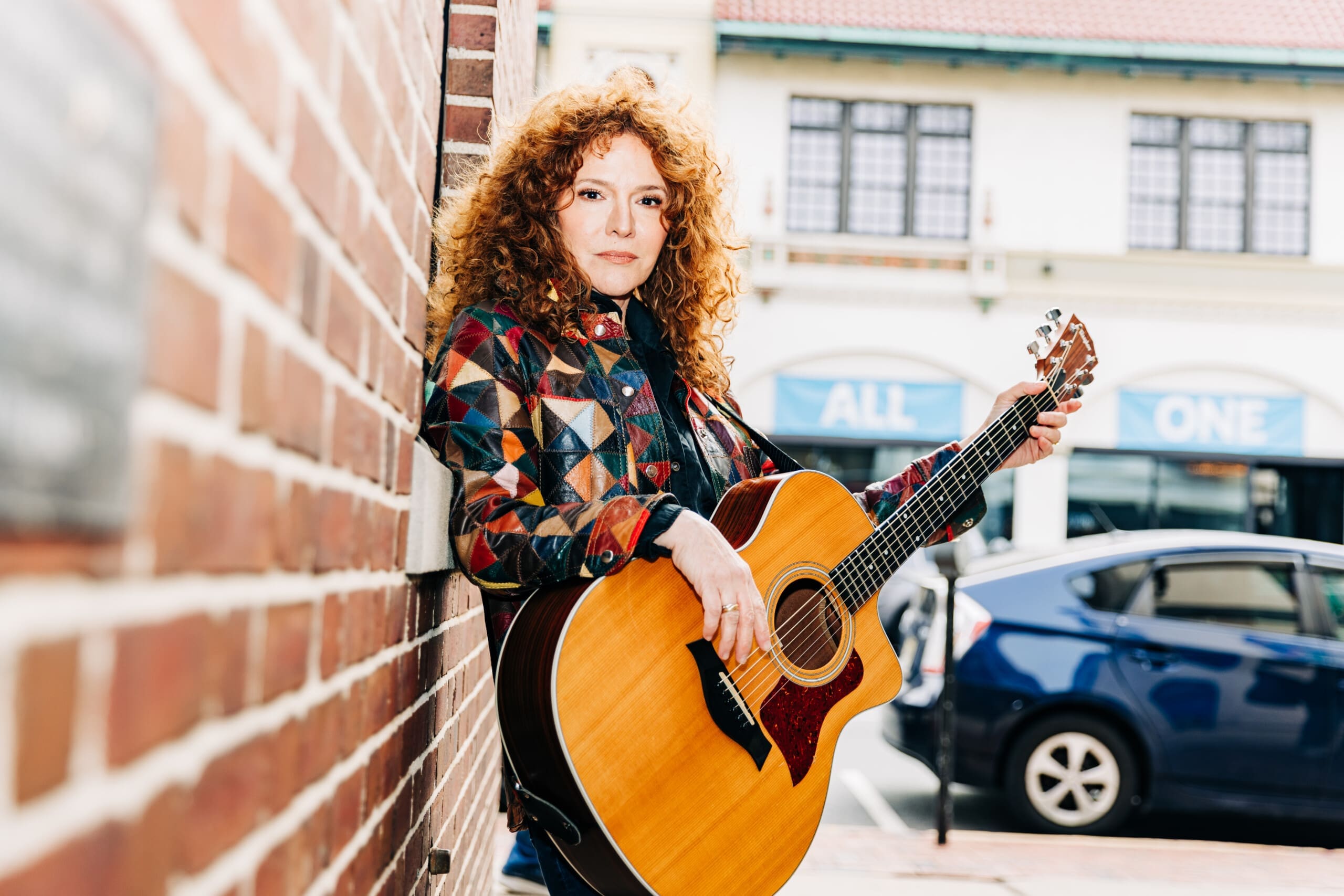
Words + Photos by Julie Hoffman
With a focus on capturing the energy of a live performance, singer-songwriter Lily Vakili’s latest project leans into a more immediate, in-the-room recording style. Her upcoming EP Live Wire, out May 8, features six songs recorded live in the studio with her band, prioritizing connection, spontaneity, and emotional honesty.
We spoke with Vakili about recording live, revisiting older material, and the importance of human connection in her work.
Your latest recordings focus on capturing a live, in-the-room feel. What made this the right time to document your music that way?
I think it came from performing live. One of the things I have consistently heard from people after shows is that they love the music, but seeing it live feels like a different experience. There is something about that connection.
Singing live gives me a deeper connection to the work, and I think part of that comes from my theater background. You are creating something in real time with other people, and that only exists in that moment. I wanted to see if we could bring that into a recording context. That is also how records used to be made. Everyone in the room together, no click track, no isolation. It is more challenging because if something goes wrong, you cannot fix it later. You just have to do another take. But there is something very alive about it.
What did that approach require from you and the musicians involved?
You have to be working with people who are open to it. I always ask, are you game? Because if everyone is willing to commit to that process, you can get through the challenges. There are technical things to figure out, like mic placement and minimizing feedback, but a lot of it comes down to trust and collaboration. When you are all in the room together, you can respond to each other in real time. That creates moments you would not get otherwise.
You have worked closely with your producer across multiple projects. How does that relationship shape your recordings?
This is my third album with Reed Turchi, and he has a very intuitive sense of how to bring out my voice. Because I trust him, I am able to relax more and focus on being the vocalist. That makes a big difference. In other situations, I have not always felt that level of ease, and you can hear that. When you feel supported, you can fully step into the performance.
One of the new songs, “Anybody Knows,” centers on the quiet feeling of waiting for someone. What drew you to that kind of moment?
We all experience that feeling. Not every song has to be about something large or dramatic. Sometimes it is just that internal moment. When you are waiting for someone you care about, it can feel very specific and very personal, like no one else is experiencing it the same way. But at the same time, it is something most people understand. I wanted to acknowledge that and give it space.
Your work has been compared to Patti Smith. Does that resonate with you?
I am very honored by that. She is someone who moves between poetry and music in a really natural way, and that is something I connect to. A lot of my songs start as poems. I never really thought of myself as a singer at first. I was trying to sound like a singer, and that did not feel right. At some point I was told to just speak and let it become song, and that changed everything for me.
How did that shift affect your voice?
It opened it up. The more I approached singing as an extension of speaking, the more natural it felt. I started to access a fuller sound. At one point a producer told me I had a bigger voice than I realized. It was not about changing my voice, it was about letting it come through in a more honest way.
You are revisiting songs you wrote years ago. How has your relationship with them changed?
That is exactly why I wanted to do this. Some of these songs are about ten years old, and my relationship to them is different now. A song is not fixed. It evolves as you do. For example, I wrote “Lake City Blues” about my parents when my mother was still alive. That changes how I experience the song now. It is similar to theater. The script stays the same, but the performance shifts over time.
Do you see yourself more as a storyteller or someone processing personal experiences in real time?
It is both. Some songs are more narrative, but they are still rooted in my own experiences. As an artist, part of the work is creating a structure that allows you to communicate those experiences clearly. When you choose to share your work publicly, there is also a responsibility to do that with care and honesty.
Is there a song on the new project you are especially excited for people to hear?
“Hearts Afire.” It is a song I lived with for a long time that never quite fit into previous projects. I would perform it on my own, but it did not find the right arrangement. When I brought it to this album, it finally felt like it had a place. I am really glad it is being released.
What do you hope someone feels when they see you perform live?
I hope they feel seen. Even if their experiences are different, there is something shared. More than anything, I hope they leave feeling a little lighter. Like there is still connection and still hope.
You have lived in many different places. How has that influenced your songwriting?
It has shaped the way I see people. You experience different cultures and ways of life, but there are also universal things that connect everyone. That shows up in the songs. They may include very specific details, but the themes tend to be universal.
In a time where technology plays such a large role in music, what feels most important to hold onto?
Human connection. That is something we have to actively hold onto. This project is called Live Wire in part because of that sense of connection. There is something unpredictable about it, something that feels alive. That is what I want people to hear.
Is there anything else you want listeners to take away from the project?
I think of it as something very simple. It is four people in a room, and one person behind the board, making something together. I love the idea that the creative act is a kind of offering. To me, it is the gifts that we give each other as living human beings. You say, here, I made this. I hope you like it. It is as simple as that.