Written by Kelley Lauginiger
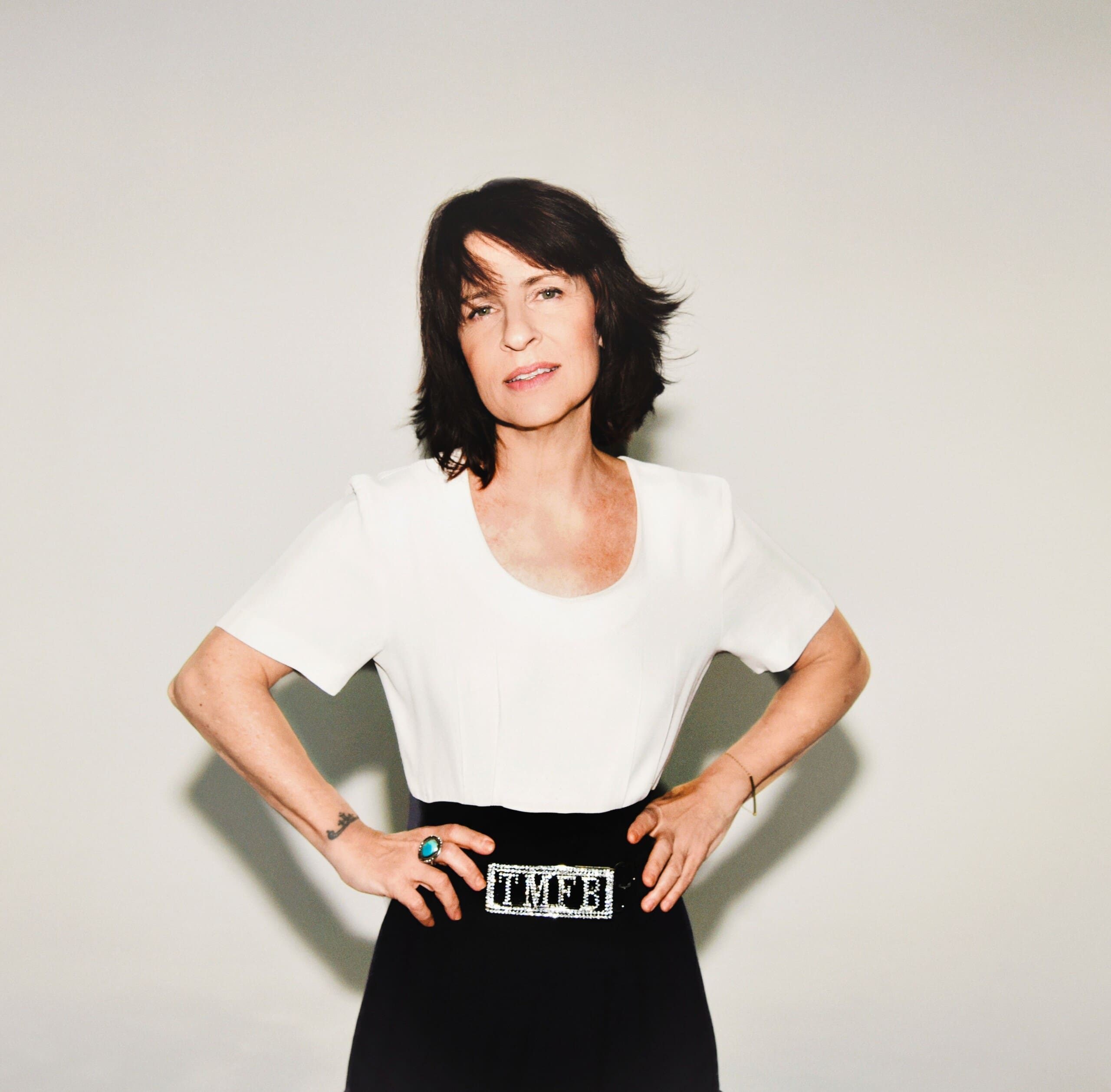
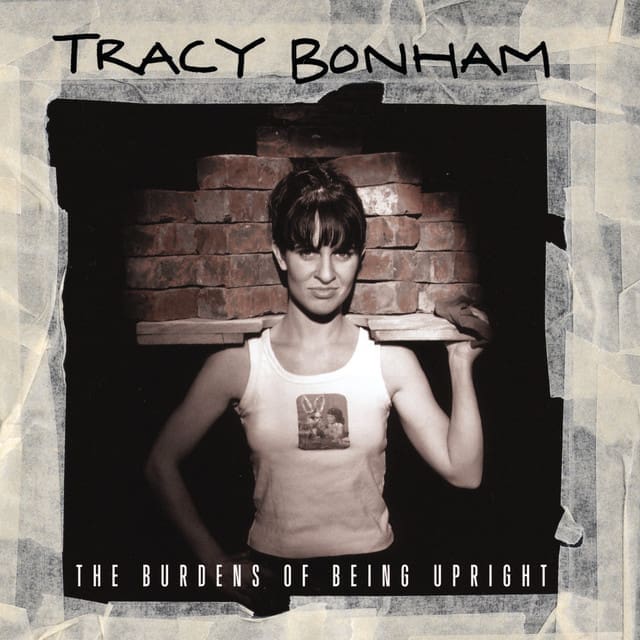
If a queen in a castle is trapped by her walls, then Tracy Bonham has swung a sledgehammer to cobblestone. Bonham’s iconic ‘90s album, The Burdens of Being Upright, has lit the path for those questioning authority, the patriarchy, and all the emotional goblins in between since 1996. This Grammy-nominated album for “Best Alternative Music Album” paired Bonham’s classical training with raw emotion and talent, creating songs that felt authentic, vulnerable, and fearless.
Now, 30 years later, she is touring to perform the album again after navigating motherhood, cancer, divorce, and a long journey back to herself.
Tracy Bonham is a visionary. An ever-evolving human being with a third-eye focused on breaking the fourth wall. It begs the question: why now?
As someone who blasted “the clean version” of this album purchased at Meijer grocery store when she was 13, and now at 42 plays the “swear version” on her kitchen cassette deck, I had to know.
Here’s what the legend herself had to say about life, love, loss, connection, and the alchemy of music and creation to ease the burdens together, through it all.
As a lifelong fan who wore out your baby blue CD in middle school, I mean this with the most love and care: why now?
I have been hearing those voices, the ones that are my true guide inside me. I’ve just been really connecting with myself to the point where it’s become a mission of mine to get back out there, to share and show people what’s possible.
Meaning it doesn’t matter how long you’ve been off the horse or whatever, off the road, you became a mom, you got cancer, you got divorced, whatever, you can get back up.
That’s incredibly powerful. Do you think by touring, you’re bringing a community together in this way?
Yeah, absolutely. That’s a great way to look at it. I feel it’s more important than ever for me to show myself that I can [do it], but also to show my fans and any new people out there [that they can do it too], because right now there’s so many obstacles, and there’s so many forces that are trying to stifle our voices. They’re trying to minimize us, diminish anyone with something to say: artists, women, people of color, trans people; everywhere you turn, there’s an external force that’s trying to stifle us. They’re just threatened. But I think the more I get out there and share my voice and share these songs, it’s about reclaiming.
It’s about reclaiming my power. It’s reclaiming my voice and it’s stronger than ever.
That’s the way I feel and I’m really believing it now. So, it’s twofold. It’s for me, but I think it’s also to inspire people. Maybe young people, and maybe women my age.
Everyone in between and beyond, I think. Is that why you stated in your announcement email to fans, “some of these rooms are small on purpose?”
Yes, that’s right. I just want to connect with my fans again. And that really helps give me more confidence in it. I love the encouragement, so thank you.
Of course. Completely. It’s an honor. Thank you, really. I don’t want to fangirl too much, but there are a few things I’ve always been curious about. One of them is this: what do you think people get wrong about you?
That’s a good question. Because I was loud and abrasive on stage, people assumed I was angry. I guess I was angry sometimes, but it was confusing because the reaction became, “Why are you so angry?” or “She’s hysterical,” or “She’s harsh.” That was a review of my show one year at Reading Festival. Hysteria.
I was reduced to one thing. People are just more dynamic than that.
I’m not just angry. That’s probably the biggest misunderstanding. And I think that’s true for a lot of women with strong voices or strong opinions. It’s easy, especially in a patriarchal society, to write women off as just one thing.
We’re all a kaleidoscope. Men are allowed to be angry and vulnerable and contradictory. They have their own limitations too. It’s not always easy for them. But when I felt people reducing me to being aggressive or harsh, I reacted by going inward.
I started thinking, I want to put something beautiful into the world too. I don’t want to just be complaining.
My second album was very much about my frustrations with the music business, and eventually I thought, “Wait, why am I writing songs about how hard this is? I have a record deal. I’m touring.” There are people struggling in far more significant ways than I am. That realization changed my perspective.
Sure. But, at the same time, if you’re being taken advantage of, or people are profiting from your ideas while you’re not getting what you’re owed, that’s a legitimate reason to be angry, no matter your gender.
Absolutely.
Something I’ve wondered about is the cultural shift that happened toward the end of the ’90s. There was this rise of angry male rock music after a period where women’s voices were becoming more prominent. Looking back, do you think that was a reaction?
Oh yes. I think it was a backlash to how successful Lilith Fair became and how many women were suddenly taking up space and commanding attention. I honestly think a lot of men felt threatened by it.
The record industry was largely run by men at that time, and I think women were taking up a little too much room for their comfort.
It’s almost like society saying, “Okay, you had your turn.”
Exactly. And that’s just not reality. We’re all here. It’s all of our turns.
When the “Me Too” movement emerged years later, did any part of you think, “I’ve been talking about these issues for decades?”
Not exactly. When women began speaking out, it was powerful and necessary, but it was also terrifying. There was so much anxiety around it knowing what these people, these women, were going through sharing their stories.
And we’d seen versions of this before. Anita Hill came before “Me Too.” These conversations weren’t new.
My songs dealt with abuse and difficult relationships, but on a larger scale, I still wasn’t fully comfortable calling myself a feminist. That’s something I admit now, even though it’s uncomfortable.
I’ve described myself as a ‘reluctant feminist.’
My songs could express those feelings because the stage felt safe. But in my everyday life, I was still filtering myself through what men might think.
I’d see friends who were confident feminists and feel intimidated by them. I worried I wasn’t informed enough, or smart enough to participate in those conversations.
Even as recently as 2017, I was still carrying that insecurity. I was in a marriage where someone else often occupied the spotlight, and I had become very accustomed to taking a subordinate role. I’m not doing that anymore.
You’ve said that the stage is the one place where you feel most comfortable and most like yourself. Would you say there’s less intimacy for you when performing to a crowd than a one-on-one with someone, but that by performing, it allows you to release your feelings on stage?
Yes, and that’s what’s really interesting. That’s the place where I can create a boundary it seems. In life, I have a hard time with that so I avoid it. For me, I can let it all out and get it all out on stage, and leave it there.
Is that something you think you were born with, as a natural performer?
A little bit, in terms of just being on stage, but I think this was especially nurtured by my mother. I also witnessed her on stage, at the Eugene Community Theater, and that was huge. She became larger than life.
I think for this reason I was born into it, rather than born with it.
I’ve heard you talk before about how important it is for children to see their parents pursuing something they’re passionate about. Looking back now, do you think your mother may have been working through some of that grief on stage the same way you’ve worked through things in your music?
Oh, wow. That is really introspective. Your questions are great. I really do think so but I did not realize it until now. As an adult woman who has lived experiences, I can now relate when I look back.
Looking back, she was absolutely grieving the death of my father on stage. But, when I’d see her perform, she was this amazing, powerful woman full of feelings. Full of life. A force. A true performer. I learned from watching her, I think. So, yes, this shaped me.
Before meeting my father, my mother had left a previous marriage where she wasn’t fully respected. It was the late ’50s and early ’60s, and women were often expected to stay home and not pursue their dreams. My father was different and then he died. My mom must have been working a lot of that out on stage, and I see that now. She probably had a lot to get out.
The more I hear you talk about it, the more I see a continuum between your mother’s experiences and your own. You’ve described yourself as someone who struggled with boundaries and people-pleasing, but then on stage you become completely uninhibited. It makes me wonder if performance became a place where both of you could reclaim your voices.
That’s a really interesting way to look at it, and I just do not know. But the answer is probably, “yes.”
A little lighter question in this area of your mom’s influence, is there a musical theater influence in your work that people might not immediately recognize?
Absolutely. Musical theater has always been part of my life. I grew up around it and performed in school and community productions in Eugene, Oregon. Looking back at my catalog, some of the songs really do feel like they belong in a theatrical setting. I’ve been told that some of my songwriting has a storytelling quality that differs from a typical pop song. I love hearing that because I’ve always felt a connection to that world.
TIs that why it’s never derivative? Regardless of the various genres you touch in your music, it still sounds distinctly like Tracy Bonham?
For the musical genres, that’s what I hope. I’ll sit at a piano, or pick up a guitar and fake my way through folk songs. People and places influence me constantly.
When I was up in Woodstock [New York], Americana seeped in, and you heard it in my music. But my classical roots and indie rock sensibilities always return. I’m an amalgamation of all of it, I suppose. I guess that’s my sound.
Is this your timbre? The ‘Tracy Bonham sound’ and can it be replicated?
Sometimes I like to say that I can’t hire certain guitarists because they’re just TOO GOOD! I play a few chords and have a distinctive sound that I like to slide on the strings.
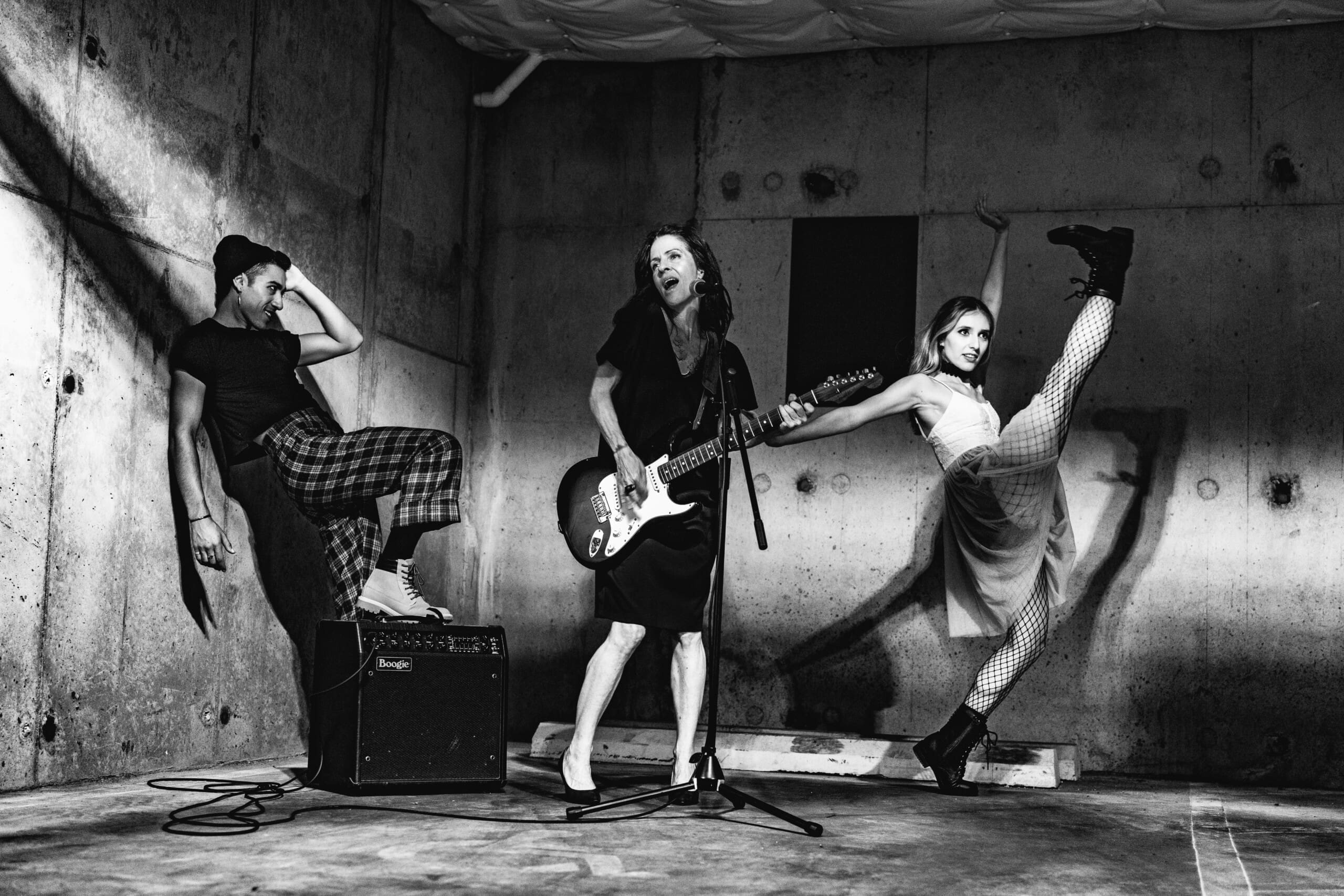
To me, that sounds less like, you’re not good, and more like you’re one-of-one and you can’t be recreated. Perhaps those are different things?
I guess. I’ve found a couple guitar players in particular who can almost do it. And it’s kind of a fun thing to challenge them to do it. I love that they don’t make me feel silly for not being able to ‘shred scales’ or play a solo or ‘doodly doodly doodly’ (emulates guitar shredding). I appreciate that the people who do play with me, appreciate it as unique, and my own, and don’t belittle me.
And who needs anyone else! Given everything you’ve shared about growing up without your father and struggling with boundaries, I love that you’re challenging the men in your bands to match ‘your sound.’ Aside from some awesome bandmates you’ve worked with, it sounds like many of the positive reinforcement in your life has come from women?
Absolutely. And it took me a long time to truly connect with women on a deeper level. But once I did, it was incredible. So, so good.
Sometimes powerful women can seem intimidating until you realize they’re actually showing you what’s possible.
Exactly. Part of it is getting older and wiser. Eventually you reach a point where you realize what you’ve been doing isn’t working anymore.
You wake up and think, “Tracy, this isn’t working.”
Has there been a moment in your life when you ignored signs for a long time and then finally couldn’t ignore them anymore?
Oh, yes. The biggest example was leaving my marriage.
I was unhappy for a long time, and eventually I received what felt like a very clear sign from the universe telling me it was time to go.
We had a son, so I was incredibly hesitant. I didn’t want to create upheaval in his life. But staying had become its own kind of unhealthy. Looking back, I think remaining together would have been more damaging for him, for me, and for all of our overall health.
Now I try to shorten my reaction time. I try to listen to my intuition sooner and stop delaying my life. I feel what my body is in tune with. That takes time and experience.
That’s so true. And it can be difficult. Do you think that fear convinces you to stay where you are?
Yes. It’s a fear of change. Fear of disappointing people. Fear of being alone.
I had ridiculous thoughts racing, like, “I’ll never own a coffee table again.” “I’ll never have a couch again.”
You spiral.
But eventually the cost of staying becomes higher than the fear of leaving. For me, the final sign came when my body started breaking down. That was when I knew I had to listen.
And now that I can associate what that feels like, physically, I’m trying not to let it happen again.
Do practices like meditation help you connect to those signals?
Absolutely.
I’ve spoken with a lot of musicians who experienced significant losses early in life, and many of them describe reconnecting with those people later in unexpected ways, meditation being a big one.
Do you feel your father’s presence?
Yes. Now I do. Of my grandparents as well.
For a long time I didn’t feel my dad. But over the last decade, I’ve started to. Now, I talk to him, and my grandparents, who are also gone. But I look at pictures of my grandma and grandpa, and I like to celebrate things with them as if they’re here. They feel like they are in a way.
I’ve spent more time tuning into myself, too, but feel that my dad has genuinely made himself and his presence known to me more, in the last 10 years especially.
Do you still feel like you’re trying to make him proud?
Honestly, I feel like he’s always been proud of me. I don’t have to try to make him proud, he already is. I don’t know exactly where that feeling comes from, but it’s there.
I love that.
For readers discovering your music for the first time, or even people who’ve been listening for decades, I think there’s something meaningful in hearing that from you directly.
You are kicking off your tour with the Sony Hall (in New York City) show. It’s just a couple of days away now (at time of interview).
Oh wow. I should probably practice (laughing).
Are you rehearsing locally?
Whenever I can find a place, yes. Always practicing whenever I can sneak it into time and place. The musician playing the duo set with me (at Sony Hall), Kevin Salem, has a space where we can rehearse. Sometimes I go to Woodstock where he lives. In New York City, you practice wherever someone lets you make noise.
A musician I’ve worked with, Marco Benevento, lives up there as well. He has often expressed the challenges for musicians within the changing music industry and how much more independent artists can be today.
Would you encourage young musicians to stay independent rather than sign traditional deals?
I know Marco well. And yes, it’s challenging, but it’s very different now from when we were cutting our teeth. There are still challenges, though.
Record labels often want a percentage of everything, which can be difficult. At the same time, there are more options than ever to create and record your music.
There are licensing deals. Distribution deals. Crowdfunding platforms like Kickstarter and Patreon.
The labels used to function as the banks. That role doesn’t really exist the same way anymore.
The upside is that artists have more control. The challenge is building the audience and the infrastructure yourself. The social media following and the follower count was never a part of the conversation before, because it didn’t exist. That’s all something they consider.
At the end of the day, you still have to know who you can trust. When you’re young, or at least when I was young, I didn’t know how to listen to my gut, or even hear it.
A lack of boundaries got me into so many challenging situations. I would tell young people that the sooner they can get to know themselves and find grounding practices to tap into their higher calling and best selves, the sooner they will be successful.
In this day in age, with social media and everyone caring so much what the world thinks of them, it’s even harder. I can’t imagine starting out today. Find your peace, young artists. That’s my advice.
It seems like technology has made creation more accessible than ever. You can record an album on a phone now. What artists still need is access it seems like. Is that what the label provides now?
Exactly. Yes. It has always meant radio, promotion, visibility. Now also means social media, press kits, you name it.
And – they want you to arrive with an audience already built. That can be hard for anyone just starting out, and above all, should not steal from the artist’s authenticity.
That’s also my advice to young artists: don’t sign anything without really knowing you can’t do it yourself, and if you do sign it, don’t forget why you started out and what you had to say. It’s different for everyone and for some people, it may be great exposure and a solid contract. Just MAKE SURE.
If there’s one thing people should know about this tour and what comes next, what would it be?
I have bigger plans beyond this.
This tour is laying the groundwork for what I believe is really my calling.
It’s about music, being on stage, and helping people use their voices, especially people who feel limited, whether those limitations come from society or from themselves. It’s everything I want to give back to the world.
Eventually, I want to create something even larger that combines orchestras, storytelling, education, and all of these ideas I’ve been exploring for years.
I still have a lot left to experience, but I also have a lot left to share. This tour will set the groundwork for all that is to come.
It sounds like you’re expanding beyond being a performer into becoming a guide of sorts. You’re bringing musicians, educators, and audiences together around these ideas that are important to you.
That’s exactly how it feels. I’m excited about this tour, and it will set the groundwork. I’m excited about the future.
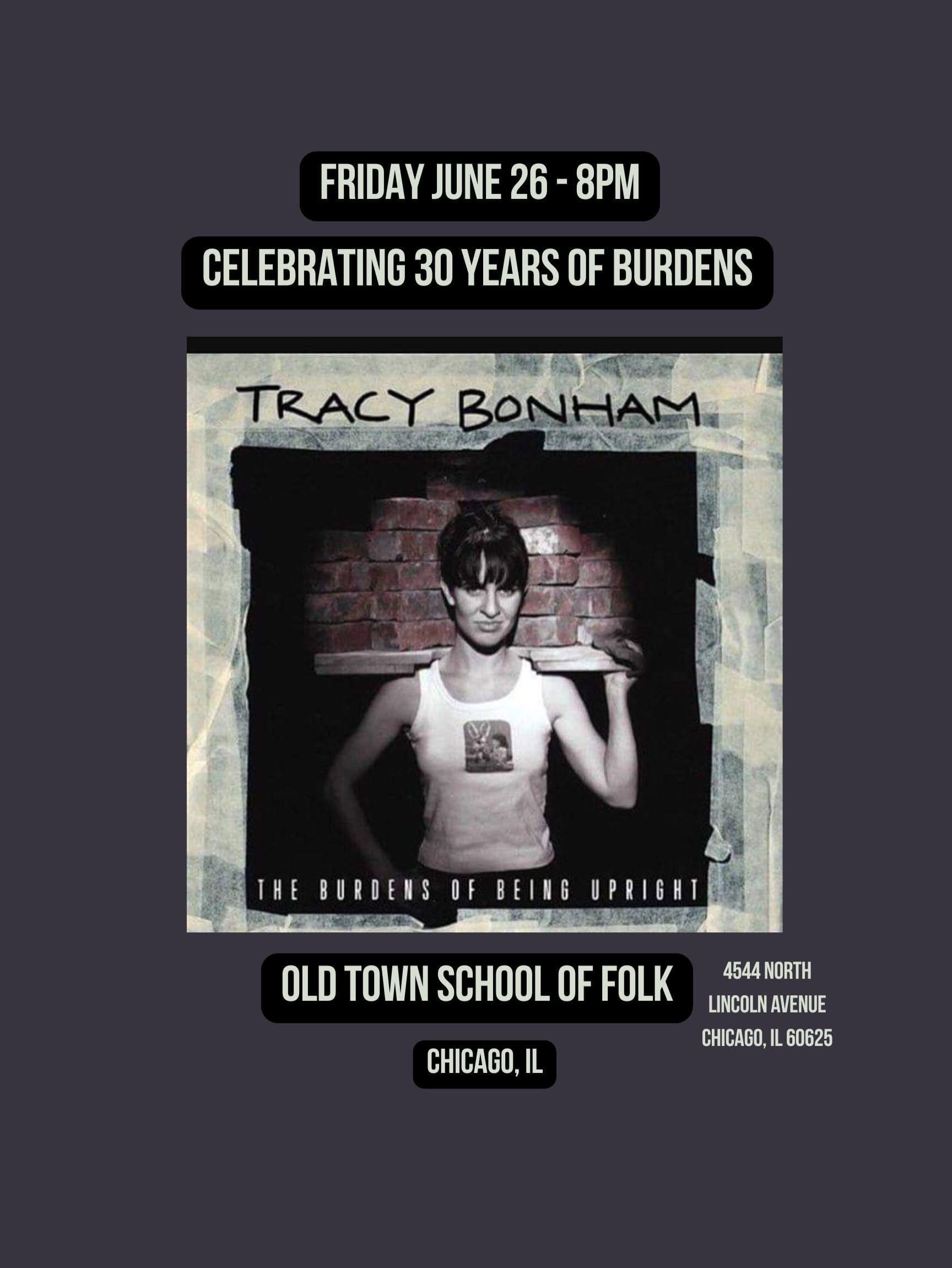
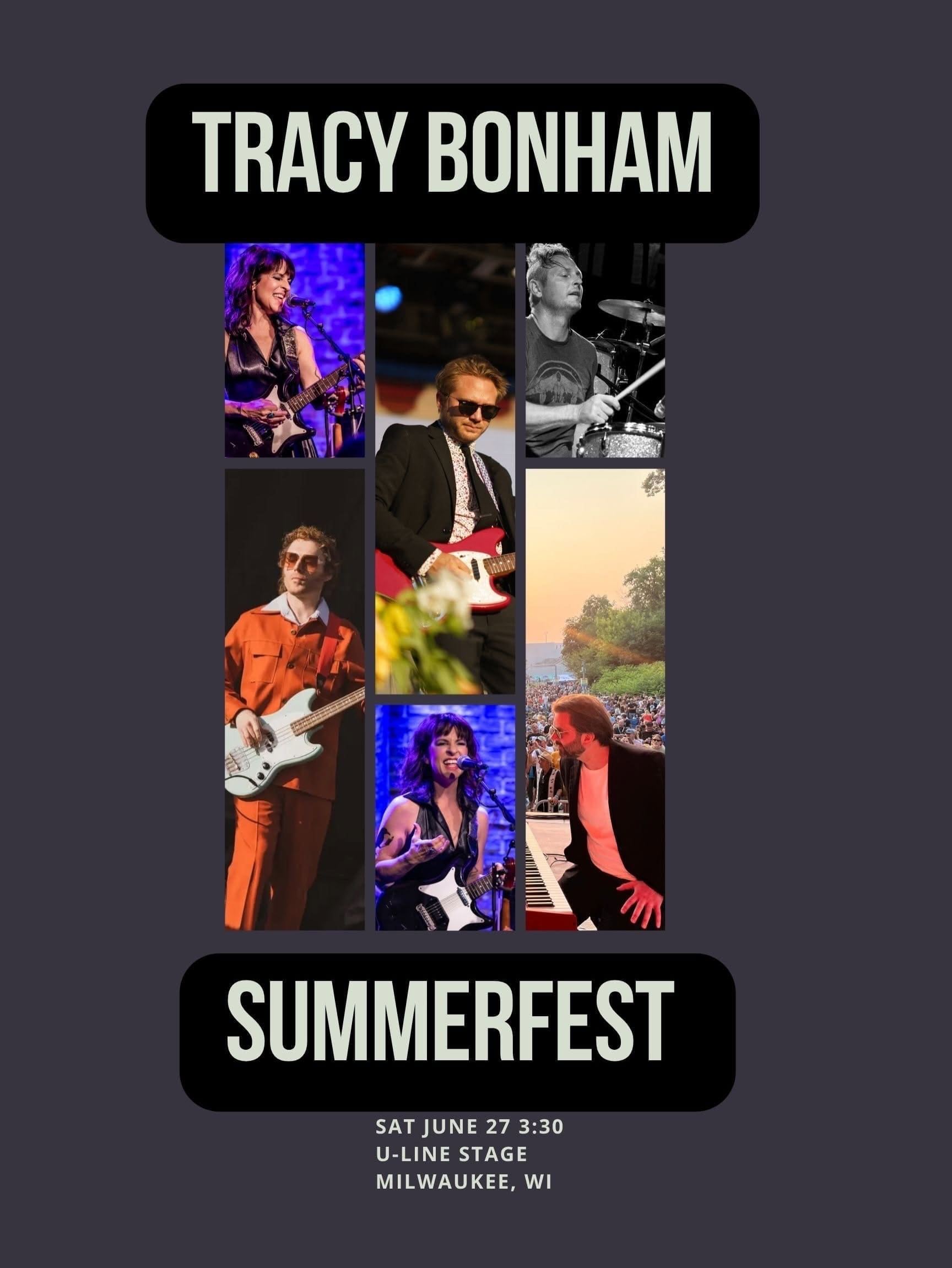
Tracy Bonham tours the U.S. this summer – including Friday June 26 at The Old Town School of Folk Music in Chicago and Summerfest in Milwaukee, Wisconsin on Saturday June 27. Click here for dates and tickets.
And now for something completely different … a bit of a yes and no lightning round of questions that Tracy and Kelley did before the start of the interview.
Bonus: Yes or No with Tracy Bonham
Kelley Lauginiger: So we’ll start with an easy one. Your name is Tracy Bonham.
Tracy Bonham: (Laughing) Yes.
Kelley Lauginiger: You have pets.
Tracy Bonham: (Frowning) No.
Kelley Lauginiger: You have children.
Tracy Bonham: (Ecstatic) Yes!
Kelley Lauginiger: You sing songs to your kids.
Tracy Bonham: (Smiling) Yes.
Kelley Lauginiger: AI music.
Tracy Bonham: (Wincing) No.
Kelley Lauginiger: Prince post-mortem releases.
Tracy Bonham: (Stank face) Yeah. Oh yea..
Kelley Lauginiger: Okay. Girls can do anything boys can do.
Tracy Bonham: (Smiling) Yes.
Kelley Lauginiger: Have you ever done a scream therapy room?
Tracy Bonham: Yes
Kelley Lauginiger: Is there a connection between (your songs), “Navy Bean,” and, “Jumping Bean?”
Tracy Bonham: Can I answer with more than one word?
Kelley Lauginiger: Yes, please do.
Tracy Bonham: I’m following the rules so well! I’m like, “Wait a minute. I can actually….it’s up to you.” Ok, so good. The answer is “Yes,” but just because “bean” is in the title. That’s all.
Kelley Lauginiger: Incredible reveal. I wasn’t sure if it was like a wink, you know? Like a nod to old fans in the newer tracks. Like, a wink to “those who know.”
Tracy Bonham: (Laughing) No, no, just the names in the title.
Kelley Lauginiger: So I just had to ask, as you lived in Boston. Go Red Sox?
Tracy Bonham: Go Red Sox! I live in Brooklyn now, but still am a fan.