Top Interview Takeaways (to the tune of Deadheads ranking the headiest “Deal”)
- Deadtronica might be someone’s first trip on the bus + the duo embraces that.
- Independent venues need our support to keep the conversation alive.
- Every show is still a one-of-one experience.
- Bill Kruetzmann changed the way Magner approaches music and Deadtronica is living proof.
- Deadtronica is not trying to replace anything, but celebrate the past and the future on the same dance floor, forever and ever, Amen.
Written by Kelley Lauginiger
If the Grateful Dead made one thing clear, it’s that songs are living things. Every show offered a new path of exploration, a new conversation, and new possibilities. Like a sprawling “Dark Star,” their music was never meant to be static.
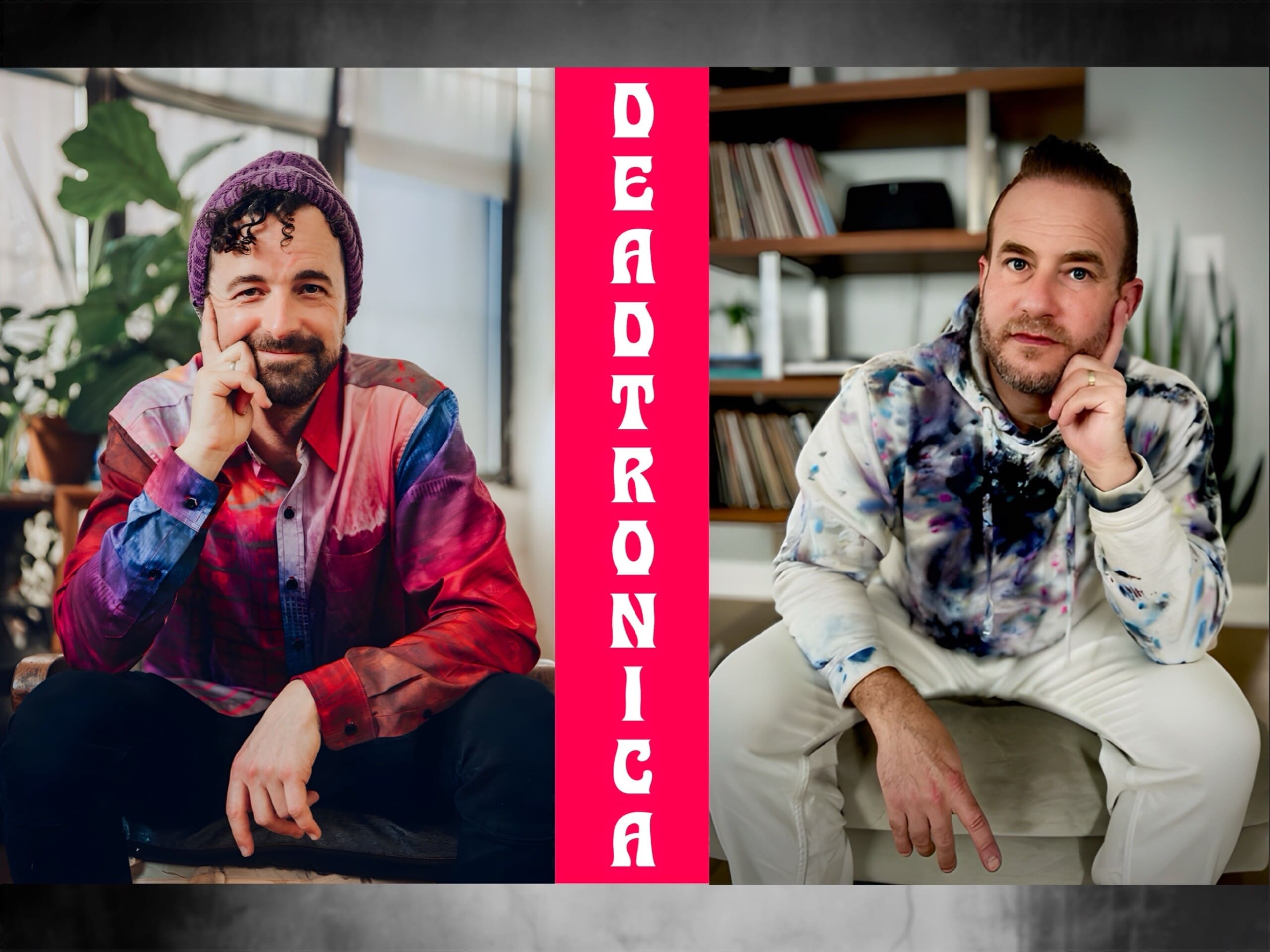
Deadtronica is carrying that spirit of exploration onto the dance floor. The project pairs The Disco Biscuits’ Aron Magner with producer and guitarist Cloudchord to honor the Grateful Dead’s legacy while viewing it through a distinctly funky modern lens. The duo’s first offering is titled, Deadtronica Vol. 1 so let’s hope this is just the beginning.
Rather than treating the Dead’s catalog as something to be observed, preserved behind glass, Deadtronica approaches it the same way the Dead approached its own music: as something meant to be explored, engaged with, challenged, and reimagined.
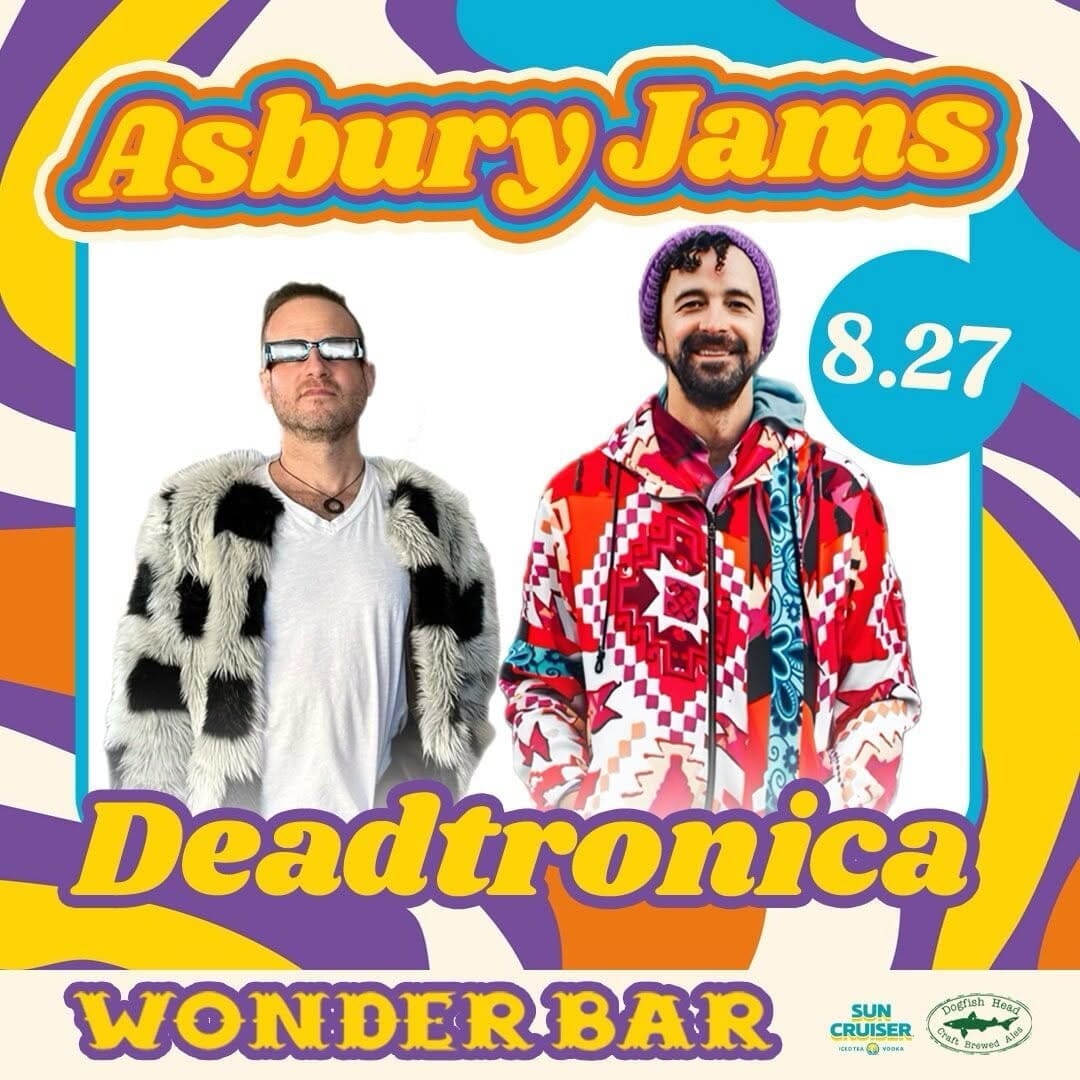
Ahead of Deadtronica’s appearance on Thursday, August 27, at Asbury Park’s Wonder Bar, Magner spoke with The Pop Break about creativity, community, the enduring influence of Bill Kreutzmann, and why honoring the Grateful Dead’s legacy means embracing the unexpected.
Before diving into Deadtronica, you recently contributed to Karina Rykman’s “Joyride.” When we asked Karina about working with you, she described your versatility as “staggering,” highlighting how seamlessly you move between synths and piano. Karina also couldn’t resist mentioning your other standout skill: making quick work of taking down a seafood tower. How do you respond to this?
That’s really nice to hear. We live in a culture where people are often encouraged to criticize each other, so it’s refreshing when someone takes the time to lift someone else up.
What I love about Karina, is that Karina’s music sounds like Karina as a person. Her energy and personality come through in her sound and music and that’s what it’s all about. That’s what I love about it. It reflects her personality and identity. I think what I admire most about Karina is her ability to bring people together. She’s incredibly talented, but she also uses her personality and passion to build community.
Being a creative person is difficult, and right now it’s an especially challenging time. That’s why I think it’s important for artists to support one another, whether that’s collaborating on a record, showing up to a show, or simply sharing encouragement, so this is just a really cool thing to hear.
Music is an oral tradition. We learn from the musicians who came before us and hopefully pass something meaningful to the next generation. Karina and I share many similar influences and working with (Phish’s guitarist) Trey Anastasio on the “Joyride” track is a perfect example. Karina brings people together.
That is fun, and very uplifting. She is a true delight. Regarding influences, what inspired you and Cloudchord to create Deadtronica?
I’ve been a Deadhead since I was a young teenager. My older cousin introduced me to the Grateful Dead, and I ‘got on the bus’ pretty early. I was fortunate enough to see around 50 Grateful Dead shows before the end.
The music has always been part of my DNA, but I never really played in a Dead cover band. Well, that is until I started learning a lot of the material as a performer working with Billy & the Kids.
Over time I developed a deeper appreciation for the Grateful Dead catalog and its complexity, especially as the Dead scene experienced a resurgence after GD50 in 2015, and the rise of Dead & Company. I found myself digging deeper into the repertoire and thinking about new ways to express that music.
How did the idea of combining Grateful Dead music with electronic music take shape?
So, Cloudchord was working with Biscuits on Revolution in Motion (2024). Cloudchord and I were curious about what would happen if we put Grateful Dead music over dance beats.
Some songs lend themselves naturally to that treatment. “Shakedown Street” already has disco influences, so it easily translates into house music. “Feel Like a Stranger” gave us more freedom, but it still made sense in that context.
At first we worked with songs that naturally fit electronic tempos. Now we’re challenging ourselves to go further and reinterpret songs that weren’t obvious candidates. That’s where it gets really creative. I can’t wait for people to hear “Victim or the Crime,” that one is especially unique I think.
You’ve said that members of the Grateful Dead family have encouraged you to bring your own identity to this music. Did working with Bill Kreutzmann in Billy & the Kids influence your willingness to take creative risks?
Magner: Absolutely. Bill Kreutzmann is one of the biggest risk-takers I’ve ever played with. You never know where a jam is going to go. He might immediately throw you into musical “Class 5 rapids.”
In those moments, you can’t hesitate. You have to commit. You have to trust the musicians around you. You have to listen deeply.
Working with Bill reinforced the idea that creativity requires vulnerability. Sometimes the experiment succeeds. Sometimes it doesn’t. But either way, you learn something.
One of my most vivid memories is from a VIP set at LOCKN’. I think it was 2015. It was so hot on a Virginia afternoon and we only had a short set, about 30 or 45 minutes between hour sets for this special group. When we got ready, Billy hit them with a full set Dark Star. This is exactly what is unexpected as the soundtrack to a VIP set in a field. They had crab legs set up on ice, and had no idea what was about to happen.
It also was one of my most impactful memories, and was a total blast. They liked it. Crab legs in a field. August. “Dark Star.”
This is the world we dream of, frankly. With Deadtronica, how do you balance honoring the original songs while making them your own?
One of my goals is to keep something familiar that grounds the listener. Usually that’s Jerry’s voice or a recognizable melody.
For example, on our version of “Casey Jones,” the vocals and melody remain recognizable, but we’ve re-harmonized the song underneath. The chord progression changes, the mood changes, and suddenly you’re hearing something familiar in a completely different context. That is enough to catch the ear.
I love that tension. Listeners often need a moment to recalibrate because they’re hearing something they’ve known for decades in a new way. That discomfort can actually be interesting. It captures attention.
Was that sense of familiarity important to you and Cloudchord for getting listeners invested immediately?
Honestly? It wasn’t really a strategy. It was a natural outcome of the process as fans who respect the original sound.
Keeping Jerry’s vocals provides an anchor point. If I sang the songs myself, people would probably hear them as covers. Hearing Jerry’s voice is the constant people are used to, and changing keys, tempo, or other parts of production is transformed by modern techniques. This combo creates something different than what we have personally heard before. It feels like a conversation between eras.
Sometimes we’ll use effects, delays, or processing that place his voice in a modern sonic environment. To me, that’s exciting.
I also know that some people might consider this sacrilege.
How do you respond to that?
That’s okay. We love them too. We expect that.
There are definitely purists who want the music performed exactly as it was originally played. There’s nothing inherently wrong with that. But as a creative person, I’m more interested in seeing artists develop their own voice.
We all learn through imitation, but eventually the goal is to express our own identity. I don’t want musicians to sound exactly like their influences. I want to hear who they are.
That’s true whether we’re talking about Billy K, Karina Rykman, Deadtronica, or any other artist.
Are you hoping Deadtronica introduces younger electronic music fans to the Grateful Dead?
Maybe.
I’m not necessarily setting out with that mission, but if it happens, that’s wonderful. The Grateful Dead’s music is rich enough to exist in all kinds of contexts. If someone discovers the catalog through Deadtronica and then dives deeper, that’s a positive thing.
What do you most want people to know about Deadtronica?
Honestly, I think my biggest message is a call to action to support live music.
I’ve spent more than 30 years watching the music business transform. Revenue models have changed. Touring has become far more expensive. Venues face enormous challenges. Young musicians face enormous challenges.
Independent venues and local music communities are incredibly important. Places like the Wonder Bar or my local room, Ardmore Music Hall, provide opportunities for artists and audiences to connect in meaningful ways.
Every time I actually get off my couch and go see live music, I’m reminded why it’s worth it. We need to keep supporting that ecosystem.
Deadtronica is bringing this project to Asbury Park’s Wonder Bar, a venue with deep community roots in the local music scene. What do venues like this mean to you?
Honestly, that’s become one of the biggest messages I want to leave people with. I’ve spent more than 30 years watching the music business transform. Touring is more expensive than ever, venues face incredible challenges, and younger musicians are trying to build careers in a landscape that’s tougher than it’s ever been.
When I hear about a place like Wonder Bar, what stands out is that it’s connected to the community. Those are the kinds of rooms that matter. They listen to what people in the area want to hear, they curate diverse lineups, and they create opportunities for artists and audiences to connect in a meaningful way.
My local venue is Ardmore Music Hall, and I’ve watched them build something really special. They bring in jazz, jam bands, singer-songwriters, all kinds of music, and people show up for it. That’s how scenes stay healthy. That’s how younger musicians get opportunities.
I think we all need to support those operators. Every time I actually get off the couch and go see live music, I’m reminded how rewarding it is.
The ecosystem only works if people show up, buy tickets, and participate. Places like Wonder Bar are a huge part of keeping live music alive.
Why should someone come see Deadtronica live instead of simply listening online?
The recorded music is carefully produced, but the live show is different.
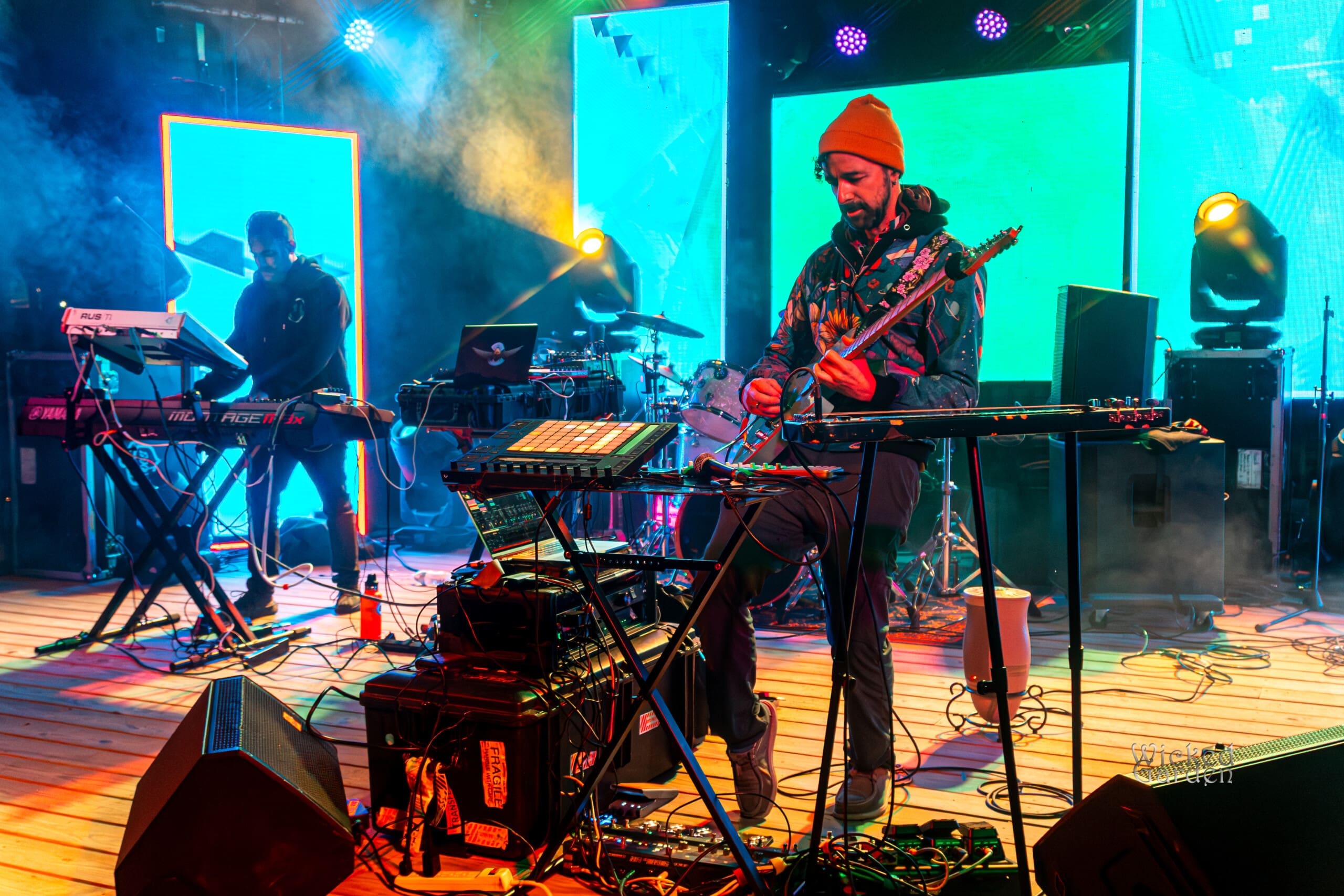
There’s definitely technology involved, but we’re not simply pressing play. Cloudchord and I are performing, reacting, interacting with each other, and interacting with the audience.
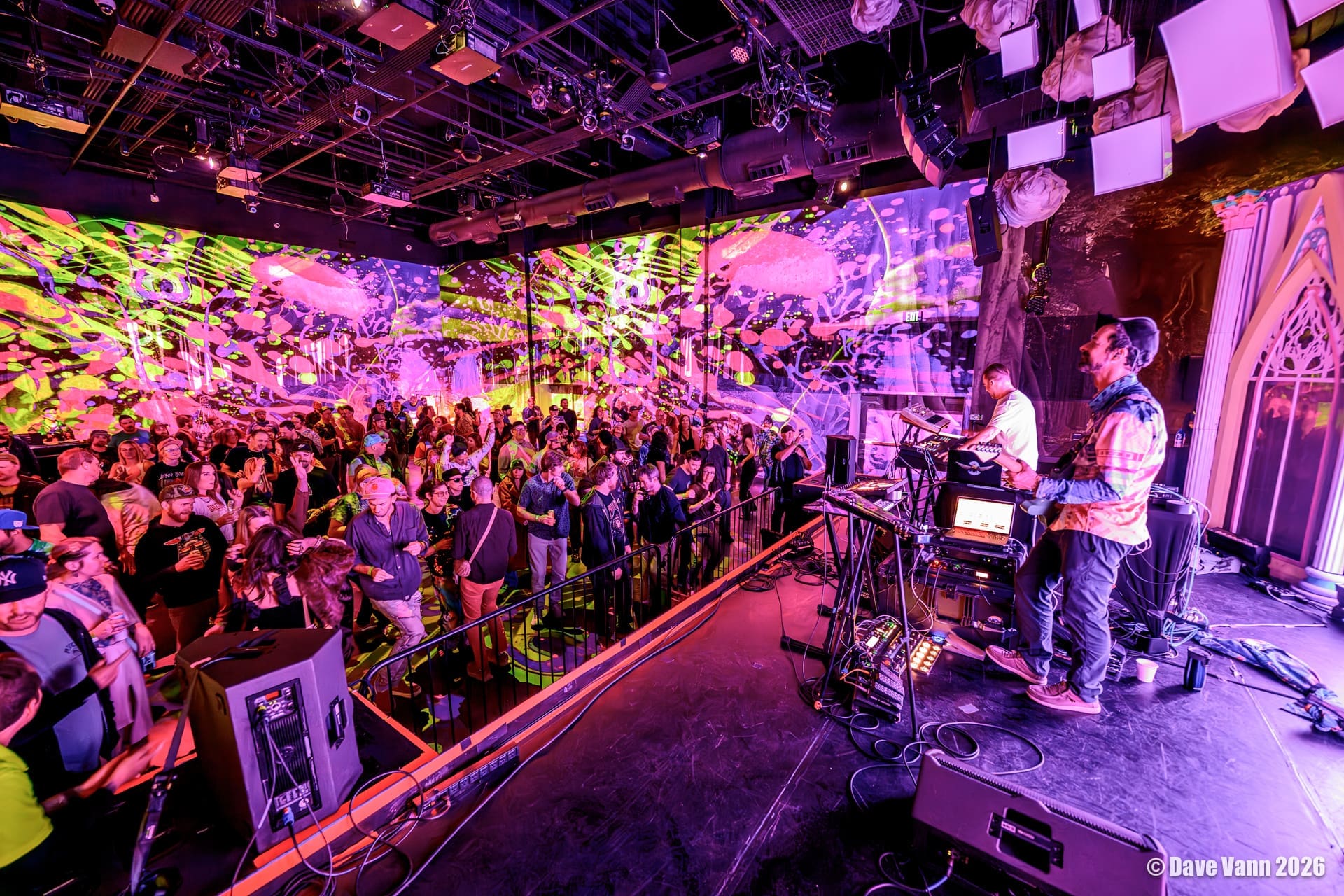
The crowd becomes part of the performance.
Every show has its own personality. The songs evolve. The solos evolve. The energy evolves. That’s something you can never fully capture in a recording.
What have you learned about improvisation through those experiences?
Improvisation is about trust.
You trust the musicians around you. You trust your ears. You trust that everyone is serving the music rather than their own ego.
One person might think a jam didn’t work, while another person thinks it was the most magical thing of the night. Music is subjective. The important thing is staying open to possibilities.
You’ve played with the Disco Biscuits for over 30 years. How does that longevity affect the music?
It’s a superpower.
Most relationships don’t last that long, let alone bands. When musicians spend decades together, communication happens on an entirely different level.
Sure, there’s the ability to anticipate what another musician is going to do. But it’s deeper than that. It’s like four independent minds developing a shared language over decades.
That’s incredibly rare.
You often talk about musical lineage. Why is that so important to you?
Because that’s how music gets passed down
I’ve had opportunities to hear stories from musicians who learned from legends before them. Those experiences become part of a larger tradition.
In the Grateful Dead world especially, there’s a real lineage. Stories, lessons, musical approaches, and experiences are passed from one generation to the next.
That’s one of the beautiful things about being part of this community.
Final thoughts. What’s in it for people considering the show to come in person and not just listen online?
Come to the show. We’ll all dance together and Derek (Cloudchord) will come out and shred up front while we all make a new tune. If you’re more of an observer, what you’ll see on stage is joy, passion, and a shared celebration of music that has inspired all of us in different ways.
“We’re just trying to use a little bit of time for fun,” to quote Marco Benevento.
We’re not trying to replace anyone’s love of the Grateful Dead. We’re trying to enhance it.