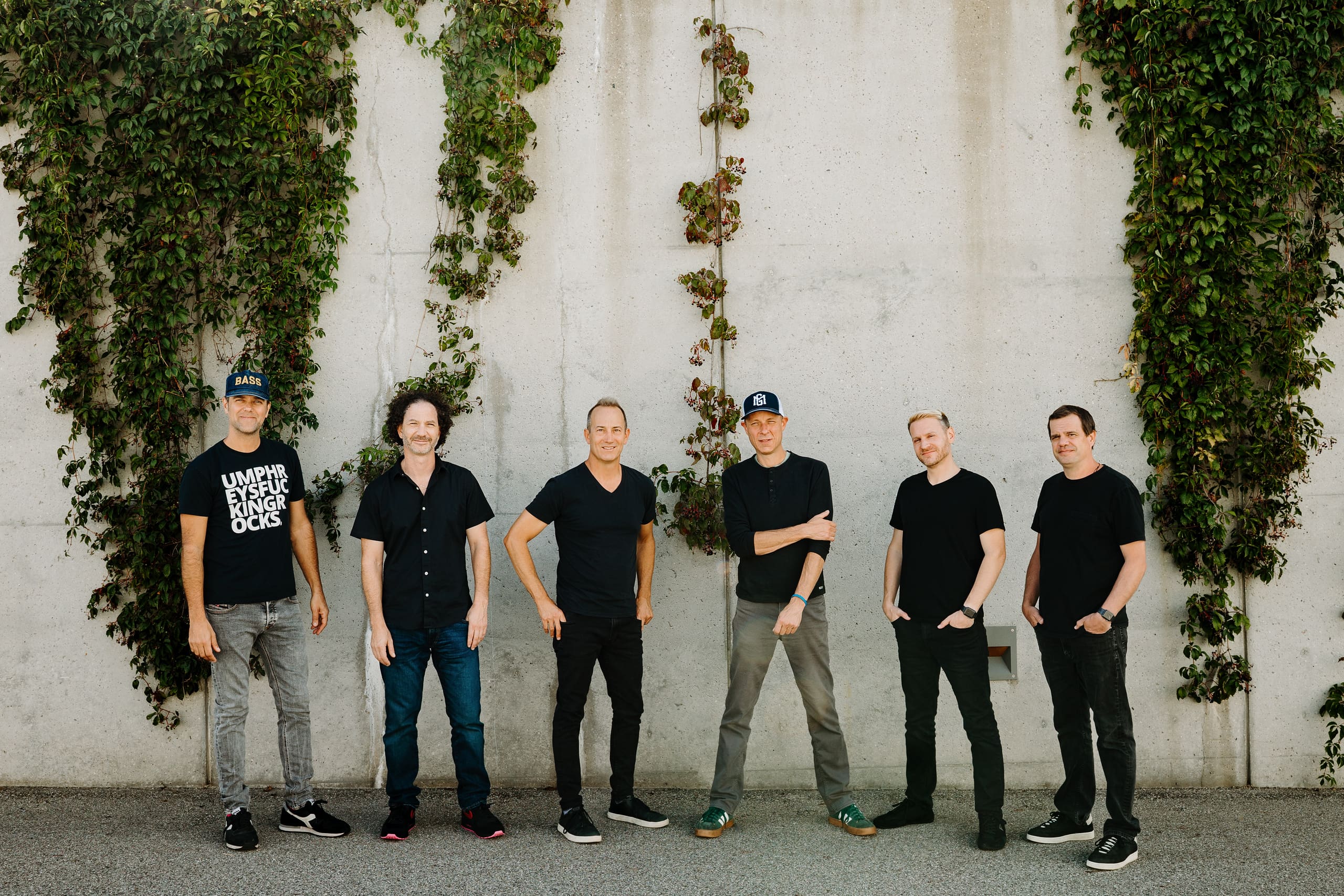
One of the most beautiful things about the jam band world is the community. The relationship between bands and their fans, and the fans amongst themselves is an awe-inspiring thing to behold. It’s reassuring, especially in the current climate, to know that people from all over the world, no matter who they are, what they do, who love them, or what they believe in can all bond over the universal language of music.
The bond is so strong that the seminal Umphrey’s McGee went to their fanbase to collaborate on the creation of their new album. No, this was not some sort of crowdfunding initiative. UM literally asked their fans delve into the band’s wide database of recorded and live jams to help them piece together this new record. The UM faithful found lyrics, improvisational moments, solos, drum beats, basslines, and riffs to the band who were then tasked with constructing songs and then an entire album.
The result is Blueprints, one of the wildest albums in UM’s epic career of wild improvisation, bold musical risks, and an uncompromising commitment to constantly evolve. It is a beguiling record that defies genre, but it is wholly, and undeniably an Umphrey’s McGee record…and it is fucking awesome.
We caught up with Ryan Stasik, bassit and founding member of Umphrey’s McGee, to discuss the construction of Blueprints, the band’s relationship with their fans, what he loves about the band, and recording the album in a club Guns ‘N Roses hung out at.
Tell me about the impetus of putting Blueprints together. How did you come to the decision of putting the album’s construction into the hands of your fanbase. It’s a pretty daunting, albeit brilliant task.
I think that was just something that made sense to us. We’ve been doing things in our own unique way for 28 years. The fans have always been very attainable in what we do musically, in what we do with our S2 events, or even being involved in the improvisations. So I think at this point it seemed like a really good idea to say, ‘Hey, we’re gonna lay out the blueprints. Why don’t you guys have a say in guiding us in what we should do, or challenge us in a sense, for us to arrange and turn these songs into jam band hits.’
I think the shortest track is 12 minutes; some of them go over the 25-minute mark which is very characteristic of a jam band concert. So to be able to implement that into the fans choosing what we were gonna write, and then us putting it together to kind of make sense of it all was a challenge we accepted, and we’re pretty proud of it, too. Thank you for the kind words. It’s different from anything we’ve done before.
Explain the process of how you presented this challenge to your audience.
The access to all of our material is out there for all of our loyal followers. Everything is there from a database, All Things Umphrey’s. You can have every statistic you want [there]. If you’re a baseball stat nerd you can find our music stats. All of our music’s on Nugs, and even prior, we have recordings. People went back and voted and sent out options, and when we saw all of them lined up and laid out we had the daunting task of firguring out what made sense because some things just don’t work.
Even when you go into a studio to write songs, just by yourselves, and people are like, ‘I have this part,’ and you try to force Legos together, sometimes they don’t fit. It was interesting to have a myriad of choices from the fans and for us to say, ‘Hey, this lyrical part we did 20 years ago actually works over this thing that happened seven years ago, and if we bump it up next to this very fresh, we have something that’s actually working here.’ That’s the six of us, and the engineers, and we’re all kind of self-producers as well in that sense, and you just gotta keep trying it and make sure it feels right.
How does it feel to have a fan base where someone says “I remember this thing from 20 years ago, and I’m gonna bring it up to help you create a song.” Tell me how that feels as a musician and as a band that you have all these people talking about their favorite stuff that maybe you don’t even remember because you have done literally thousands of shows.
It’s a thank you. It’s gratitude. Because if they didn’t then it’s just is a fart in a dust storm we don’t remember. It doesn’t come back. So I thank them.
That’s (laughs) a very good way of putting it. Throughout Blueprints the word LEGO is used. It feels self-explanatory, but I’d love to get it from you. To me it reminds of putting different pieces together like different stanzas together in a classical piece or a Broadway show.
That’s exactly what it was. It is just simply a word that we enjoyed that’s a metaphor we’ve used in past interviews that makes sense. We do that a lot with just our regular songwriting. Sometimes a fan will be like, ‘Hey man, I don’t know how this song in 2014 didn’t make a Hall of Fame.’ I go back and I revisit it. Or there’s a fan forum, and they all talk to each other, and they’re like, ‘I still listen to that version of “All In Time” all the time.’ Then we’ll go back and listen to it because of them, and we’ll be like, ‘I remember that riff!’ Then we’re saying, how does that “LEGO” into something that we could make up right now? And that’s just our fun word of making it happen. It’s the same way we call our improvisation Jimmy Stewart’s. It has nothing to do with Jimmy Stewart. That’s our code for, ‘Hey, it’s time to improvise.’
And from a marketing standpoint, too, the artwork, the word blueprint, the actual visualization of the blueprints, and then the word LEGO looks cool. L-E-G-O, it’s a cool word and everybody knows what it is. Kids still love Legos and then when you put them together, it just makes sense visually of stacking and doing this, and then you’re able to put out a record that has how many tracks are on it now, because of the Legos.
You can listen to it, flawlessly through the way it’s supposed to be listened to, but it’s kind of cool to say, ‘Oh, this is just that section.’ And for the people that don’t know that LEGO number 4 might have been from 20 years ago, that obviously we re-recorded, and re-recorded live, and did together, so it’s cool to break it up that way, where the fans know they had a part of constructing our record.
I remember hearing “Exit Signs” on the radio and enjoying it, but then I heard it on the album, and I heard all the LEGOs added and I was like “Wow, this is wild where this song is taking me.”
I’m glad you said that because it’s very interesting in the time that we live in. This is why I like vinyl and records so much because you have to pay attention to the side. You’re not skipping the needle around to get to your track. You’re not shuffling. You’re not listening to one Lego. I don’t even know if any of these Legos have made a playlist for something because that would be very unusual to me. This is meant to be listened to from beginning to end. I don’t even know what it would be like to listen to just a section of a song. I hope people know that when they go, ‘I like that LEGO.’ I hope they know that you’re supposed to listen to the whole thing and just understand where it came from.
Were there any results that came back in, and you guys just sat there like, ‘Oh man, this is gonna be a challenge.’
No, there’s more than enough to choose from. So if it’s not working, like I was saying before, you can’t make a LEGO, you can’t force a LEGO into a LEGO. It has to fit. You gotta throw it on the floor and let a dad step on it somewhere so he can yell, “Fuck!” It’s just very simple. You move on to something else that would fit. We jam 30-40% of the night every night so there’s plenty of Legos for people to choose from and vote on and do.
You also chose a pretty interesting venue to record in. You took this small club, Top Note, which is located on the fourth floor of The Metro in Chicago. Tell me about the choice to make the record here as opposed to a studio.
I think part of it is that when our management went on a site visit, I didn’t even know the room existed, to be honest. We have a history with The Metro. We have a history with Chicago. Then there was really cool news about when Guns N’ Roses was recording, they used to hang out there, and I think recorded some stuff back for maybe Use Your Illusion 1 and 2. I think it’s post-Appetite. And, we’re all huge Guns N’ Roses fans. That was a band that changed my life.
[For this album] we wanted it to be intimate. We wanted to do multiple days so we could get multiple recordings. All of our gear’s already in Chicago. Logistics. A lot of things make sense for us there. I don’t really get into the financials or the expenses and costs and stuff like that, but the vibe…I don’t know if you’ve ever been to Chicago.
Sadly, I have not…
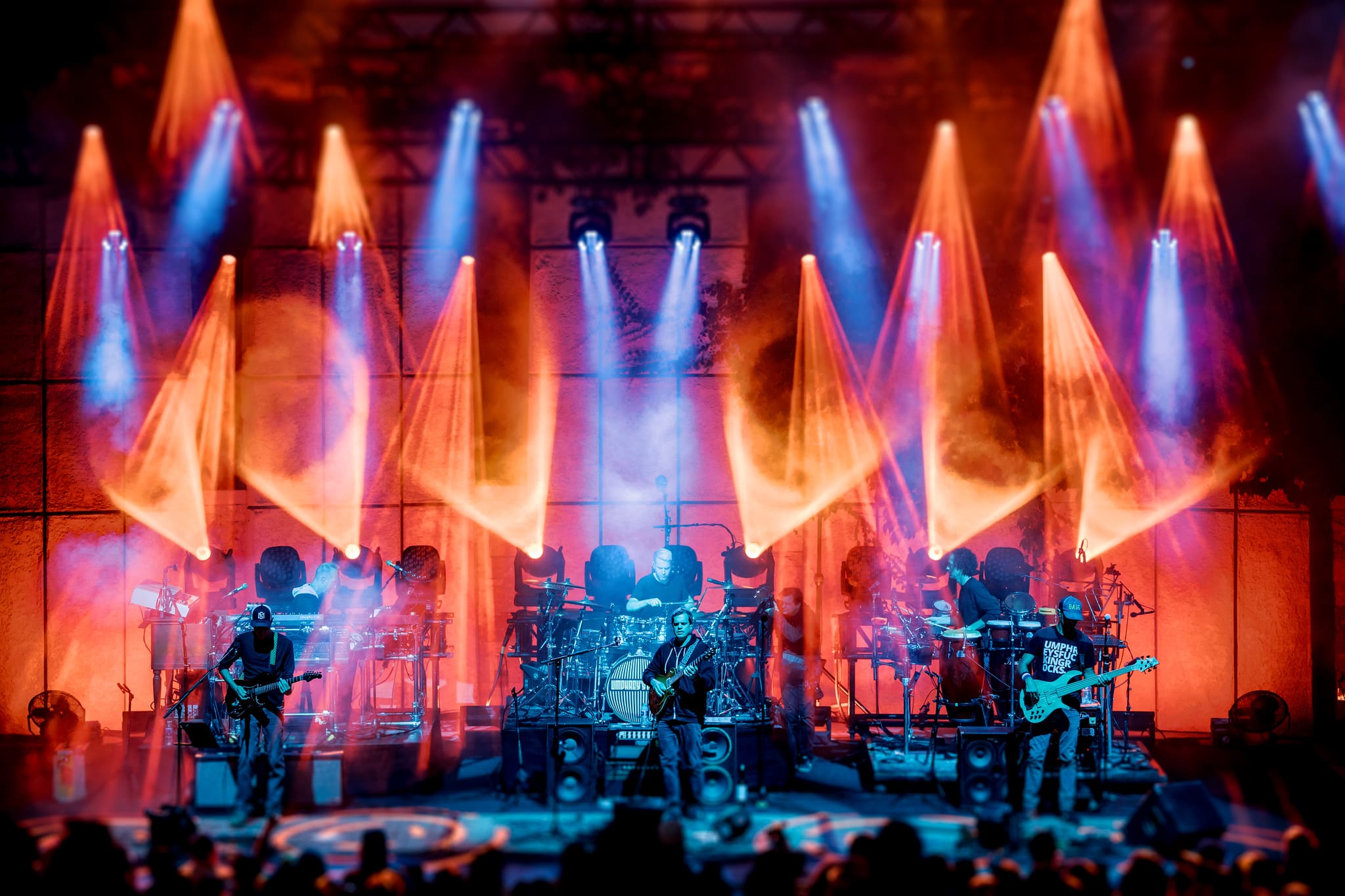
You’re in a historic venue, The Metro, everybody’s played there, and then you’re on the top floor where Guns N’ Roses was hanging out doing Use Your Illusion, and it’s like a small little amphitheater where we were set up in a round. People were seated around us because it was a studio recording. So it wasn’t like a rock show. Nobody’s jumping up and running around and stuff, like, but we’re improvising and playing. Improvising in a studio setting or jamming and doing that while people are seated is always a different vibe, too. But I think that was what was really cool. 100 people, so we kept it small. And it turned out great. It was fun. I don’t think we would have done it any other way.
Now this record is made up of so many different pieces and parts. It’s out there for everyone to hear. Do you play it the way it’s on the record, or do you still improvise a little bit more on it.
Absolutely. For example, I think my favorite track is “Unevolved” and that’s a banger. [New drummer] Scotty Zwang learned it, so now we’ve got that one in the repertoire. And there’s a lot going on in there. I think in the beginning, because he was learning the stuff from ear and tracks and from the charts. He was learning the parts so we’ve kind of stayed a little bit close to the blueprint there, but there’s always room to get off of it and see where it goes. I think we’re hitting that territory right now where there’s going to be more exploration and jamming.
I always tell people with Umphrey’s McGee we hit the road really hard from January through to April. That’s when we really hone in on becoming a well-oiled machine, because we’re rehearsing. We’re doing hour sound checks. We’re playing three and a half hour gigs, four to five days a week, and we’re starting to get really in tune with the stuff.
Once you hit summertime it’s a lot of throw-and-goes. You don’t get a sound check. You don’t get to check your pedals. You don’t get a rehearsal.You kind of go up, and you gotta wing it a little bit more. You’re not as well-oiled before the sports car hits the track, you know what I’m saying? Then at the end of summer we like to hit all of our numbers in the first three quarters, so we can be with our family and have vacation from Halloween, Thanksgiving, and Christmas time. That’s kind of how we’ve been operating as a business and that’s how we like to do it. So, these are the times right now where we want to be changing and exploring and taking those chances. That’s what’s going to start happening with the Blueprint songs.
The day before we’re doing this interview it marks a huge anniversary of playing around Notre Dame in South Bend.
Oh yeah, it was yesterday. We were 28 years old, we turned 28 years old last night, and I’ve been playing in a band with Brendan Bayliss for 31 years.
What is it about this band that you love that you just keep coming back? Because a lot of bands don’t last this long, and like you said you guys are ferocious tourists.
You tapped into it in the beginning — the relationship with the fans. As long as they keep coming and wanting to buy tickets to see us and putting us in venues and giving us the opportunity, we’re gonna try and give them the best show we can with taking the best musical risks we can together.
We want it to be an adventure. We don’t want you to come and say, ‘Same old Sally.’ We don’t want expectations to be super low. It’d be easier to exceed them if they were, but we want to challenge ourselves, and challenge them. We’re gonna take chances. We’re gonna jam. We’re very ADD, and we like to play in all the genres. We like to create some of our own, you know? We like to fake it through the ones that we don’t really know. We like to get out there and do it.
I make a lot of eye contact [during shows]. I like to feed off of what people are giving us and what we’re giving them. It’s been a lot of fun, so that’s what keeps my sanity. I love going up knowing that … and no disrespect to a structured setlist night after night after night. Totally get it. But we are just born, for change, and in improvisation. Some nights, I want to punch the wall, and other nights, I want to pet it.
I think that’s where my sanity and the other guy’s sanity stays. We can explore all of that musical emotion, and kind of get off on it … and hopefully make it tight. At least fake it, fake it so it sounds tight, and then get through it and be like, yeah, when we’re done, that was fucking awesome, let’s do it again.
To close the interview out what are five things the band are you’re excited for for the band?
One, obviously, Scotty [Zwang] being our new drummer [so] to continue furthering that drum and bass relationship, that band communication relationship where he’s comfortable in helping him learn our extensive catalog. He knows over 100 songs now, but we have close to 400 original compositions. We want to help get up to speed with all of that.
Two, just feel blessed to be seeing all parts of the country. We have played in 48 states. We’re hoping to knock off 49 this year, and then hopefully, maybe next year, get to 50.
What two are left?
Hawaii. Wyoming. We’re playing Jackson Hole in about a month or two.
…When you said before, a lot of bands don’t last, and how do you do it? There’s a lot of personal relationships and band family growth. We check in on each other, work on that kind of stuff because that’s important. It’s not easy on the road, on one bus, or concrete, and never see a daylight for a couple days and stuff, or it’s negative 23 in Minneapolis. Getting through all that kind of stuff and kind of lifting each other up and holding each other up when it can be tougher than it looks like it is on the outside. I like the continued work on that part.
And above all make new music. It’s important for us to put out records. We really, really enjoy that. Amd to just keep challenging ourselves to not only take those risks, but have a lot of fun doing it. That’s just a fun reminder.