Written by Sean Merkel
The Mummy movie is almost as old as Hollywood itself. Linen-wrapped undead have been terrorizing the silver screen for almost a century now. Mummies are up there with vampires, werewolves and zombies in the pantheon of movie monsters. Every generation or so, someone needs to take a crack at making a new film starring Egypt’s favorite dead people. Enter, Lee Cronin, the mind behind Evil Dead Rise and The Hole in the Ground, and the newest big name in body horror.
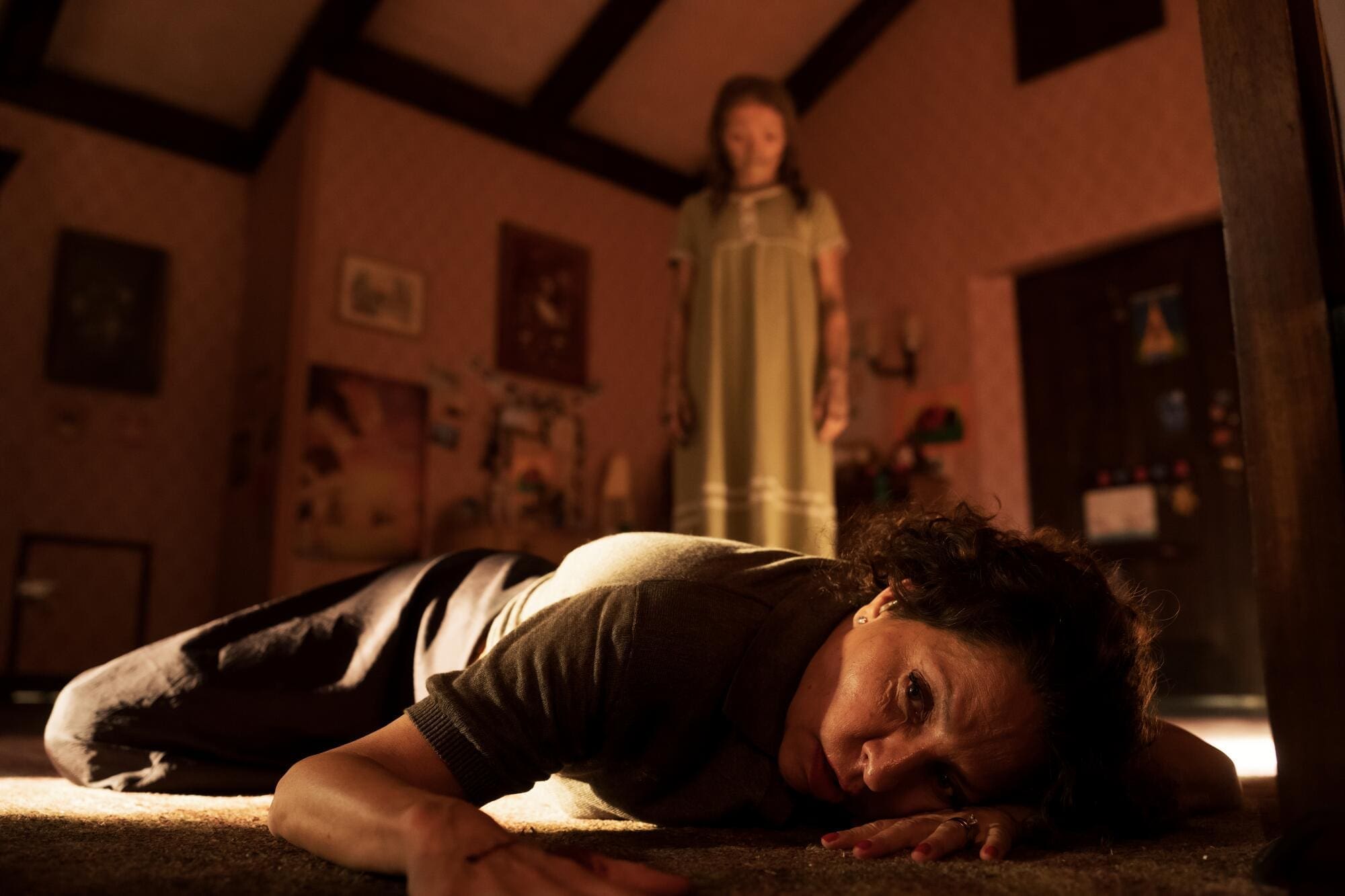
Lee Cronin’s The Mummy is nothing like the other movie called The Mummy that you might know about. The movie begins with the abduction and disappearance of young Katie Cannon (Emily Mitchell), the daughter of an American journalist living and working in Cairo. Eight years later, her parents, Charlie (Jack Reynor) and Larissa (Laia Costa), find out that their daughter is not only alive, but she was found wrapped in strips of cloth and trapped in an ancient stone sarcophagus. They take her back home to Albuquerque only to find out something else may have come along with their daughter.
This is not a movie for the faint of heart. Discussions of overall good-ness aside, Lee Cronin’s The Mummy is going to be talked about by body horror aficionados for decades to come. This is an oozing, squelching, visceral movie filled with blood and guts and other things that should normally be on the inside of a body getting out. Lee Cronin has given audiences an almost Cronenbergian level of goo and pus to recoil and gasp at. Credit where it’s due, the man is an innovator when it comes to doing fucked-up things to the human body. This is a gross-out, body horror movie and it wears that badge proudly.
Being a gross-out body horror movie, it is indebted to The Exorcist. Heavily indebted. So heavily indebted that the references to William Friedkin’s movie ride the line between homage and rip-off. In fact, more than a mummy movie, Lee Cronin’s The Mummy is a possession movie with some Egyptian flair. The mummy aspect is just set dressing for an all-too-familiar story about a little girl being taken over by some ancient evil.
The acting varies in quality. Child acting is often hit-or-miss and that is certainly the case here, but these are kids after all, so let’s cut them some slack. A person who deserves no slack is the main actor, Jack Reynor. As the fearless journalist Charlie Cannon, Reynor’s delivery is stilted and sounds forced—especially during the beginning of the film. It does improve as the movie progresses, but overall, Reynor’s acting only serves to distract from the rest of what is on screen. The other actors are quite good, however, especially Natalie Grace as the older Katie Cannon.
The film’s pacing is too slow. The runtime is two hours, 14 minutes and it could have lost that last quarter-hour. The focus jumps back and forth between Egypt and Albuquerque, sometimes gracefully, other times not. The scenes drag on a little longer than they should and even the body horror is so constant that eventually, the audience reaches a saturation point and becomes numb to all the blood and guts. The final act of the movie loses much of the horror element without having a satisfying conclusion. The ending could have been about five minutes shorter. The plot—which is straightforward enough but nothing really special—sometimes feels like little more than a vehicle to get the audience from one nasty, bloody scene to the next.
Lee Cronin’s The Mummy is the next evolution of the gross-out body horror movie. There are enough skin-crawling moments in it that picking just one is a difficult task (although the mummy pedicure-gone-wrong definitely comes to mind). However, beyond the goo and gore, the movie falls a little flat. A just O.K. plot hampered by stilted acting and scenes that tend to wear out their welcome. It’s a movie that takes some risks but ultimately sacrifices everything else it could be in service of making the audience cringe in disgust. The result of all of this is that the mummy movie as a genre is likely to stay dead and buried.