Written by Matt Swanson
In 1978, David Attenborough was filming the series Life on Earth in Rwanda’s Virunga Mountains. What was supposed to be a standard scene about the evolution of opposable thumbs became one of the most memorable nature documentary moments. As Attenborough spoke his lines in the rainforest, a 3-year-old gorilla named Pablo approached him and lay on top of him. It is impossible to watch that footage without some reaction—be it laughter, shock or fear. Nearly 50 years later, Attenborough narrates the story of a pivotal arc in a group of gorillas that this 3-year-old Pablo led as an adult.
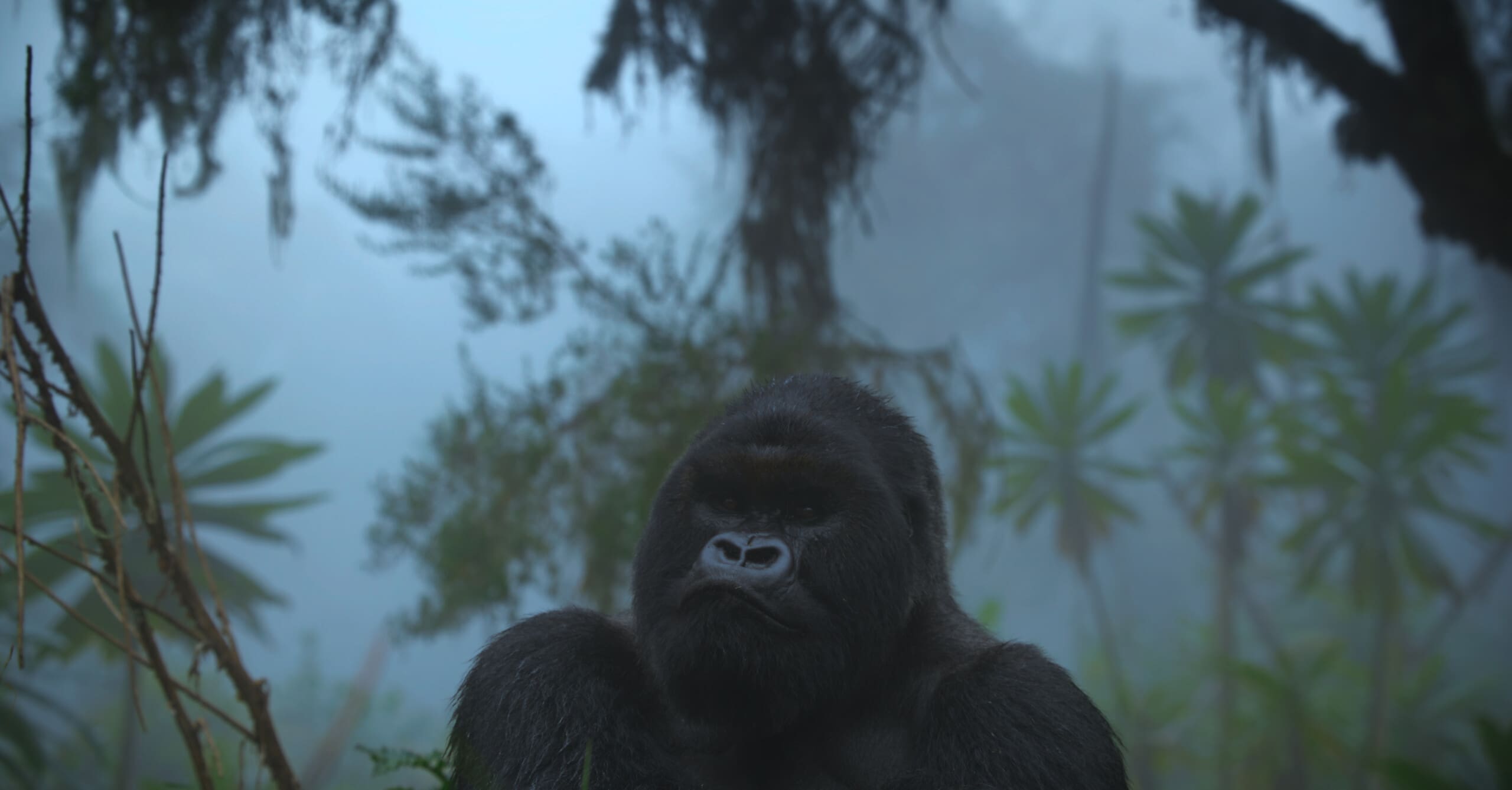
In A Gorilla Story: Told by David Attenborough, the Pablo Group, once the largest known group in the mountains, is now at a crossroads. The dominant male, Gicurasi, is getting older and weaker, while the younger Ubwuzu vies for the top spot in the group. What follows is a tale of succession and drama that reads more like an HBO miniseries than a nature documentary.
The narrative in this film keeps the audience engaged and even emotionally invested, which is an accomplishment for a documentary consisting of wildlife footage. Sometimes these types of documentaries can struggle to build a cohesive story to guide the footage without it being an unrealistic and forced narrative. This film finds a good balance of walking the audience through the recorded events but never embellishing details beyond what is believable. The stakes have real weight and the film makes the audience care about the fate of these silverbacks.
The footage throughout the film is simply breathtaking, with sweeping views of lush Rwandan rainforest and close-up, intimate shots of the gorilla family. However, what makes the documentary truly special is the narration. Attenborough, at 99 years old, is still a phenomenal narrator, and his musings on gorillas are thought-provoking and insightful. He famously said, “There’s more meaning in exchanging a glance with a gorilla than any other animal I know,” after his encounter with Pablo. The viewer can feel the weight of that glance. The film is effective at making the audience believe they can recognize the emotions and social cues behind that glance as the story goes on.
One highlight is the younger gorillas, often roughhousing in the bushes or trying to get the attention of the older gorillas. However, while often cute, this film is not for the faint of heart. It is impossible to watch much wildlife footage without realizing nature’s to matters that humans would consider sacred. However, the film is never exploitative in its depiction of violence in the animal kingdom, focusing on the aftermath more than the brutality. With powerful beasts like the mountain gorilla, it is touching to see the emphasis on the peculiarity of their social order. To approach the dominant male one way is to challenge them. But to approach the dominant female in another way is to seek acceptance into the group. It often feels more like a high-school lunchroom than a wilderness removed from humanity.
The secret main character of the film is David Attenborough himself. His infectious love for these gorillas shines through his narration. It’s hard not to feel moved by the contemplative glance of the great mountain gorillas. It’s even harder not to feel moved by Attenborough’s incredible career as he approaches 100 years old. Surely, his greatest gift is helping humanity feel a greater appreciation for the beauty of creation in every hidden corner of the world. Attenborough opens the film by explaining that he isn’t afraid of the power of gorillas, but he is afraid that people may have misunderstood them. A Gorilla Story shows a more well-rounded view of the great ape, balancing their power with their gentle and protective care for their family.