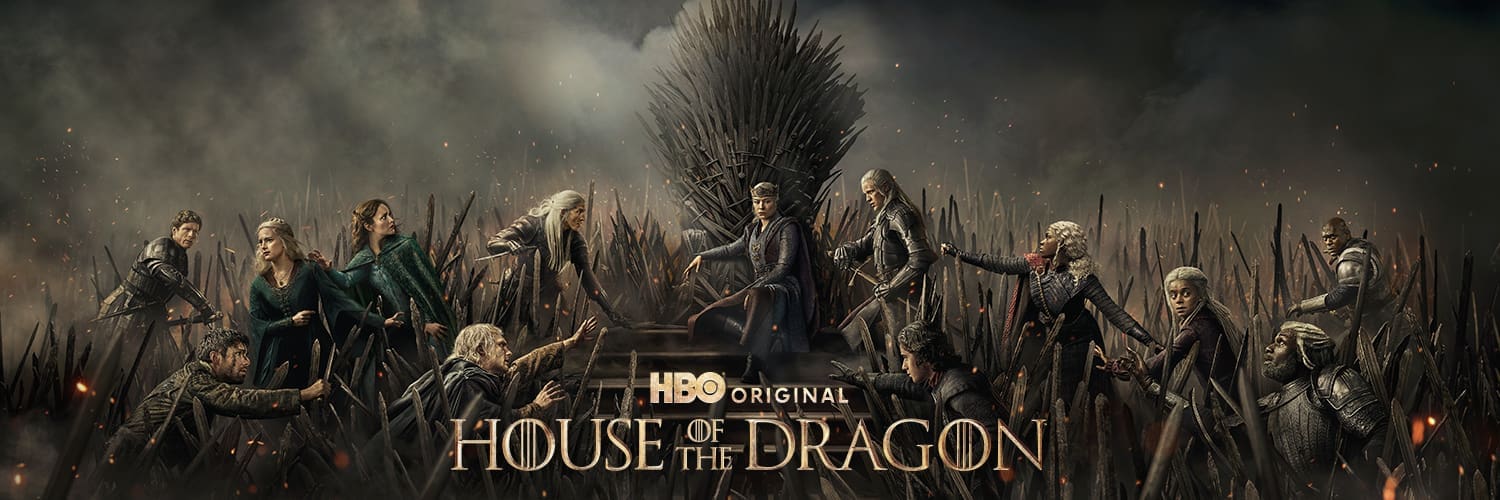
In order to mark this turning point in the Dance of the Dragons, the creative team behind House of the Dragon decided to play with the show’s traditional format. “Rhaenyra Triumphant” sticks almost entirely to Rhaenyra’s point of view as she navigates her first days as Queen of Westeros. In fact, the episode plays like an homage to The West Wing, with all of the competing special interests and hallway walks that come with the territory. It’s a political intrigue episode that takes us behind the curtain of The Red Keep and into the visceral doubt and anxiety plaguing the new ruler. It’s an effective effort that commits to deep character work and successfully positions viewers to accept a whole new version of Rhaenyra that will likely reveal itself next week.
Before we proceed, please be sure to tread lightly around that puddle of usurper blood as we step into spoiler territory.
Before we get into all of the political angles, it’s important to note that Rhaenyra is collapsing from the very moment we check in with her. In her opening lines of dialogue, Rhaenyra reflects on the “ghosts” that haunt the Red Keep: everything from distant memories of a naive and innocent youth to the very real spectre of her late son. Rhaenyra’s general disconnect from reality is punctuated by persistent high-pitched ringing, absent gazes, and unguarded frustration and doubt in the presence of advisors and key allies. She can’t even seem to get a good night’s sleep as she weathers the slings and arrows of leadership.
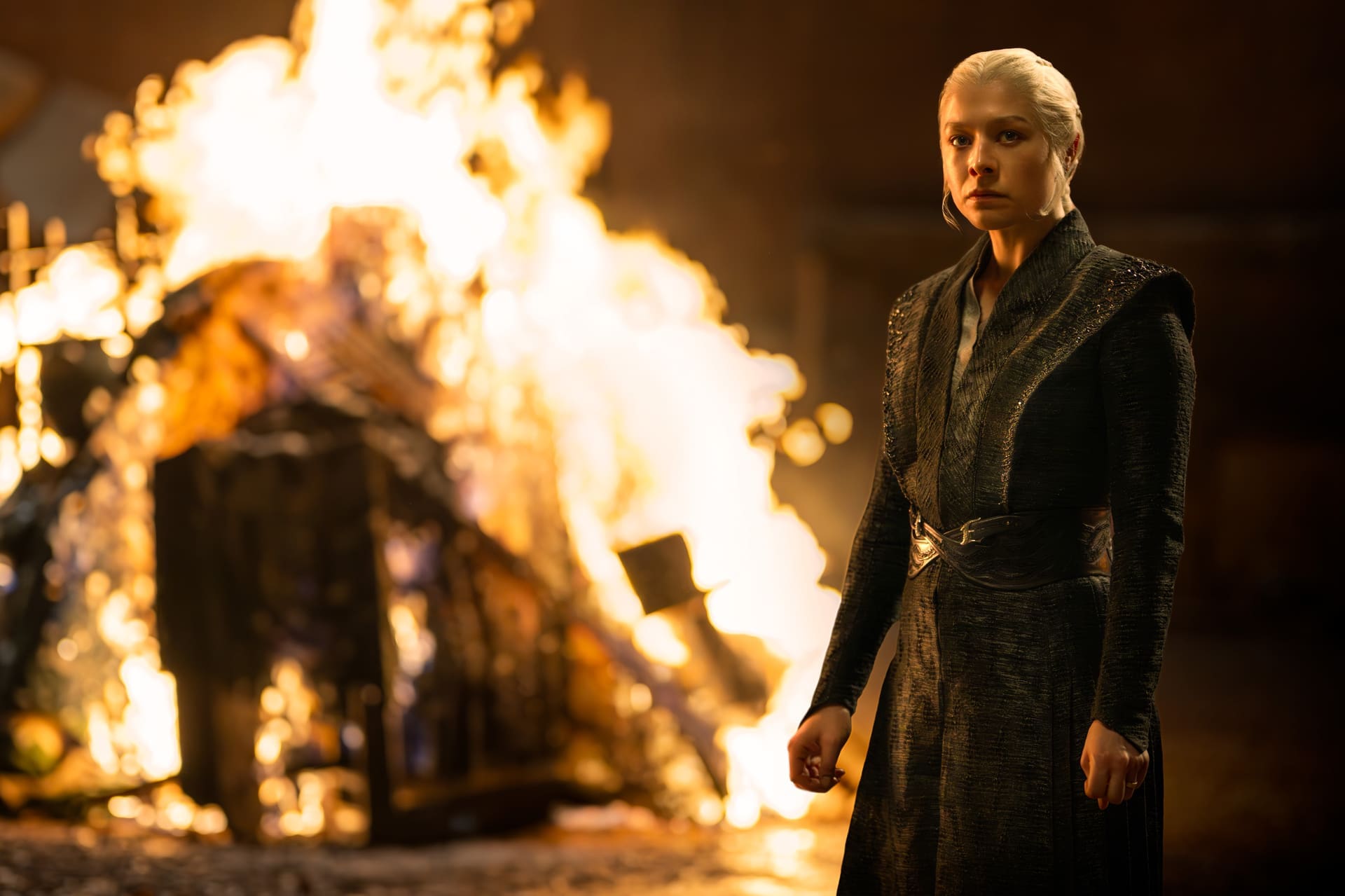
Her fall from grace feels ripped straight from the pages of Shakespeare’s Macbeth. In fact, Rhaenyra shares some key behaviors with the Bard’s tragic ruler. For instance, from the moment doubt seeps into his mind in response to the witches’ first prophecy, Macbeth often zones out and becomes “rapt” in thought. His friends and allies are left to explain and excuse this odd behavior. As Lady Macbeth describes it to her ailing partner: “This is the very painting of your fear.” This Shakespearean comparison does not bode well for Rhaenyra’s future on the throne, particularly when we consider her walk through a puddle of blood last week. In Macbeth’s case, soon after he loses the remaining trust and support of his allies during a disastrous banquet, he chooses to commit himself to violence and stop second guessing his actions:
“I am in blood / Stepped in so far, that, should I wade no more, /
Returning were as tedious as go o’er.”
In the closing moments of this week’s episode, as the glow of a bonfire burns beside Rhaenyra, she seems poised to embrace the same sort of reckless abandon that marks Macbeth’s end.
Let’s see how she got there.
Team Green’s Master Stroke
Casual viewers may remember Tyland Lannister (Jefferson Hall, Oppenheimer) as the milquetoast nobleman we last saw being thrown overboard by a vengeful pirate queen, but he is also the mastermind of a plot to empty the treasury and hide The Crown’s gold across Westeros. Early in this episode, Rhaenyra and her team begin their death spiral when they realize that, although they’ve taken the throne, the piggy bank is empty. It turns out you can’t rule very effectively without the proper resources.
As a result, Rhaenyra is left on her heels in a constant state of bargaining. For instance, her dreams of a grand coronation day that would make Anna and Elsa blush are exchanged for a humble religious anointing that is denied by The Faith. She ultimately settles for some performative charity as she hands away a pittance of food ransacked from greedy nobles that doesn’t even come close to feeding the starving masses.
Mercy vs. Murder
Additionally, Rhaenyra and the team just can’t seem to find the right balance of mercy vs. murder as they solidify their claim to the Iron Throne. Sure, Team Black has the head of Tyland’s identical twin on a pike in the Riverlands, as well as the beautiful memory of beheading rapist Ser Jasper Wylde (Paul Kennedy, Mandrake) mid-bluster last week, but they’ve also executed two of the folks who might have yielded the most promising leads in the search for the missing gold from the treasury. Each of these murders were meant to legitimize Rhaenyra’s claim, but right now, the information those men might have shared is looking much more valuable.
Despite making some key heads roll, Rhaenyra still desires to be a merciful Queen. While she has largely abandoned the ways of The Seven in favor of dragon prophecy and Targaryen mythology, Rhaenyra decides to play nice with The Faith and be anointed in the religion of her subjects. Unfortunately for Rhaenyra, the kindness and respect she pays to High Septom Balman (Simon Chandler, The King’s Speech) is rewarded with nothing but condescension and treasonous accusations. He refuses to anoint her without proof of King Aegon II Targyaren’s (Tom Glynn-Carney, Dunkirk) death and goes on to disparage her faith in dragons: “My gods do not deal in dragons. They are a profane magic, created in darkness and pride and lust for power, for impunity. They destroy, but they do not create. There is no good that can come of them.” It’s not only his words that burn, it is his tone and demeanor. In this moment, Balman drops his facade, raises his voice, and asserts his position in a manner that is reminiscent of last week’s sexual assault. He punctuates his words with a threat: “Do not underestimate the faith.”
While viewers may feel like it is time for another beheading, Rhaenyra lets her attacker escape unscathed. Once again, her power and authority are in question. It’s hard not to remember a key quote from the original Game of Thrones series: “Power resides where men believe it resides.” It seems her mercy in this moment will come back to haunt her as conditions continue to deteriorate in King’s Landing.
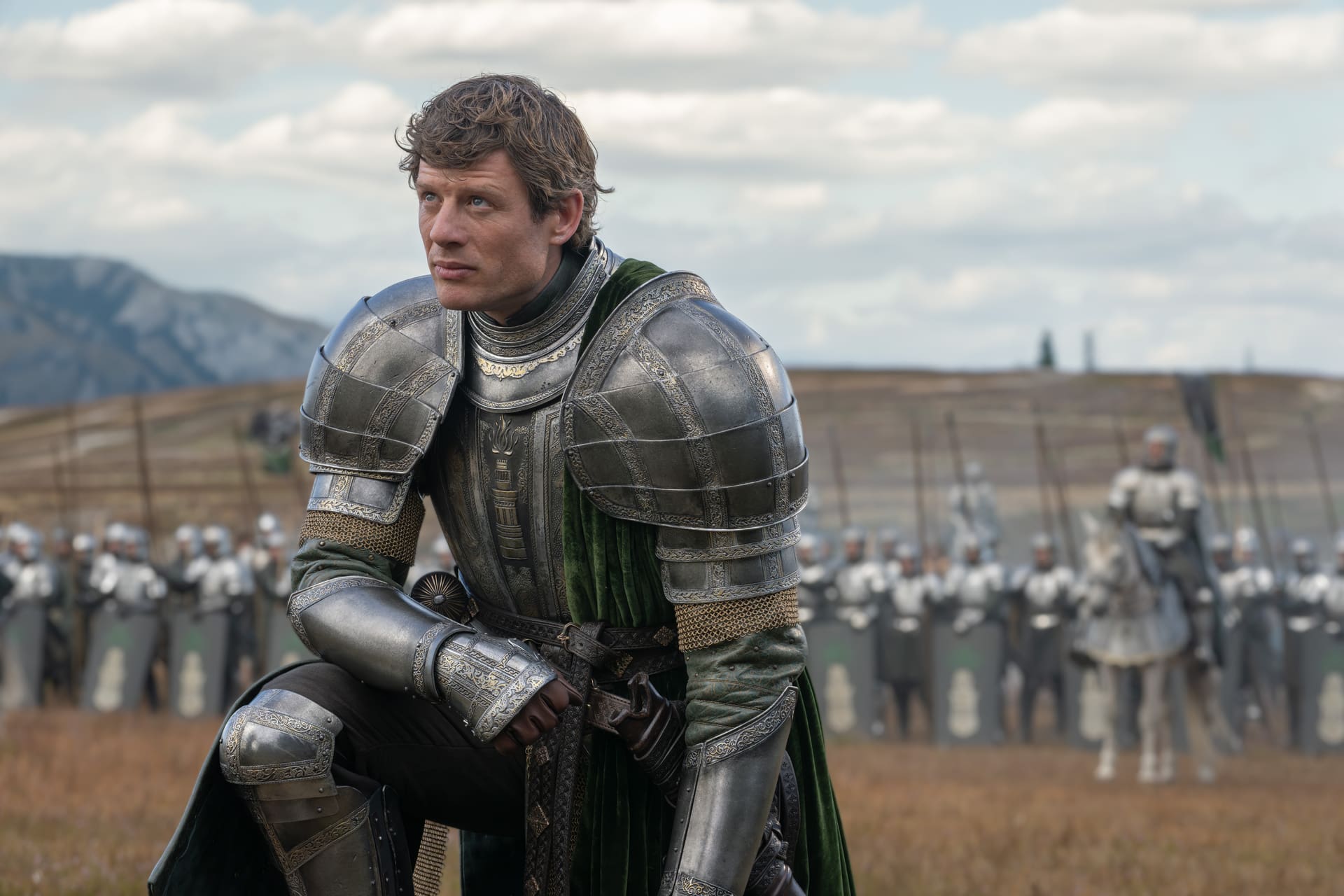
Similarly, Rhaenyra pays a price for showing mercy to the remaining Hightower forces. Despite having an opportunity to decimate her foes with dragon superiority, she offers Lord Ormund HIghtower (James Norton, House of Guinness) an opportunity to bend the knee and give up his ward, and claimant to the throne, Daeron Targaryen in exchange for a safe retreat to Oldtown. In the closing moments of the episode, we learn that his oath of fealty was a lie and that he gave up a nameless peasant boy to The Crown instead of the real Daeron. Furthermore, we learn that he and his forces have invaded the local trading hub, Tumbletown, and dared Rhaenyra to suck herself and her subjects back into the war.
Promises, Promises
In addition to all of the enemy machinations and impossible choices muddying the waters, Rhaenyra is forced to confront her inability to make good on the promises she made to her allies during her campaign for the throne. Some of these broken promises have clearly put her political position in danger. For instance, she is unwilling to put a timetable on when she will fulfill her promises to the Dragonseeds and specifically denies an opportunity to legitimize Addam of Hull (Clinton Liberty, Touchdown) as Addam Velaryon.
While Addam and his fellow dragon riders look pretty underwhelmed with their knighting ceremony, it is possibly even more noteworthy that Rhaenyra manages to alienate her most widely-respected ally, Corlys Velaryon (Steve Toussaint, Before We Die) with her refusal to legitimize his sons. In fact, he is so incensed at this betrayal that he openly questions the legitimacy of Rhaenyra’s fallen sons and heirs in front of witnesses: “Your son Jacerys lived and died a bastard,” he seethes.
Much like the High Septom, Corlys styles the tone and mannerisms of this accusation in the form of an open assault. Corlys is right to be angry about this slight after he worked so hard to support the legitimacy of Rhaenyra’s bastard children for so many years, but he may have pushed too hard. If Rhaenyra is looking for respect and legitimacy, she may have to consider taking Corlys’s life for his treasonous words. At this point, it seems that none of Rhaenyra’s alliances are sacred.
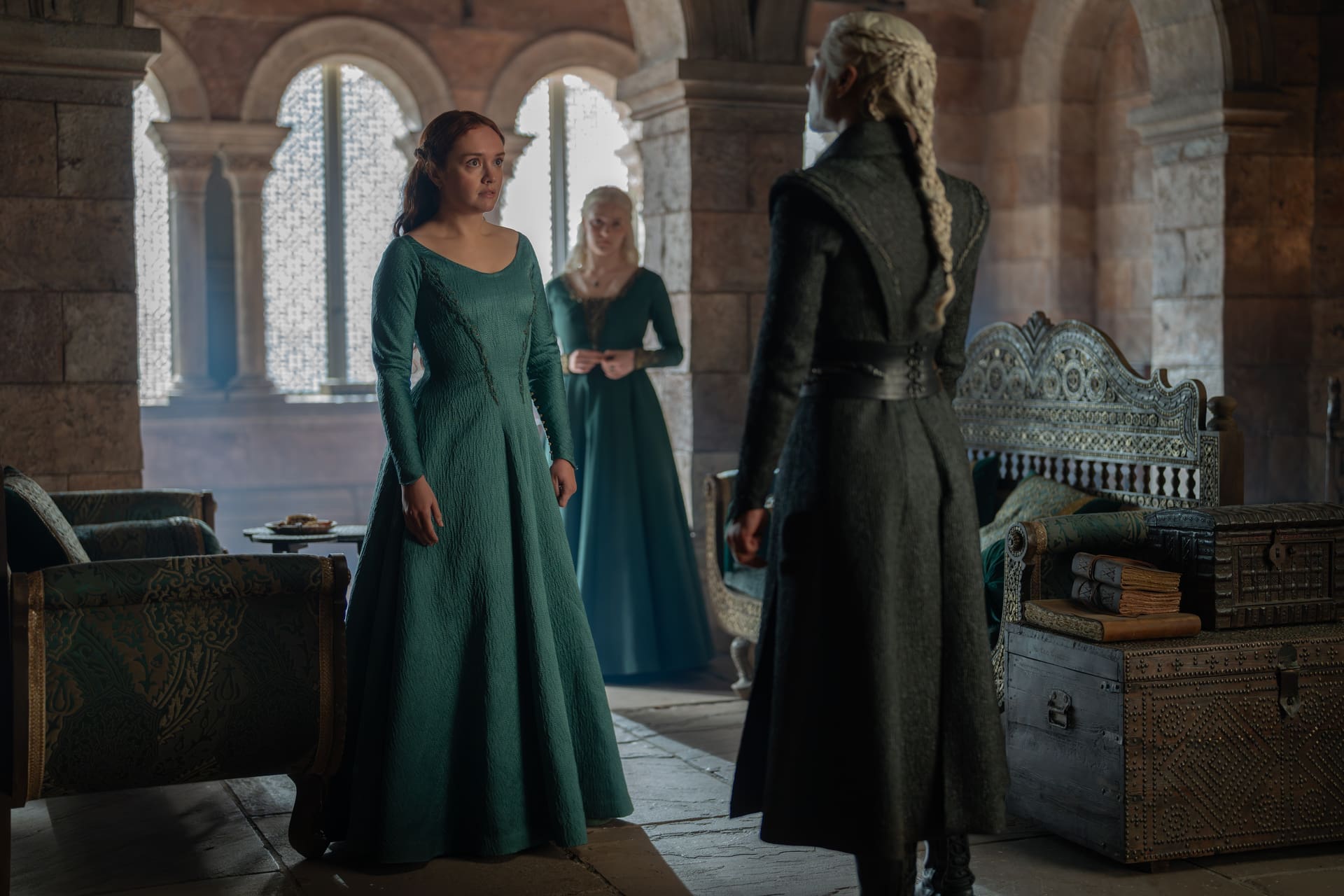
Despite all of the potential damage of these broken promises, Rhaenyra seems most emotionally distressed by the feeling of a broken promise to her bestie, Alicent Hightower (Olivia Cooke, Katie Says Goodbye). Performer Emma D’Arcy described the imprisoned Alicent as a manifestation of Rhaenyra’s conscience. While Alicent didn’t quite make good on the promises she made to Rhaenyra in the takeover, she still plays up her frustration at Rhaenyra’s failure to send her and her daughter to safety. Alicent bemoans accusations from Rhaenyra that might be better levied at the patriarchy: “Will you blame me only for what men have done?” she exclaims. It’s a relatable sentiment considering the unending mistrust Rhaenyra has suffered at the hands of men.
Later, Alicent pivots her position to a more advisory capacity as she begins to understand the tenuous nature of her position. While it is clear that she is in self-preservation mode, she offers Rhaenyra the most astute wisdom of the episode: “In truth, you may not rule and remain yourself.” She also hits Rhaenyra with the hard revelation that her father’s illusion of peace stemmed from the fact that he lived within a fantasy world of his own construction. If we think back on our time with Viserys, it’s easy to see that Alicent it right. Not only did he turn a willful blind eye to the strife within his family, but he spent the better part of two seasons working on a giant constructed model of Old Valyria.
While Rhaenyra initially buckles at these words, the gravity of Alicent’s advice is clearly top of mind for Rhaenera as she realizes that the deceptive Ormund Hightower has slapped her in the face with an open challenge. As rage engrosses her at the end of the episode, it is clear that Rhaenyra has already strayed quite far from the woman she was mere days ago.
The Toll of War
Finally, we learn that even with an intact treasury, Rhaenyra was always going to have her hands full managing a populace that has been suffering the day-to-day cost of this ongoing civil war. Master of Whispers and champion of the people Mysaria (Sonoya Mizuno, Devs) captures the weight of this responsibility best with her first impression of life within the Red Keep: she explains that it is both “larger and smaller” than she imagined.
While Mysaria is much more interested in the wellbeing of the smallfolk than the wellbeing of Rhaenyra’s reign, she is not blind to the impossible challenge that Rhaenyra has inherited, making the Red Keep feel larger. On the other hand, the constant second-guessing and claustrophobic smothering of Rhaenyra’s authority likely feels small and familiar to a smooth operator like Mysaria who once made a living catering to the desires of well-connected men. This unyielding questioning of female authority is further punctuated as Rhaenyra is forced to manage the discomfort of menstruation alongside all of the other challenges she weathers as the chief authority in Westeros.
While Rhaenyra doesn’t spend much time out amongst her subjects, their presence is always felt in the constant presence of rats scurrying underfoot. While they certainly remind us of the failed assassination of Aegon last season, they also remind us of Aegon’s unceremonious murder of the castle’s ratcatchers. If that wasn’t enough to keep the smallfolk front of mind, multiple servants remind us of the devastation the little critters have caused to stores of important supplies like candles; this is particularly devastating when we consider that fact that Rhaenyra would give anything for a guiding light as she navigates the murky waters of leadership.
In an attempt to be a queen of the people, Rhaenyra devises a ploy to procure resources hoarded by nobles at the start of the war. She reinforces her moral authority with a visual aid when she feeds her noble guests a banquet of roasted rat and rotting stores of food. She reminds them of their responsibility to the realm even as she demands tribute to reinforce her own treasury. While her intent is good, it does not seem that Rhaenyra will procure the resources she needs to keep her subjects happy. This short term moral victory will start to look and feel like hypocrisy pretty quickly as hunger sets in once again.
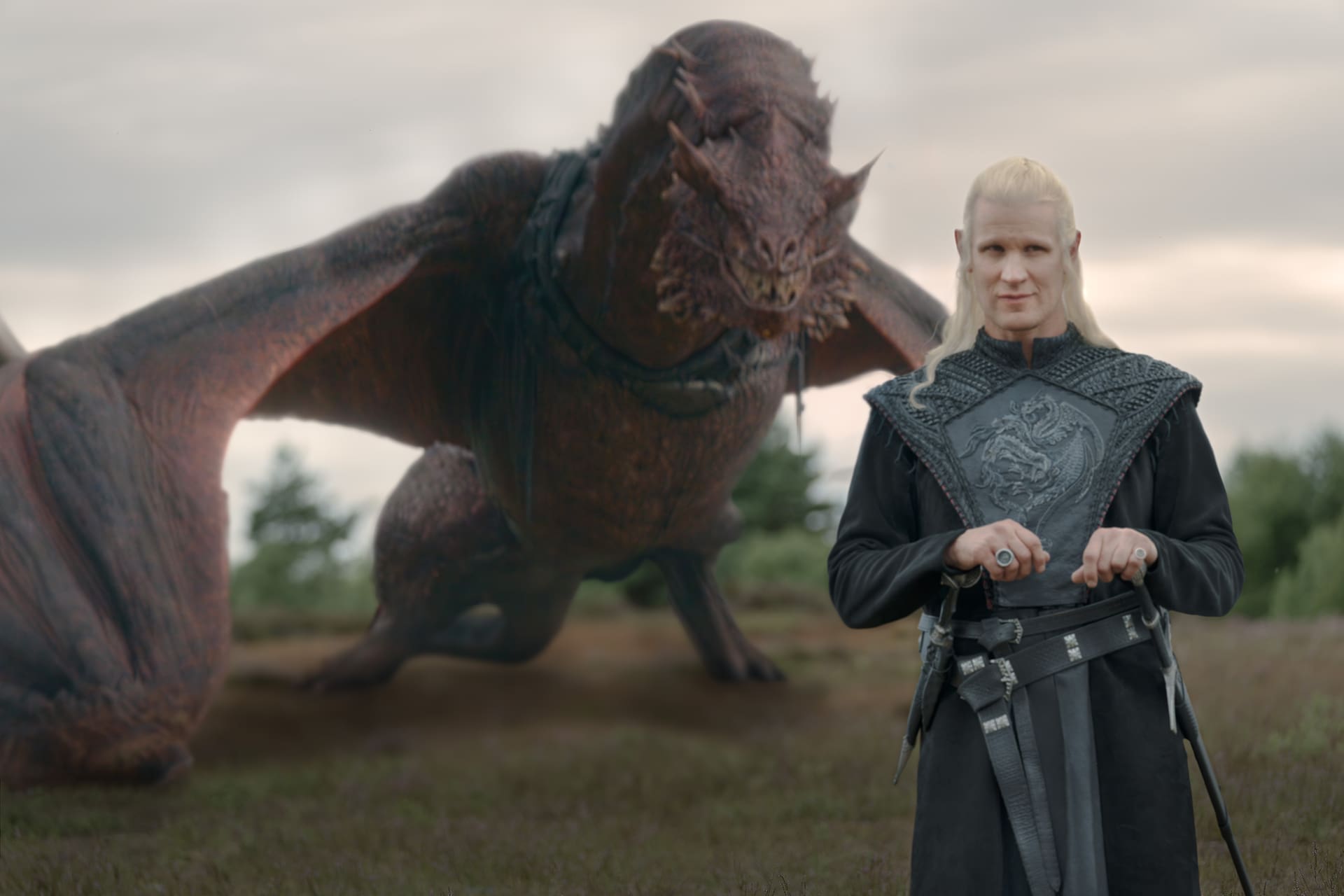
Of course, the toll of war also hits the noble class and even disquiets Rhaenyra’s marriage. As Rhaenyra depletes her energy desperately trying to restore the status quo, she learns that her husband Daemon Targaryen (Matt Smith, Doctor Who) isn’t satisfied with simply restoring the power her father once held. He is ready for worldwide conquest: “an empire unassailable.” Daemon points out that they won’t have to worry about money or resources if they expand the net of their conquest to Dorne, and then Essos. Given how difficult it was to claim an empty castle, it sure feels like Daemon is glossing over the hard work it would take to pull off a larger conquest. While this difference of opinion would be enough to sour any marriage, things get personal and spiritual when Rhaenyra paraphrases the High Septom to imply that messing with dragons may be an act of hubris that reflects a rotten moral core and will doom them all to destruction. That is the kind of difference of opinion that can destroy a marriage – and if your husband is Daemon Targaryen? Look out.
Who Won the Week?
Rhaenyra may sit upon the Iron Throne, but as we’ve just outlined, this week’s episode doesn’t make that feel like a victory. Thanks to the machinations of Tyland Lannister, Rhaenyra has inherited a failing, bankrupt throne. On top of that, she has lost favor with her most trusted advisors and failed to make good on a single campaign promise. It’s hard not to notice that a few of those scorned supporters also happen to control some pretty intimidating dragons. To cap off the trifecta, the Hightowers have set up shop in Tumbleton and dared Rhaenyra to rain down fire and brimstone upon her brand new subjects. Heavy is the head that wears the crown, indeed.
In other words, Team Green wins the week. They may have lost the throne in name, but Rhaenyra is begging for scraps, dissolving the trust of her leadership team, and seems ready to abandon her scruples in order to get the smallest taste of sweet, sweet vengeance.
It’s a rough moment for Rhaenyra, but on the bright side, Emma D’Arcy once again wins the week with a multi-faceted performance as an overwhelmed new ruler desperate to save face, even as every look and slight twitch of the face reveals her self-doubt and shame. D’Arcy’s pacing, body language, and subtle facial cues not only help viewers understand Rhaenyra’s struggle, but help us fully empathize with her. By the end of the episode, this pacifist reviewer found himself wishing that Queen Rhaenyra would start collecting the heads of her detractors. It takes a special sort of performance to take a viewer on that journey, and once again, D’Arcy deserves highest honors for carrying the weight of this very special episode.
In any case, war is calling once again. Next week, we’ll find out if Rhaenyra rises from the ashes of her Hightower bonfire or loses herself to the call of the flames.