Written by Avani Trivedi
Something Very Bad is Going to Happen is far less interested in delivering a conventional narrative and more focused on building a sustained sense of unease.
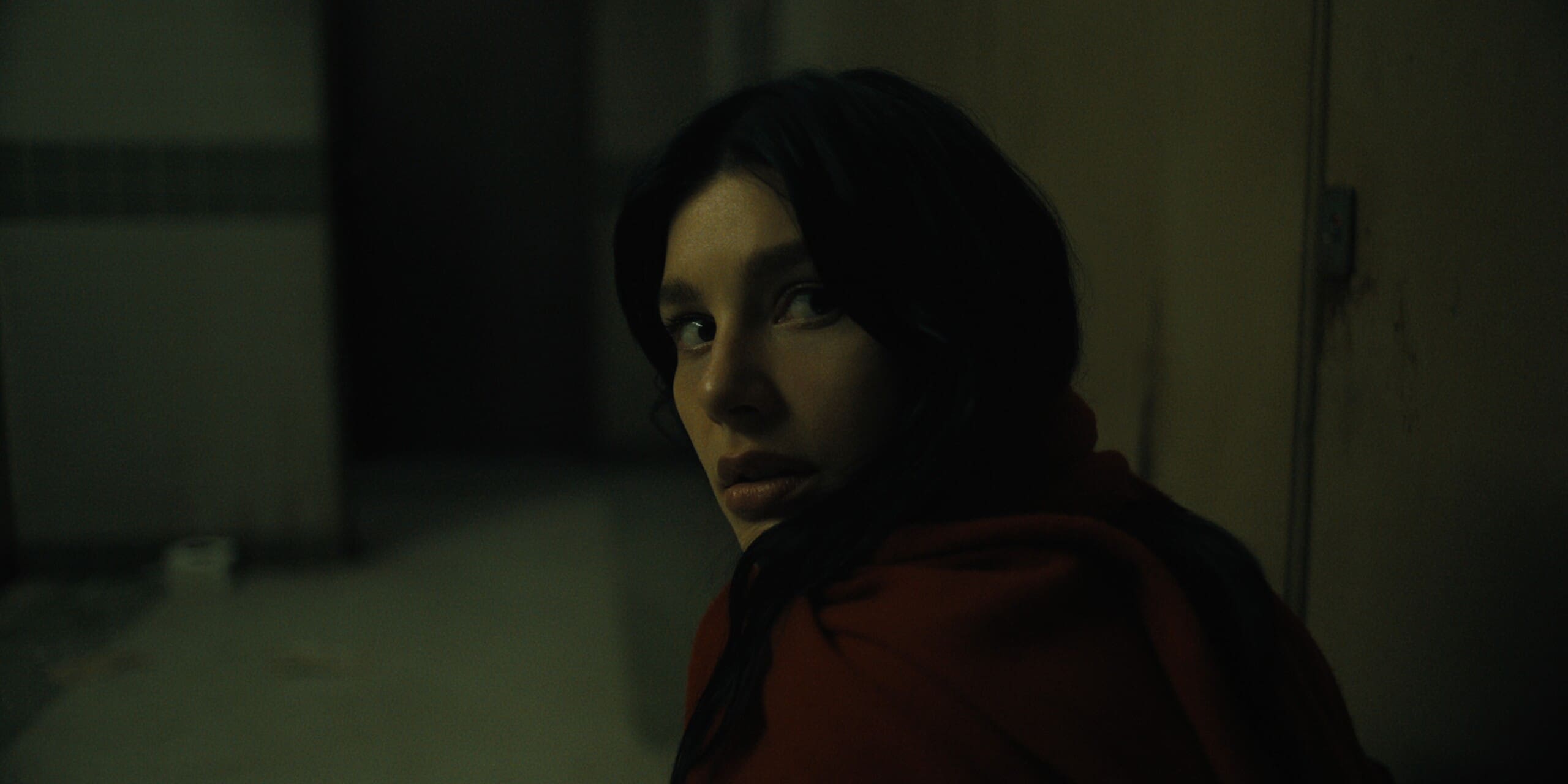
From its opening moments, Something Very Bad is Going to Happen establishes a clear tone of something is coming and it will not end well. Instead of relying on twists or dramatic reveals, the series commits to this idea fully, structuring itself around anticipation rather than surprise and grounding that tension through its two central characters.
At the center of the series are its leads, played by Camila Morrone and Adam DiMarco, whose dynamic becomes the primary lens through which the story unfolds. Rather than positioning them as traditionally active protagonists, the show presents them as individuals shaped by hesitation and uncertainty. Their interactions are often quiet and restrained, but that restraint is where much of the tension lies. Small pauses, avoided conversations and subtle shifts in behavior carry more weight than overt conflict. In this way, the characters do not just exist within the story, they embody its central idea, reflecting how people respond when they feel a loss of control over what comes next.
This character-driven approach allows the show to explore a broader theme: how anticipation can distort both perception and relationships. Much like in real life, where fear of the future can impact present decisions, the leads begin to act not based on what is happening, but on what they believe will happen. This creates a disconnect between them, where miscommunication and emotional distance gradually replace clarity. Their relationship becomes less about connection and more about projection, reinforcing the idea that the expectation of something bad can be just as damaging as the event itself.
This structure works in the show’s favor. The slow pacing and minimal dialogue give the actors space to convey emotion through subtlety rather than exposition. Moments that might seem insignificant in a faster-paced series, glances, silences or unfinished sentences, become central to understanding both characters. This reinforces the show’s reliance on atmosphere, making the tension feel constant even when very little is happening on the surface.
However, this same approach also exposes some of the show’s limitations. While the leads are effective in representing the show’s themes, they can feel underdeveloped as individuals. Their motivations are often implied rather than clearly established, which can make it difficult to fully connect with them on a deeper level. As a result, while their dynamic is conceptually strong, it does not always reach the emotional impact it seems to be aiming for.
What ultimately makes Something Very Bad Is Going to Happen stand out is its commitment to this restrained, character-focused storytelling. In contrast to many modern series that rely on fast pacing and explicit emotional beats, it places its trust in subtle performances and unresolved tension. This aligns with a broader trend in television that prioritizes mood and thematic exploration over traditional narrative satisfaction.
Overall, the series succeeds in using its lead characters to reinforce its central idea about anticipation and control. It suggests that the fear of an outcome can shape not only individual behavior, but also the way people relate to each other. While it does not always provide the depth needed to fully realize its characters, it remains effective in creating a distinct and unsettling viewing experience, one that lingers because of the tension between what is happening and what feels inevitable.