Written by Ronnie Gorham
Like a lot of Hollywood IPs, Toy Story 5 looked like another sequel no one asked for—until I saw it. It turns out to be not only worth the trip back to Bonnie’s room, but the most relevant entry in the franchise, especially in an era where toys versus tech is real. Directed by longtime Pixar alum Andrew Stanton (Finding Nemo, WALL‑E) and written by Kenna Harris, the movie finds a surprisingly fresh angle with Jessie leading the toys instead of Buzz and Woody. And that switch ends up unlocking a story I didn’t realize I’d been waiting for.
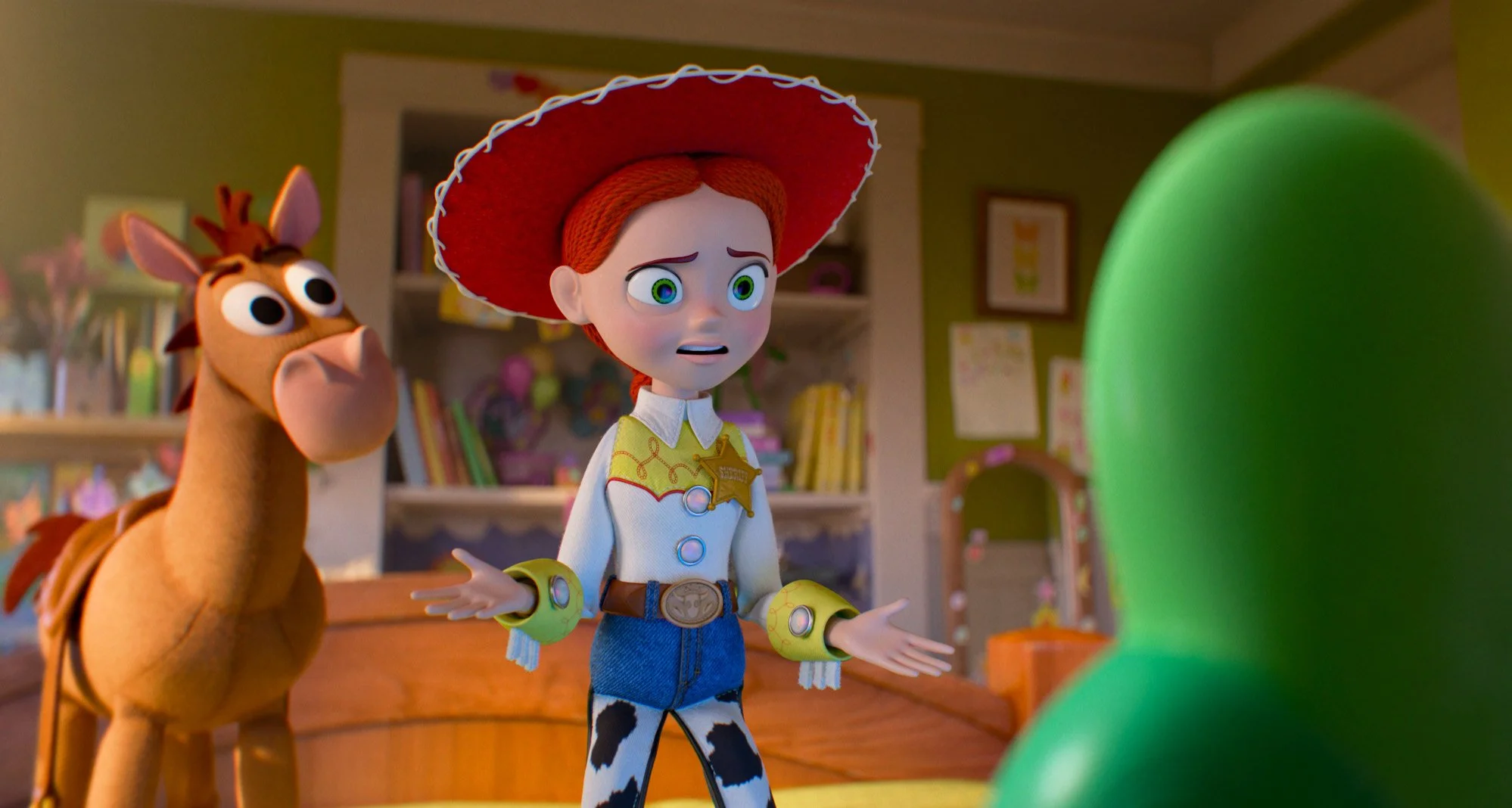
Jessie (Joan Cusack), who Woody (Tom Hanks) left in charge of the toys at the end of Toy Story 4, is still living with Bonnie (Scarlett Spears). It’s going smoothly until two big shifts hit at once: Bonnie’s growing worry about making friends and the arrival of a new piece of tech, the LilyPad, Toy Story’s version of an iPad. Toy Story 5 finds Jessie in the same position Woody was in during the first Toy Story, when Buzz Lightyear (Tim Allen) first arrived and it sent him into a panic thinking he would be replaced. In the film, Jessie and the toys battle against LilyPad (Greta Lee) while trying to stay relevant and remain an important part of Bonnie’s life.
Stanton and Harris do an impeccable job showing the weight Jessie carries after taking over leadership from Woody. Jessie doesn’t lead from paranoia the way Woody once did, she attacks problems head on, and the toys respond to her confidence. The film adds real depth to Jessie’s emotional decision‑making by giving us more of her backstory, especially how her past abandonment still shapes her choices. Watching her navigate tech, fear and responsibility and seeing how she initially views LilyPad as the enemy is one of the film’s most compelling arcs.
That shift opens the door to a bunch of new characters, including what I’d call the story’s “anti‑villain,” LilyPad. LilyPad isn’t a villain in the traditional sense; just like Jessie, LilyPad wants what’s best for Bonnie, she just sees it through a technical perspective. Jessie wants Bonnie to make friends organically and use her imagination, while LilyPad believes a friend request is just as meaningful. That clash of values creates a fun, surprisingly thoughtful dynamic that makes Toy Story 5 exciting, adventurous and a genuinely interesting addition to the series.
And although Buzz and Woody take on unfamiliar territory as co-stars in the film, each still is given enough to satisfy both old and new fans. In addition to LilyPad, we’re also introduced to new toys like Smarty Pants (Conan O’Brien), Atlas the GPS hippo (Craig Robinson), Snappy the camera (Shelby Rabara) and a new human character named Blaze (Mikala-Michelle Harris) who loves to play with toys. Each character adds a great deal of humor, charm and fresh energy to the film.
Some of the film’s strongest conversations revolve around technology: how much is too much, when it starts replacing real‑world connection and how easily kids can slip into screens over friendships and family. The movie also touches on cyberbullying and FOMO in ways that feel surprisingly grounded for a Pixar sequel. The only thing that could’ve used a bit more attention is the parental‑responsibility angle, the idea that adults need to set limits so tech doesn’t completely take over a child’s life. It’s there, but a little more depth would’ve made the message even stronger. For example, there could have been a scene where they talk to Bonnie about the safety’s of talking with friends over tech.
One of the greatest things about the Toy Story films is that each one teaches a core life lesson. The toys go from figuring out who they are in the first Toy Story (Identity), to standing by each other no matter what in Toy Story 2 (Loyalty), to learning how to let go when it hurts in Toy Story 3 (Loss), all the way to chasing whatever comes next with a full heart in Toy Story 4 (Purpose). Toy Story 5 is no exception, adding to those themes with Adaptability.
Overall, Toy Story 5 is an emotional triumph. It’ll make you laugh, cry, and remember why you fell in love with this franchise in the first place. It’s a reminder that no matter how old you get, you shouldn’t let the kid in you fade and that joy, imagination, and balance matter more than ever in a tech‑heavy world.