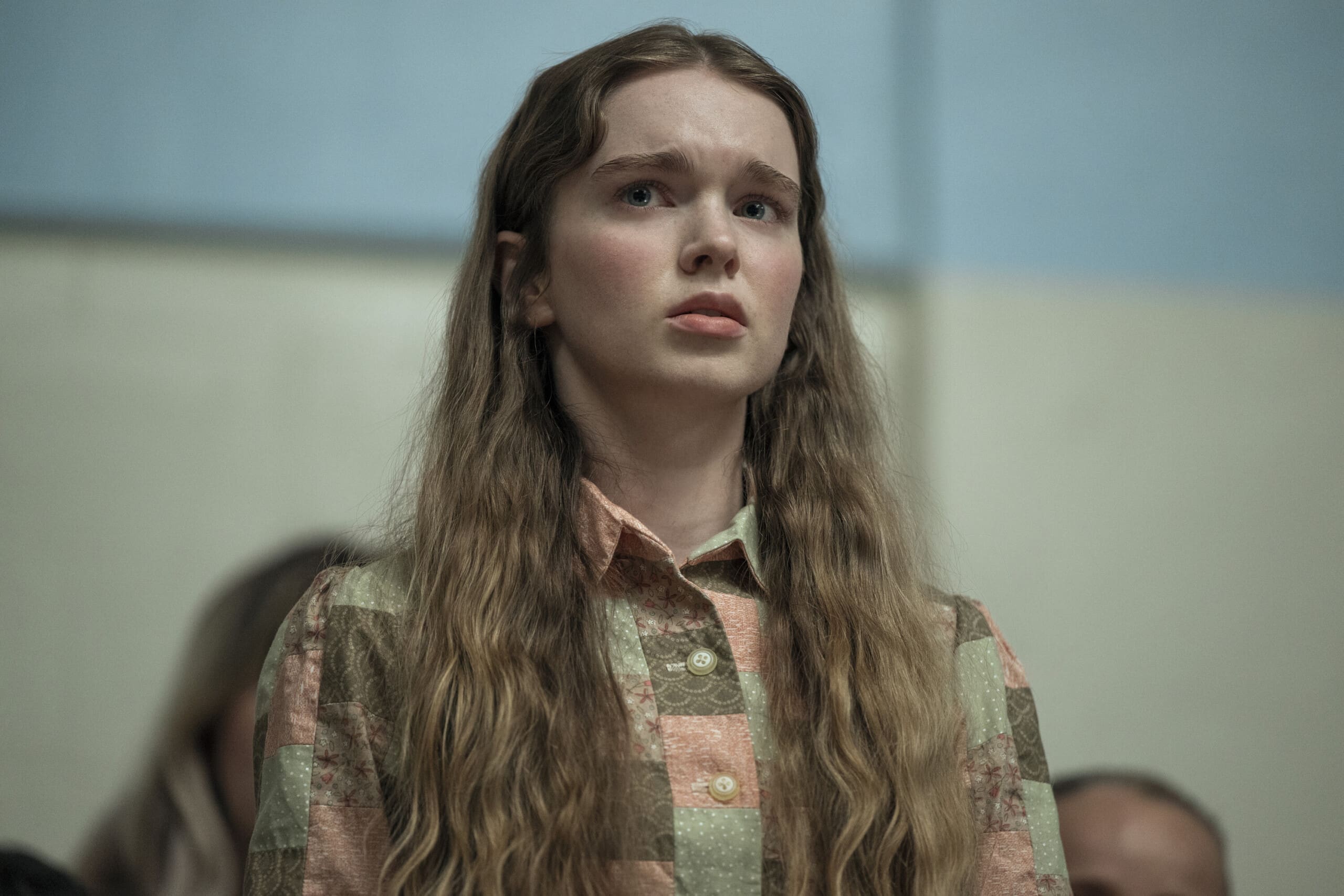
It has become a bit of a trend that every decade or so, there’s an updated version of the horror classic, Carrie. The newest 2026 version by Mike Flanagan is here, and this time taking Stephen King’s original story and pacing it out into an eight-part series with added characters and modernized cultural impacts.
Having watched all eight episodes, here’s a mostly spoiler-free recap of the newest series in the Flanaverse. For anyone who keeps up with Mike Flanagan’s body of work, it’s obvious he has a tendency to intertwine stories of love and the human condition with horror. It’s part of what makes many of his most popular series so compelling. Carrie is no different.
Having the story of a homely, bullied teenager who discovers her telekinetic powers expanded across multiple episodes allows the story to breathe and provides deeper insight and context into many of the main and supporting characters. Especially when it comes to Margaret White (Samantha Sloyan, Grey’s Anatomy), Carrie’s mom, who in previous iterations is a very one-note religious zealot. This version of Margaret has dimension and, yes, is even relatable in some aspects.
Sloyan’s portrayal of Margaret is perfect. Sloyan always seems to portray characters that fans are meant to hate, but she plays them in such a nuanced way that occasionally there’s moments of endearing qualities — with the exception of Midnight Mass because her character in there, Bev Keane, is the absolute worst.
In addition to Sloyan, there are many faces in this series that are recognizable from other Flanagan works, including, but not limited to, Matthew Lillard (Daredevil: Born Again), Rahul Kohli (iZombie), Kate Siegel (The Haunting of Hill House) and Ruth Codd (How to Train Your Dragon). But the main cast of characters are new additions to his adaptations, including Summer H. Howell (Curse of Chucky) as Carrie White and Alison Thornton (Dare Me) as Christine Hargensen.
Howell plays this version of Carrie beautifully. Coming from the ultimate sheltered life, Carrie appears on her first day of school as a doe-eyed baby deer dropped in a sea of sharks. But over the course of eight episodes, she learns to navigate her surroundings and take autonomy in certain situations, both growing in her confidence and power. The story also expertly highlights what Carrie’s unchecked power is capable of, and how she doesn’t always have the control she thinks she does when her emotions are involved.
Christine, on the other hand, acts as the main antagonist and almost a foil to Carrie. Both girls have bad things happen in their lives, but this series provides some great insight as to why she ultimately does what she does. Over the course of several episodes, such little decisions add up with increasing intensity to lead to the infamous Prom night. It’s so easy to think that if Christine chose to spend time with different people, had been more open to her changing family dynamics, found healthy coping mechanisms for her anger and ultimately took the high road, how different this story could have turned out for all the teenagers at Ewen High School.
It is a really great touch to also learn some more backstory on smaller characters such as Sue (Siena Agudong, Sidelined 2: Intercepted) and Tommy (Joel Oulette, Abducted), the teaching staff at Ewen High School, and Carrie’s neighbor next door. The series also introduces new characters original to this particular version of Carrie, including another new student, Emaline (Thalia Dudek, Better Man) and a reporter and her team covering the aftermath of the events at the climax of the story. This series pays homage to the book in that it starts off with interviews from students and people affected by the events of prom night, though it would benefit the show if viewers got more of that beyond the first episode and final episode.
The way Flanagan modernizes the story to incorporate the pressure of experiencing the unsheltered world for the first time, while highlighting the true horror of how desensitized to violence society is and how much technology plays a part in all of that, is truly incredible. These kids are constantly experiencing being harassed and being the harassers via social media, and despite the best efforts of parents and community, they’re all stuck navigating a world where they can no longer protect their children (or themselves) from being bullied anytime or anywhere.
That being said, this is not one of his stronger pieces of work. The first six episodes are intriguing in both story, emotion and stunning visuals; however, the final two episodes completely drop the ball. The prom scene, the pinnacle of the original Carrie story, feels like an afterthought, and the introduction of new characters takes away from the whole theme of Carrie being a horror story of how society can create a monster.
Having Emaline be the main driver of Carrie’s rage at the prom takes away from Carrie being a nuanced character, capable of both good and evil. Under the right conditions, Carrie could have excelled and done great things, because at the center of everything, she truly is a pure-hearted person who genuinely wants good things for all. But the circumstances surrounding her — her sheltered life, her overbearing mother, Christine, who chooses to displace all of her anger and hatred by destroying Carrie because she’s both an easy target and too nice, the repeated harassment from online bullying and a culture that is so unfazed by violence culminate in such a way as to almost force Carrie into darkness.
Sometimes people don’t get happy endings, and their untamed rage causes them to do things they wouldn’t normally do that can’t be taken back. Flanagan wants to find a way to allow the audience to still care for Carrie and think of her as innocent by offloading the culpability to Emaline, but this diminishes the theme of Carrie and falls short.
Understandably, he’s planning to tell a larger story with Carrie being the catalyst for a wider world of supernatural powers, but sometimes it’s okay to keep a story small and to allow a promising young girl to be the villain.