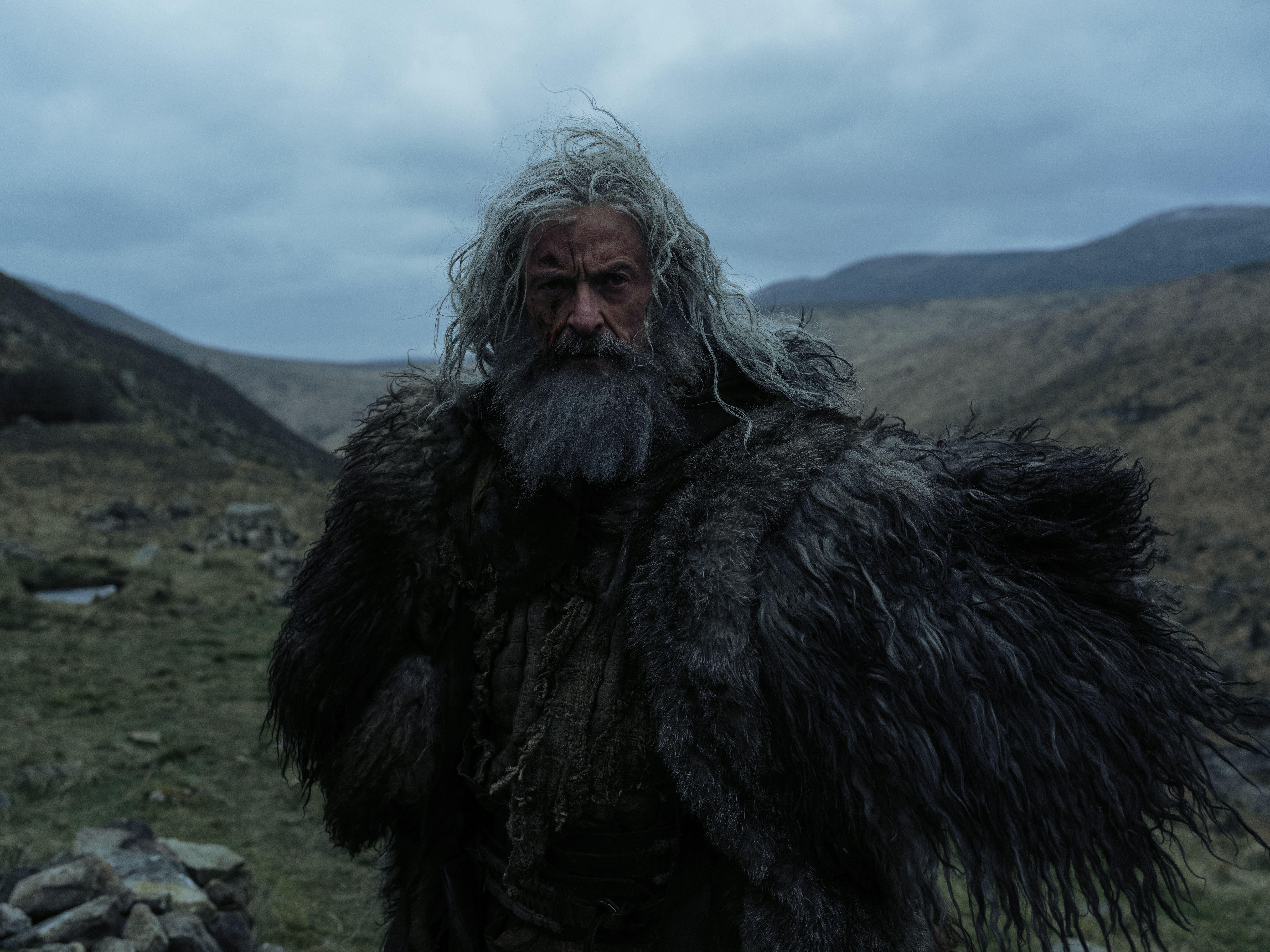
With only two features under his belt, Pig and A Quiet Place: Day One, writer-director Michael Sarnoski is quickly establishing a fresh vision for dark, cathartic thrills. His latest, The Death of Robin Hood, cements his style even further, as he and Hugh Jackman strip away the classic “man in tights” persona to reveal something much more brooding.
Based on the 17th-century ballad Robin Hood’s Death, Sarnoski characterizes the titular bandit as a man haunted by his own legend. Robin Hood (Jackman) no longer sees himself as the “watcher of the meek” and “giver to the poor” his tales make him out to be. Thus, he’s become an isolated man who only sees the trail of blood that follows behind. However, he’s eventually found by his old partner, Little John (Bill Skarsgard), and tasked with a personal mission that leaves him mortally wounded. After being taken in by a prioress named Brigid (Jodie Comer), Robin Hood faces his blood-filled past as death seemingly draws near. With The Death of Robin Hood, Sarnoski creates a truly fresh depiction of the iconic character through a first act that’s remarkably brutal and moody as hell.
Even before Jackman appears on-screen, there’s a palpable intensity and dark desperation. The empty stretches of land filled with cold mist instill an unshakable chill that only grows as a young straggler’s encounter with Robin Hood takes a vicious turn. Sarnoski establishes cutthroat survival that shows no mercy—not even towards children—and showcases some gut-punching storytelling. Robin Hood’s fractured self-view and jaw-dropping history of slaying are excellently touched on to give the film a heaviness even before its foreboding title drop. From there, Sarnoski and Jackman make Robin Hood a terrifying force, both physically and psychologically. His conversations with Little John about their time together and the new life John leads brew with darkness and regret. Jackman taps into that lingering rage from playing Wolverine in Logan to be an aging, yet vicious combatant. All the ominous vibes only heighten as Robin and John get into a massive, unexpected conflict that delivers some sickeningly blunt bloodshed and stunning brushes with death. Seriously, with a bow in hand, this Robin Hood isn’t afraid to get his hands dirty and delivers some of Sarnoski’s most visceral action to date.
The Death of Robin Hood gets off to a thrilling start and Sarnoski’s dark vision for character-building thrives. Unfortunately, as Robin Hood becomes wounded and is taken to a priory, the momentum and pacing take a rough downshift. Given how captivating and energy-filled the first act is, the film’s transition to Robin Hood healing is like a shock-inducing halt. It makes sense that things would wind down since Robin Hood is in no shape to fight. But, the more conversation-heavy elements of Sarnoski’s storytelling overtake the experience, causing the film to never regain its early momentum. It’s a little disappointing because there’s so much to love about the first act, especially Skarsgard’s savage depiction of Little John that’s nearly absent the rest of the film. Plus, the shift in focus causes more abstract elements to clog up the narrative and underwhelming story threads to drag down the experience. Often, Sarnoski feels like he’s cueing up something big, like Robin Hood’s identity as an outlaw being outed. But it usually leads to nothing because the impact is never given the time to develop. The story moves on quickly and Robin Hood often skates by without too much consequence.
Still, it’s hard for the emotion Sarnoski and Jackman create for this incredibly thoughtful depiction of Robin Hood not to resonate. There’s something so powerful about seeing him deal with the torment he’s caused (regardless if it was well-intentioned( and even try to live up to the glory of his fables to the last few people around him. It’s very akin to Kratos’s arc of dealing with past sins in the Norse-era God of War games, and it’s a role that shows the best of Jackman’s ability. He lays Robin Hood’s heartache bare for everyone to see, and his line delivery carries a rawness to it that’s both earth-shaking and vulnerable. He’s desperately pouring out his soul and it’s incredible to see other actors in the film literally be left in a state of awe. There’s a great scene between Jackman and Noah Jupe that captures the presence and impact of his performance perfectly. Best of all, though, is how Sarnoski manages to create a story about death and legacy that contains an unrelenting emotional pull. The entire last act tugs hard on the heart-strings and features compelling dialogue about life in its final moments. There are great moments of honesty that hurt, yet also some satisfying relief that leaves things on a tender note.
The Death of Robin Hood might struggle with its second act, scaling back the epic action and stark atmosphere of the first act for some character-driven storytelling that doesn’t always live up to its potential. But Sarnoski and Jackman hand-mold a truly unique depiction of Robin Hood that harnesses the raw emotional power and heart-wrenching conclusions to leave audiences moved.