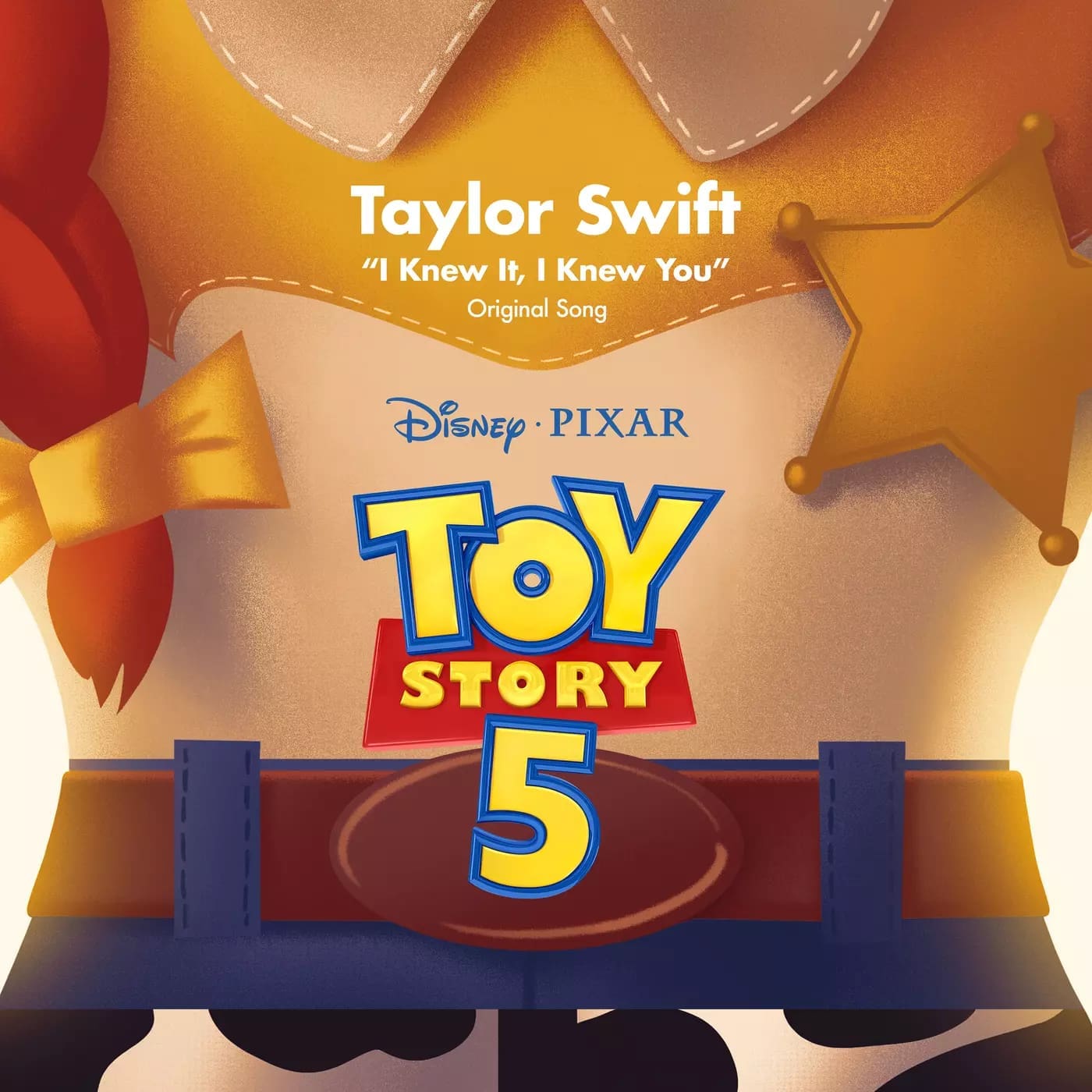
For years, fans have wondered if Taylor Swift would ever fully embrace her country roots again. “I Knew It, I Knew You” isn’t a grand return or a calculated reinvention. It’s something much better. It’s a silent reminder that no matter how many genres Swift explores, storytelling has always been and always will be her greatest strength.
Written for Toy Story 5 and inspired by Jessie’s journey, “I Knew It, I Knew You” delivers with the kind of sincerity that has always separated Swift from her peers. While plenty of artists have contributed songs to animated films, few manage to make them feel essential outside of the movie itself. Swift does exactly that. Even if you’ve never watched a single Toy Story film, the emotions at the center of this song are impossible to miss.
What makes “I Knew It, I Knew You” so special isn’t that it sounds like old Taylor Swift. It’s that it reminds listeners why they fell in love with her songwriting in the first place.
There’s an incredible amount of restraint throughout the song. Instead of building toward an explosive bridge or chasing a radio-friendly hook, Swift lets the story unfold naturally. The acoustic guitar, warm harmonies, and soft percussion never overpower the lyrics. Every production choice serves the emotion rather than distracting from it.
It feels intentional.
Swift has always excelled at transforming ordinary moments into something unforgettable. Across nearly two decades of songwriting, she’s built entire worlds out of passing glances, forgotten scarves, handwritten notes, and memories that most people would overlook. Here, she applies that same gift to Jessie and Emily’s reunion. Rather than relying on dramatic declarations, she captures the comfort of recognizing someone who once meant everything to you.
That emotional subtlety is what makes the song resonate far beyond its Pixar origins.
It’s impossible not to hear pieces of Swift’s earlier work shine throughout the track. The country instrumentation recalls the familiarity of Fearless and Speak Now, while the emotional maturity feels like the natural evolution of the songwriter who gave us folklore and evermore. Yet “I Knew It, I Knew You” never feels like an attempt to recreate the past. Instead, it sounds like an artist who’s comfortable enough to revisit where she started without trying to relive it.
Jack Antonoff deserves recognition here as well. After years of larger, more experimental productions together, this collaboration feels refreshingly understated. The arrangement gives Swift room to breathe, allowing every lyric to land exactly where it’s supposed to. There’s no need for sonic spectacle when the writing is this strong.
That’s what stayed with me after the song ended. Not that Taylor Swift had returned to country, but that she never really left behind the qualities that made those early songs resonate in the first place. The genre may change, the production may evolve, but her ability to make nostalgia feel tangible has remained remarkably consistent.
For longtime fans, “I Knew It, I Knew You” feels like sitting down with an old friend after years apart and realizing nothing important has changed. Swift still has an unmatched ability to find universality in the smallest moments, turning memories into something that feels lived in rather than simply written. Even within the world of Toy Story 5, those emotions never feel confined to Jessie and Emily. They’re ours too.
What surprised me most wasn’t that Swift returned to country, but how effortless it all feels. There’s no announcement that she’s reclaiming a genre or revisiting an era. She simply follows the story wherever it needs to go, trusting the lyrics to carry the weight. That confidence is exactly what makes the song so moving.
Maybe that’s why “I Knew It, I Knew You” lingers long after it ends. Not because it’s the biggest song Taylor Swift has ever released, but because it’s one of her quietest. It reminds us that some reunions don’t need grand speeches or dramatic gestures. Sometimes all it takes is recognizing someone you thought you’d lost, realizing they still feel like home, and letting the silence say everything else.